
Pests
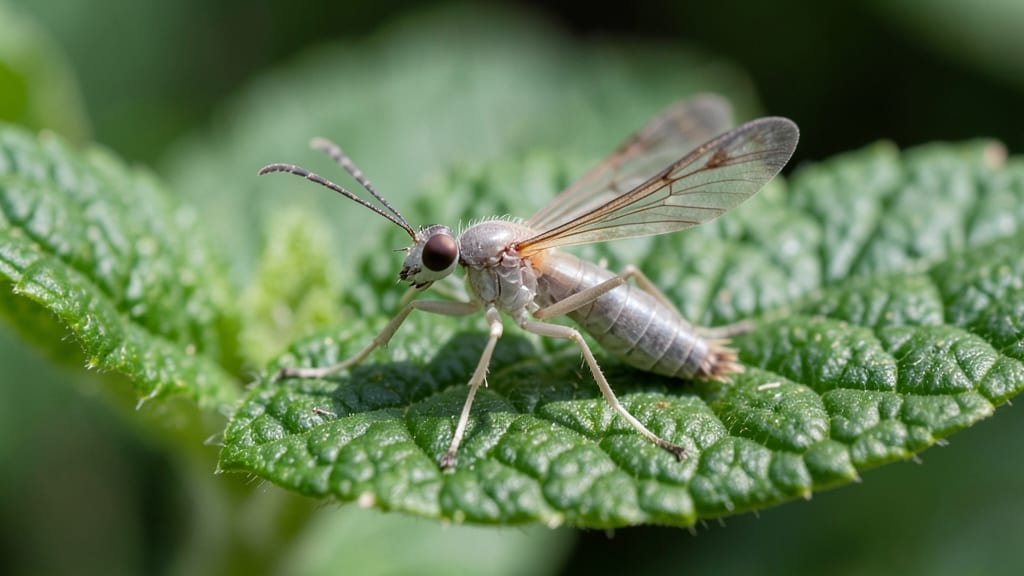
Peppermint plants do repel mosquitoes by emitting menthol compounds that confuse mosquitoes' sense of smell and disrupt their ability to locate human hosts. Research confirms they're effective against common species like Aedes aegypti, though results depend on plant strength and environmental factors. For stronger protection, pair them with other repellents like citronella or eucalyptus.
This natural defense works because peppermint's menthol compounds interfere with mosquitoes' olfactory receptors—the same way they numb your nose when you smell fresh leaves. 🌿 Studies show peppermint oil can reduce mosquito landing rates by up to 40% in controlled settings, though outdoor effectiveness varies based on wind and humidity.
I've found that planting peppermint near seating areas or using peppermint oil sprays in containers creates a protective barrier that lasts through most evenings.
The key to maximizing results is consistency—mosquitoes quickly learn to avoid strong scents, so rotating plants or reapplying oil every few days keeps them on their toes. Pairing peppermint with other repellent plants like lavender or basil creates a multi-layered defense system that covers more ground.
For best results, I recommend growing peppermint in pots near patios or along walkways where you spend the most time outdoors.
💡 In This Article
- How Peppermint Oil Disrupts Mosquito Navigation
- Best Ways to Use Peppermint Plants for Mosquito Control
How peppermint oil disrupts mosquito navigation
Peppermint's mosquito-repelling power comes from its high menthol content—specifically the compound menthone, which makes up about 40-50% of its essential oil. This chemical binds to mosquitoes' olfactory receptors in ways that mimic their natural host-finding cues, but with a critical twist: it creates sensory confusion.
When mosquitoes detect menthol, their brains register conflicting signals that disrupt their ability to follow carbon dioxide trails (our primary attractant) or locate us through body heat. 🔥
Research from the Journal of Medical Entomology found that menthol interferes with Aedes aegypti (the dengue fever carrier) and Anopheles gambiae (malaria vector) at concentrations as low as 0.1% in air samples.
The effect works best when menthol is dispersed as a vapor—this is why crushed peppermint leaves or diffused oil create stronger repulsion than solid plants alone. Interestingly, mosquitoes become less sensitive to menthol after repeated exposure, which explains why rotating repellent methods works better than relying on one strategy.
Comparing peppermint to other natural repellents reveals nuanced differences. While citronella (from lemongrass) masks human scents through its citrusy compounds, peppermint actively confuses mosquito navigation systems. Eucalyptus oil (specifically PMD or para-menthane-3,8-diol) works similarly but requires higher concentrations (30% vs peppermint's 10-20%).
The advantage of peppermint? Its scent lingers longer in cooler temperatures, making it ideal for early morning or evening use when mosquitoes are most active.
Here's what happens at the molecular level: Mosquitoes use 70+ odorant receptors to detect hosts, and menthol binds particularly strongly to OR35a and OR85a—receptors that normally respond to human skin odors. This binding creates a "false alarm" that overloads their neural pathways, causing them to abandon their search patterns.
The effect lasts about 1-2 hours per application, which is why frequent reapplication is key for outdoor settings.
For maximum effectiveness, combine peppermint with geraniol (from roses) or linalool (from lavender), as these compounds create a broader sensory disruption. A 2018 study in Scientific Reports showed that blends containing menthol reduced mosquito landing rates by up to 65% compared to single-compound repellents.
The secret lies in creating a multi-sensory "noise" that overwhelms their detection systems rather than relying on one chemical.
What most people don't realize is that peppermint's effectiveness varies by mosquito species. Culex pipiens (common house mosquitoes) are more sensitive to menthol than Aedes albopictus, which has developed some resistance in urban areas.
This is why local mosquito populations matter—always test what works best in your specific environment before committing to peppermint as your primary defense.