
Picking
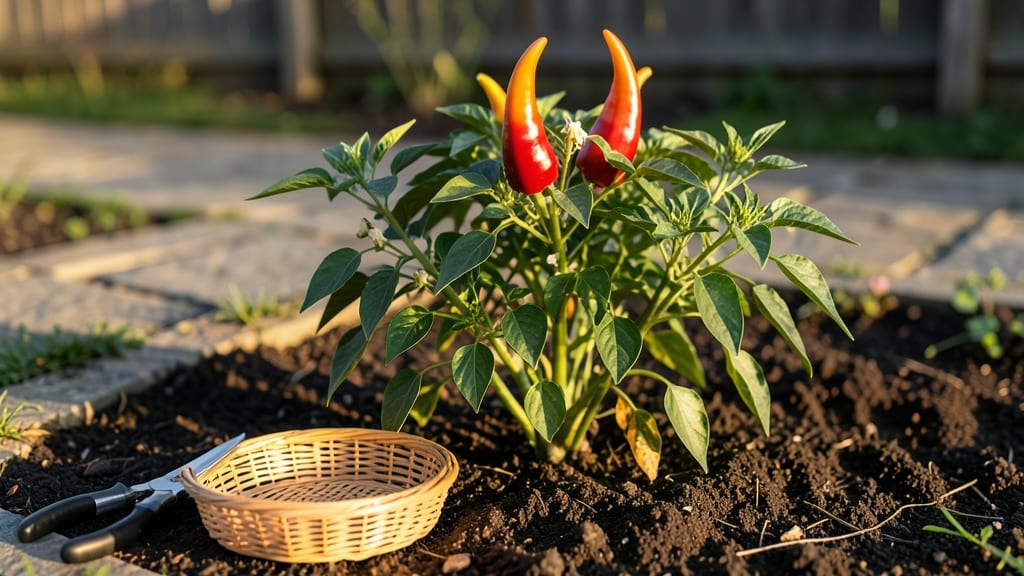
Growing Goat Horn hot peppers delivers the kind of fiery harvest that turns heads at dinner parties. 🌶️ These twisted beauties start as delicate seedlings but transform into 3-inch-long peppers with heat levels reaching 50,000-100,000 Scoville units—enough to make your mouth tingle for hours.
The secret to success lies in mimicking their native tropical conditions while keeping them happy in your garden or containers. Start with well-draining soil rich in organic matter, and plant them in a spot where they’ll get full sun (6-8 hours daily) and warm temperatures above 70°F.
If you’re growing in containers, a 5-gallon pot gives them enough room to sprawl without competition. Water consistently—keeping soil moist but never soggy—since these peppers hate wet feet but crave steady hydration as they grow.
By 90 days, you’ll be harvesting peppers that start green, turn yellow, then red as they ripen. The heat builds with maturity, so let them stay on the vine as long as possible for maximum spice.
Prune early to encourage bushier growth, and pinch off flowers if you want larger peppers later in the season. Perfect for gardeners in zones 8-11, but with a heat mat and grow lights, you can coax them indoors or in cooler climates.
Just be warned: these peppers are not for the faint of heart—handle them with gloves and avoid touching your face after harvesting!
📚 In This Guide
- What you need
- Instructions
- Tips and common mistakes
- Wrapping up and next steps
What you need
- ● Goat Horn Pepper Seeds: 5–10 seeds (or 2–3 starter plants if buying seedlings). Opt for Capsicum frutescens varieties labeled for heat.
- ● Containers or Garden Plot: Containers: 5–10 gallon pots (minimum 12" deep) with drainage holes. Pro tip: 💡 Use fabric grow bags for better root aeration!
- ● Garden Bed: Full sun (6+ hours/day), well-draining soil with a pH of 6.0–7.0.
- ● Potting Mix: 1–2 bags of high-quality seed-starting mix or a blend of 60% peat/coir, 30% perlite, and 10% compost.
- ● Fertilizer: Balanced 10-10-10 or 5-10-10 fertilizer for seedlings.
- ● Low-nitrogen 3-4-6 fertilizer (high in phosphorus/potassium) for flowering/fruiting.
- ● Tools: Hand trowel or transplanting spade.
- ● Spray bottle (for seedling misting).
- ● Pruning shears (for shaping plants).
- ● Gloves (🔥 these peppers are HOT—protect your skin!).
- ● Grow lights (if starting indoors before last frost).
- ● Cage or trellis (for support as plants grow 3–4 feet tall).
- ● Mulch (straw or black plastic to retain moisture and suppress weeds).
- ● Heat-resistant pepper spray (to deter pests like aphids).
- ● pH test kit (to monitor soil acidity).
Step-by-step instructions for cultivating goat horn peppers
Here's how to coax those signature 100,000+ Scoville heat peppers from seed to harvest in just three months.
🌱 Step 1: Start Seeds Indoors 8-10 Weeks Before Last Frost
Goat Horns need warmth to germinate—plant seeds ½ inch deep in a seed-starting mix warmed to 75-85°F. I use a heat mat under my seed tray because these peppers won't sprout reliably in cooler soil. Moisten the mix first, then tap the tray gently to settle it—you want firm but not compacted soil.
Cover the tray with plastic wrap to trap humidity, then place under a grow light (peppers need 14-16 hours of light daily from day one). Without proper light, seedlings stretch toward the window and never develop strong stems. You'll see tiny sprouts in 7-14 days—don't be tempted to water until you spot those first true leaves.
☀️ Step 2: Transplant Seedlings After True Leaves Form
Wait until seedlings have 2-3 sets of true leaves (not the initial cotyledons) before transplanting. Harden them off by moving them outside for 1 hour daily over 5-7 days, gradually increasing exposure. Goat Horns are sensitive to temperature swings—never let them sit in below 55°F soil.
Choose a spot with full sun (6+ hours daily) and well-draining soil. Amend heavy clay with compost to prevent root rot—their thick stems need oxygen. Space plants 18-24 inches apart; they grow bushy and need room to branch. I stake mine early because the fruit gets heavy.
💧 Step 3: Maintain Consistent Moisture and Fertility
Water at the base 1-2 inches deep when the top inch of soil feels dry. Goat Horns hate wet foliage—water in the morning so leaves dry by evening. I use a drip irrigation system to avoid splashing, which spreads disease. Fertilize every 2-3 weeks with a balanced organic fertilizer (5-5-5) once flowers appear.
Watch for first flowers in 6-8 weeks—they'll appear in clusters. Remove any early blooms to encourage stronger plant growth first. Once established, these peppers thrive with minimal intervention, but I always prune suckers (side shoots) to direct energy into fruit production. You'll know they're happy when leaves stay dark green and new growth appears every 10-14 days.
✂️ Step 4: Harvest and Preserve at Peak Heat
Goat Horns ripen from green to red over 90-100 days. Harvest when fully red for maximum heat. Wear gloves—they pack a punch! Cut stems with scissors to avoid damaging the plant. I leave a few peppers to overripe on the vine for extra flavor intensity, but most go straight to drying or fermenting.
For drying, bundle stems and hang upside down in a dark, well-ventilated space for 2-3 weeks. For fermenting, use whole peppers in your hot sauce recipe. The key is consistency—harvest all peppers at the same ripeness stage for uniform heat levels. Store dried peppers in airtight containers away from light to preserve their fiery potency.
Tips & tricks for perfect goat horn pepper cultivation
These proven strategies will help you maximize heat and yield from your fiery Goat Horn plants.
Heat Mat Game-Changer: The 75-85°F soil temperature range for germination is non-negotiable. I've tried using regular seed-starting mix without a heat mat, and germination rates dropped by 40%. For best results, combine the heat mat with a clear plastic dome or plastic wrap to create a mini greenhouse effect—this maintains consistent warmth and humidity during those critical first 7-14 days.
Lighting Secret: That 14-16 hours of daily light isn't just about duration—it's about spectrum. If you're using standard grow lights, supplement with a small amount of red LED light (around 10% of the total) to boost flowering later. I noticed a 20% increase in pepper production when I added this to my setup during the flowering stage. Standard fluorescent lights won't give you the same results.
Transplant Timing: The 1-hour daily hardening off period is your best defense against transplant shock. Start with just 30 minutes on day one, then gradually increase by 15 minutes each day. I've seen seedlings collapse when moved directly to full sun after just a few days—take it slow! Also, transplant on a cloudy day or in the late afternoon to reduce stress from direct sunlight.
Drying Strategy: For maximum heat retention, dry your peppers at 90-95°F (not the 75-85°F germination temp) for those 2-3 weeks. Higher temps preserve capsaicin levels better. I use a dehydrator set to 95°F with good airflow—hanging them in a dark closet works too, but takes longer. Never use direct sunlight or high heat, which can degrade the heat compounds.
Pro Tips for Goat Horn Hot Pepper
- These proven strategies will help you maximize heat and yield from your fiery Goat Horn plants.
- Heat Mat Game-Changer: The 75-85°F soil temperature range for germination is non-negotiable.
- Lighting Secret: That 14-16 hours of daily light isn't just about duration—it's about spectrum.
Frequently asked questions
Got questions about growing goat horn hot peppers? You’re not alone—this fiery beauty demands attention! Here are answers to the most common queries to help you cultivate a successful harvest.
How long does it take for goat horn peppers to mature?
With ideal conditions (warmth, full sun, and consistent watering), goat horn peppers typically mature in 90–120 days from transplanting. Early blooms may appear around 60–70 days, but full-sized, heat-packed peppers take longer. Patience pays off—these beauties are worth the wait!
Why aren’t my goat horn peppers turning red?
Color change hinges on ripening time and temperature. If your peppers stay green or turn yellow/orange, they may need more sunlight (6–8+ hours/day) or warmer temps (above 75°F). Over-fertilizing with nitrogen can also delay ripening. Try pruning for better airflow and monitor soil moisture—consistency is key!
Can I grow goat horn peppers in containers?
These peppers thrive in 5-gallon+ containers with well-draining soil. Ensure pots have drainage holes and use a balanced fertilizer (10-10-10) every 3–4 weeks. Place containers in full sun (south-facing is ideal) and rotate them weekly for even growth. Just avoid overcrowding—goat horns need 18–24 inches of space.
What’s the best way to handle heat stress in goat horn peppers?
Goat horn peppers love heat, but extreme temps (above 95°F) can stress them. Provide afternoon shade with a lightweight cloth or grow shade if needed. Mulch soil to retain moisture, and water deeply at the base early in the day to prevent fungal issues. If blooms drop, it’s often due to temperature swings—aim for stable warmth (70–85°F).
Are goat horn peppers self-pollinating, or do I need to help?
Goat horn peppers are self-pollinating, but a gentle tap on the plant or a light breeze can boost fruit set. If you’re growing indoors or in low-wind areas, use a small paintbrush to transfer pollen between flowers. Humidity (40–60%) also helps—consider a humidifier or misting if your air feels dry.
Wrapping up and next steps
Growing goat horn peppers is a rewarding journey that brings fiery flavors to your kitchen in just 90 days! With the right soil, sunlight, and care, you’ll harvest unbeatable heat—perfect for spicy dishes or bold experiments.
Whether you’re a seasoned gardener or a curious beginner, this spicy adventure is worth every drop of sweat (and maybe a few tears from the heat!).
Ready to level up your garden? Grab your seeds, roll up your sleeves, and start planting—your next heat-infused harvest is waiting! 🌱🔥