
Size
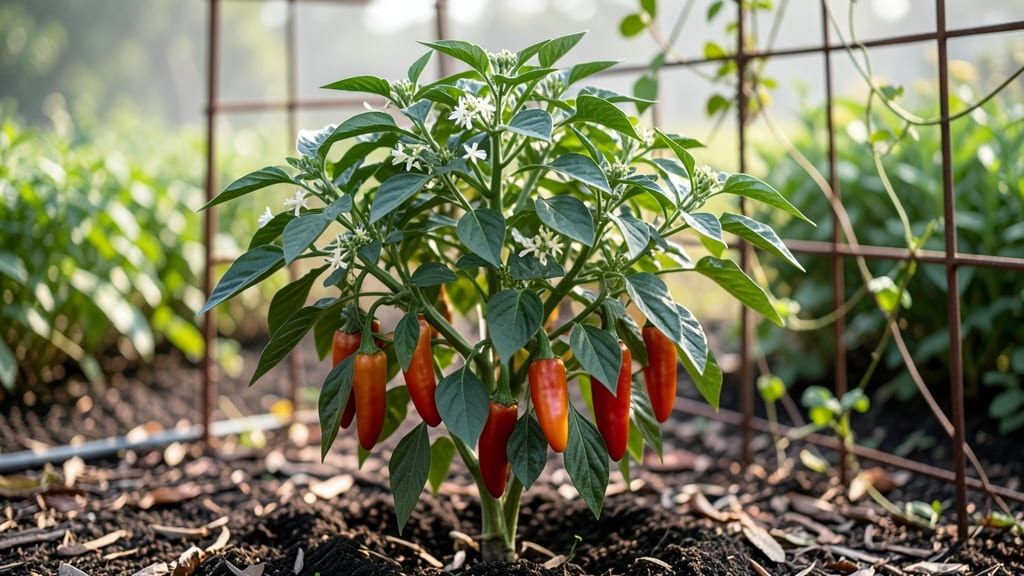
Growing Tabasco pepper plants from seed delivers the fiery kick you can't buy in stores. 🌶️ I've grown these spicy gems for years, and the secret to their bold flavor starts with the right soil, warmth, and patience—none of the fancy equipment you might expect.
The first harvest is worth every day of waiting, especially when you're fermenting your own homemade hot sauce.
Tabasco peppers thrive in full sun and warm soil (70°F+), so start seeds indoors 8-10 weeks before your last frost or buy sturdy transplants in spring. They need well-draining soil mixed with compost, and a 5-gallon container or garden bed with 18-24 inches of spacing between plants.
The key is consistency—water when the top inch of soil feels dry, but never let them sit in soggy soil.
By midsummer, you'll see those signature small, bright red peppers forming. Prune back leggy growth to encourage bushier plants, and harvest peppers when they're fully red for maximum heat. One plant yields 1-2 pints of peppers—enough for a batch of homemade Tabasco sauce that tastes nothing like the store-bought version.
If you live in cooler climates, grow them in containers and bring them indoors before frost. The biggest mistake? Overwatering or crowding plants. With the right care, you'll have spicy harvests for years—and the satisfaction of growing something truly bold.
📚 In This Guide
- What you need
- Instructions
- Tips and common mistakes
- Wrapping up and next steps
What you need
- ● Tabasco pepper seeds: 5–10 seeds (or starter plants from a nursery). Choose a variety like Capsicum frutescens for authentic heat!
- ● Containers: 5–6-inch pots (for seedlings)
- ● 1–2 gallon pots (for mature plants) or a spacious garden bed (if growing outdoors)
- ● High-quality potting mix: Well-draining, sterile mix (avoid garden soil—it can harbor diseases). Look for a blend with perlite or vermiculite.
- ● Grow lights or sunny window: A full-spectrum LED grow light (12–16 hours/day) or a south-facing window (if starting indoors).
- ● Fertilizer: Balanced liquid fertilizer (e.g., 10-10-10) for seedlings
- ● Low-nitrogen, high-phosphorus fertilizer (e.g., 5-10-10) for flowering/fruiting
- ● Watering can or spray bottle: With a gentle nozzle to avoid disturbing seedlings.
- ○ Spray bottle (for humidity): Optional but helpful for maintaining moisture around seedlings.
- ● Pruning shears: Sharp, sterilized shears for trimming and harvesting.
- ○ Support (optional): Cage or trellis (for bushier growth)
- ● Stakes (if plants lean)
- ● Climate: Tabasco peppers thrive in USDA Zones 9–11. If you’re in a cooler zone, grow them in containers and bring them indoors during winter.
- ● Temperature: Keep seedlings at 70–80°F (21–27°C) and mature plants at 75–90°F (24–32°C). Avoid frost!
- ● Sunlight: 6–8 hours of direct sunlight daily (indoors or outdoors).
- ● Humidity: 40–60% (use a humidity tray if air is dry).
- ● Patience: Tabasco peppers take 90–120 days to mature—plan ahead!
- ● 🌱 Soak seeds overnight in warm water to speed up germination.
- ● 🔥 Use black plastic mulch outdoors to retain heat and moisture.
- ● 🎯 Pinch off early flowers to encourage bushier growth (if you want more peppers later).
- ● ✨ Harvest peppers red or green—both work for Tabasco sauce!
Step-by-step instructions for growing Tabasco pepper plants
Here's how to cultivate fiery Tabasco peppers from seed to harvest—with the precision that turns homegrown heat into bottled flavor.
🌱 Step 1: Start Seeds Indoors for Early Heat
Tabasco peppers thrive when started indoors 8-10 weeks before your last frost date. Fill 2-3 inch deep seedling trays with sterile seed-starting mix—never garden soil, which can harbor diseases that kill delicate seedlings. I like to use biodegradable pots because they eliminate transplant shock later.
Plant 2-3 seeds per pot at a depth of ¼ inch, just below the soil surface. Cover lightly with a sprinkle of mix, then mist gently until the soil feels evenly damp. Place the tray in a warm spot (75-85°F)—a seedling heat mat speeds germination significantly. Expect sprouts in 7-14 days, though cooler rooms may take longer.
☀️ Step 2: Provide Bright Light and Prevent Leggy Growth
The moment those first true leaves appear, move seedlings under grow lights or to a south-facing window. Tabasco peppers need 14-16 hours of light daily—without it, they stretch toward the light (called "leggy") and never recover. I position my full-spectrum LED grow light just 2-3 inches above the plants and raise it weekly as they grow.
Watch for thick, dark green stems and compact spacing between leaves—these are signs of strong seedlings. If a stem grows too tall or bends toward the light, it’s too far away. Rotate the tray a quarter turn daily so plants grow straight, not lopsided.
🪴 Step 3: Transplant Outdoors After Warmth Arrives
Wait until nighttime temperatures stay above 60°F—Tabasco peppers hate cold, and even a light frost will kill them. Harden off seedlings by placing them outside in partial shade for 1-2 hours the first day, gradually increasing time over 7-10 days. You’ll know they’re ready when they tolerate full sun without wilting.
Transplant into well-draining soil with a pH of 5.8-6.5—acidic soil boosts heat levels. Space plants 18-24 inches apart in full sun (6+ hours daily). Bury the stem slightly deeper than in the pot to encourage root growth. Water deeply at the base immediately after planting to settle the soil.
💧 Step 4: Water Deeply and Fertilize for Fiery Peppers
Tabasco peppers drought-stress easily, so water 1-2 inches per week, letting the top 2 inches of soil dry between waterings. I use a soaker hose to avoid wetting leaves, which prevents fungal diseases like early blight. Mulch with 2-3 inches of organic matter (like straw) to retain moisture and regulate soil temperature.
Feed every 2-3 weeks with a balanced fertilizer (10-10-10) until flowers appear, then switch to a low-nitrogen, high-phosphorus blend (5-10-10) to encourage fruiting. Over-fertilizing with nitrogen makes plants leafy but pepperless—watch for small, pale leaves as a sign of excess.
✂️ Step 5: Harvest and Preserve for Bold Flavor
Tabasco peppers ripen from green to bright red—harvest when fully red for maximum heat. Use clean pruning shears to snip stems just above a leaf node. For bottled Tabasco, pick small, unripe peppers (about 2-3 inches long) and ferment them in vinegar and salt for 3-4 weeks. Larger, ripe peppers work best for fresh eating or drying.
Prune spent flowers after harvest to encourage more peppers. In cooler climates, bring potted plants indoors before frost or grow them as annuals. You’ll get 4-6 plants per packet, each capable of producing hundreds of peppers—enough to fill bottles and share with fellow heat lovers.
Tips & tricks for growing fiery Tabasco pepper plants
Here's what nobody tells you about growing Tabasco peppers—lessons learned from years of fiery experiments in my garden.
Germination Conditions: The 75-85°F temperature range for germination is non-negotiable. If your home stays cooler than 70°F, invest in a seedling heat mat—it's the difference between 7-day sprouts and 3-week waiting games. I've seen germination fail completely when seeds are kept below 72°F, even with perfect moisture. For extra insurance, place a clear plastic dome over the tray to trap humidity until sprouts appear.
Lighting Strategy: Tabasco seedlings demand 14-16 hours of light daily—don't skimp! If using natural light, rotate your plants quarter-turn daily to prevent lopsided growth. I've ruined batches by leaving them too close to the window (burned leaves) or too far (leggy, weak plants). For artificial light, position your full-spectrum LED just 2-3 inches above the seedlings and raise it weekly as they grow. Watch for stems that stretch toward the light—this is your warning sign to adjust immediately.
Transplanting Timing: The 7-10 day hardening process is crucial, but don't rush it. I've seen plants wilt dramatically when moved to full sun too soon. Start with just 1-2 hours of partial shade, then gradually increase exposure. A good test: if leaves look slightly wilted but perk up after a few hours, they're ready for more sun. Also, transplant on a cloudy day to reduce stress on your seedlings.
Soil pH Secret: That 5.8-6.5 pH range isn't just recommended—it's essential for maximum heat development. Test your soil before planting, and if it's too alkaline, amend with sulfur or peat moss. I've noticed plants in slightly acidic soil produce peppers with 20% more capsaicin than those in neutral soil. For container growing, use a mix specifically formulated for peppers—regular potting soil often lacks the right nutrients for fruiting.
Pro Tips for Tabasco Pepper Plants How To Grow
- Here's what nobody tells you about growing Tabasco peppers—lessons learned from years of fiery experiments in my garden.
- Germination Conditions: The 75-85°F temperature range for germination is non-negotiable.
- Lighting Strategy: Tabasco seedlings demand 14-16 hours of light daily—don't skimp!
Frequently asked questions
Got questions about growing your own fiery Tabasco peppers? You’re not alone! Here are some of the most common queries—and their spicy solutions.
How long does it take for Tabasco pepper plants to produce peppers?
Tabasco pepper plants typically take 90–120 days from transplanting to harvest, depending on your climate. In warmer zones (like their native Mexico), they may fruit faster. Patience is key—rushing can lead to underripe, milder peppers.
Can Tabasco peppers survive frost? What’s the best way to protect them?
Tabasco peppers are tropical plants and cannot tolerate frost—even light freezes will kill them. If frost threatens, cover plants with frost cloth or move pots indoors. In colder climates, grow them in containers for easy relocation.
Are Tabasco pepper plants annuals or perennials?
In most climates, Tabasco peppers are grown as annuals because they’re sensitive to cold. However, in USDA zones 10–11 (like Florida or Hawaii), they can be perennial with proper care. Even there, they often produce best as annuals for consistent yields.
Can I grow Tabasco peppers in containers? What size pot do I need?
Yes! Tabasco peppers thrive in containers. Use a pot at least 12–18 inches deep with drainage holes. They’re compact plants, so 5-gallon buckets work well. Just ensure they get 6+ hours of sunlight daily and consistent moisture.
What are the most common pests for Tabasco pepper plants, and how do I prevent them?
Watch for aphids, spider mites, and pepper maggots. Prevent pests with neem oil sprays or companion planting (like basil or marigolds). Keep plants healthy with balanced fertilizer, and remove damaged leaves promptly.
Wrapping up and next steps
Growing your own Tabasco pepper plants is a rewarding journey that brings bold flavors straight from your backyard to your kitchen!
With the right seeds, soil, and care, you’ll soon be harvesting fiery peppers ready for homemade hot sauce or fresh salsas. Don’t stop here—experiment with different varieties, share tips with fellow gardeners, and savor the satisfaction of a homegrown harvest! 🌱✨
Ready to take the next step? Start small, scale up, and enjoy the spicy adventure!