
Picking
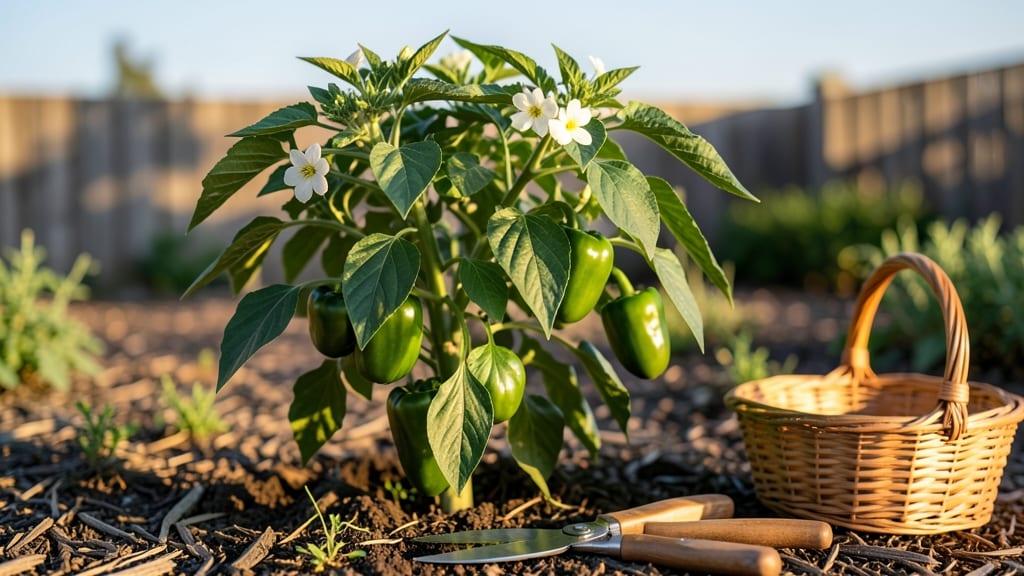
Green bell peppers ready to pick show up when they’re 6-8 inches long, deep green, and firm to the touch—miss these signs, and you’ll end up with underripe, bitter peppers that ruin your salsa.
You might think bigger is always better, but those oversized peppers lose their crisp snap and sweetness. The trick is timing: harvest when the skin resists gentle pressure and the stem snaps cleanly at the base.
Here’s how to spot the perfect pepper, from color cues to texture tests, plus how often you should pick to keep your 🌶️ plants producing all season.
We’ll also clear up myths about ripeness—like why pale green or uneven peppers aren’t ready—and share the best tools (pruners vs. hands) for a clean harvest.


How to identify green bell pepper ripeness by size, shape, and color
Green bell peppers are at their peak when they balance size, firmness, and color—but knowing exactly when to pick can be tricky. Unlike their red or yellow cousins, green bell peppers stay green until fully mature, so you’ll need to rely on subtle visual cues.
I’ve learned that ignoring these signs often leads to peppers that are either too small or woody. Let’s break down the key indicators so you can harvest at the perfect moment.
First, focus on the size of your green bell peppers. The ideal harvest size ranges between 6 to 8 inches in length. Peppers smaller than 5 inches are usually underdeveloped, with thinner walls and less flavor.
On the other hand, if they stretch beyond 8 inches, they may become tough and less tender. Measuring with your hand can help—most mature peppers fit snugly from your thumb to your pinky when held vertically.
A firm texture is another critical clue. Gently press a pepper with your thumb—if it gives slightly but doesn’t feel mushy, it’s ready. Overripe peppers will feel soft or even wrinkled, while underripe ones remain rock-hard.
I always test a few peppers on the plant to confirm consistency. Remember, the stem should also snap easily when you twist it gently; if it resists, the pepper isn’t fully mature yet.
Color plays a surprising role in determining ripeness, even for green bell peppers. Look for a deep, glossy green hue, not a pale or uneven shade. The stem end should turn a yellowish-white color, which signals the pepper is nearing peak ripeness.
Avoid picking peppers with green stem ends—these are still developing. Pro tip: Morning sunlight enhances the pepper’s natural shine, making color cues easier to spot.
Shape also matters—ripe green bell peppers should be smooth and slightly tapered at the blossom end. If the pepper looks lopsided or has deep ridges, it’s likely still growing.
I’ve noticed that peppers growing in hotter climates may ripen faster, so checking them every 2-3 days during peak summer is a good habit. In cooler weather, the process slows down, giving you a longer window to monitor.
| Indicator | Ready to Pick | Not Ready |
|---|---|---|
| Size | 6-8 inches long | Under 5 inches |
| Color | Deep, glossy green | Pale or uneven |
| Stem End | Yellowish-white | Green |
| Texture | Firm but slightly soft | Rock-hard or mushy |
| Shape | Smooth, tapered | Lopsided or ridged |
Timing your harvest correctly also depends on the variety of green bell pepper you’re growing. Some hybrids, like ‘Early Cal Wonder’, mature faster (around 60 days) and may need picking sooner, while others like ‘Big Beef’ take closer to 80 days.
Always check the seed packet for guidance, but use the physical cues above as your final judge. I’ve found that container-grown peppers often ripen slightly earlier than those in garden beds, so adjust your expectations accordingly.
One common mistake I see is waiting until peppers turn red to harvest them. Green bell peppers are meant to be picked while still green, and letting them ripen fully on the vine can reduce the plant’s productivity.
Once you pick a ripe green pepper, the plant will quickly produce another in its place. This continuous harvest encourages more peppers to form, extending your growing season. Think of it as a feedback loop—the more you pick, the more you get!
Finally, don’t forget to use the right tools. A sharp pair of pruning shears or clean scissors makes harvesting easier and reduces damage to the plant. Always cut the pepper just above the stem to avoid tearing.
I’ve also started labeling my plants with small flags to track which peppers are closest to ripening. This simple trick saves time and ensures I don’t miss any ready-to-pick beauties hiding among the leaves.
Mastering these visual and physical cues will transform your green bell pepper harvests from hit-or-miss to consistently delicious. The next time you’re in your garden, take a moment to examine your peppers closely—you’ll be amazed at how much difference a few extra inches or a deeper green can make! 🌱
Common mistakes that make you pick green bell peppers too early (and how to avoid them)
Even experienced gardeners sometimes rush to harvest green bell peppers before they're truly ready. The biggest mistake? assuming size means ripeness. A pepper might look big but still be underdeveloped inside. I’ve picked 6-inch peppers that were hollow—wasting precious garden space and flavor potential.
Another common error is ignoring the stem test. Many gardeners focus on color, but a pepper’s stem tells the real story. A yellowish-white stem base signals readiness, while a green one means it needs more time.
I once missed this clue and ended up with peppers that were tough and bland.
🌶️
⚠️ Premature Harvest Warning Signs
- ✗ Pale or uneven green = Underripe
- ✗ Soft or wrinkled skin = Overripe or diseased
- ✗ Green stem end = Still growing
- ✗ Hollow when cut = Picked too early
Pro Tip: Gently squeeze the pepper—it should feel firm but yield slightly, like a ripe avocado.
Color confusion is another pitfall. Dark green doesn’t always mean ready—some varieties stay dark until they’re fully mature. I learned this the hard way with Jalapeño varieties that looked identical to bell peppers but needed 10 extra days on the plant.
Always check the variety’s maturity timeline in your seed packet.
Overestimating the harvest window is a seasonal mistake. In cooler climates, peppers slow down in late summer. I’ve seen gardeners give up too soon because growth stalled. The fix? Use row covers to extend the season by 2-3 weeks and keep peppers producing.
Finally, harvesting too frequently can trick your plants into thinking they’re done. Pick every 5-7 days max—any more, and the plant may stop flowering. I once harvested every 3 days and ended my season early. Patience pays off with sweeter, larger peppers later in the season.
Remember: Peppers keep ripening off the plant for about a week, but only if picked at the right stage. The best time? When they’re 6-8 inches long, deep green, and the stem snaps cleanly. Now you’re ready to avoid these common traps!