
Container Gardens
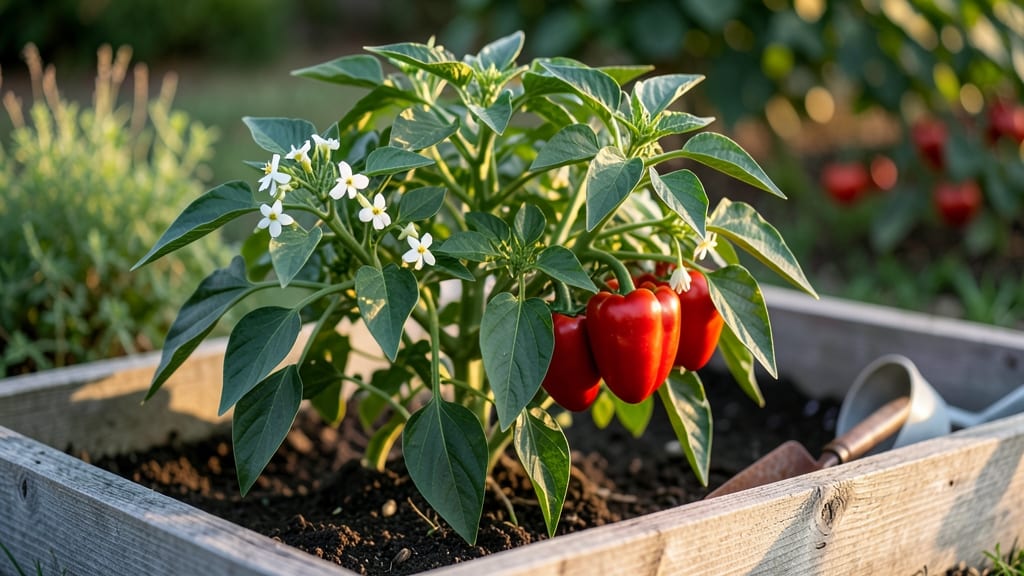
Here are some red pepper growing tips that’ll turn your garden into a fiery success—no more guesswork, just thriving plants. 🌶️ always comes down to sunlight, soil warmth, and consistent care.
The first year I tried, my peppers stayed green and stunted because I didn’t account for how much heat they truly crave—both from the sun and the soil.
You’ll need a spot that gets at least 6-8 hours of direct sunlight daily, soil that stays between 70-85°F, and a container or bed that drains well (peppers hate soggy roots).
Most gardeners overlook soil temperature—stick your finger in the ground in the morning; if it’s cooler than your wrist, wait a few more weeks to plant. The payoff? Peppers that ripen faster, produce more, and develop that deep, vibrant red color you crave.
Once established, these plants are surprisingly low-maintenance—just keep the soil moist (not soaked) and feed them every 4-6 weeks with a balanced fertilizer.
The real magic happens when you prune strategically: pinch off early flowers to boost plant strength, and you’ll end up with bigger, hotter peppers later in the season. I’ve gone from 10 peppers my first year to over 50 now, and it all starts with these simple adjustments.
Whether you’re growing in containers or garden beds, these tips work for any variety—from mild bell peppers to fiery ghost peppers. The key is patience: red peppers take their time to ripen, but when they do, the harvest is worth every extra week of waiting. Let’s get those plants thriving!
📚 In This Guide
- What you need
- Instructions
- Tips and common mistakes
- Wrapping up and next steps
What you need
- ● Containers: 5-gallon pots or larger (minimum 12" deep and wide per plant). Opt for fabric grow bags or plastic pots with drainage holes to prevent root rot.
- ● High-quality potting mix: 10-15 lbs of well-draining, organic potting soil (avoid garden soil—it compacts!). Mix in perlite or vermiculite (1 part per 4 parts soil) for aeration.
- ● Red pepper seeds or seedlings: Choose heat-tolerant varieties like Cayenne, Jalapeño, or Habanero. Start seeds indoors 8-10 weeks before the last frost or buy healthy seedlings from a nursery.
- ● Fertilizer: A balanced, water-soluble fertilizer (e.g., 10-10-10 or 5-5-5) or organic options like fish emulsion or compost tea. Apply every 2-3 weeks once plants are established.
- ● Drainage trays or saucers: To catch excess water and protect surfaces.
- ● Stakes or cages: 3-4 ft tall tomato cages or bamboo stakes to support tall varieties.
- ● Watering can or hose with a gentle spray nozzle: Peppers hate soggy roots—aim for deep but infrequent watering.
- ● Pruning shears: For trimming leggy growth or removing damaged leaves.
- ● pH test kit: Ensure soil pH is between 6.0-7.0 (peppers prefer slightly acidic to neutral soil). Adjust with lime (to raise pH) or sulfur (to lower pH) if needed.
- ● Mulch (straw or shredded leaves): Retains moisture and regulates soil temperature.
- ● Shade cloth (30-50% coverage): Protects seedlings from intense midday sun in hot climates (Zones 9-11).
- ○ Grow lights (optional for indoor starts): 12-16 hours of light daily for seedlings until transplanting.
- ● Companion plants: Basil, marigolds, or onions to deter pests naturally.
Step-by-step instructions for growing red peppers in heat Zones
Here's how I grow fiery, productive red peppers—even in hot climates where others bolt.
🌱 Step 1: Start Seeds Indoors at the Right Time
Begin seeds 8-10 weeks before your last frost date. I use biodegradable peat pots filled with seed-starting mix and plant 2 seeds per pot at ¼ inch deep. Keep the soil 80-85°F for germination—peppers need warmth to break dormancy. A seedling heat mat works wonders here.
Once sprouted, place pots under grow lights for 14-16 hours daily. You'll see first true leaves in 7-10 days. This is your cue to reduce bottom watering—peppers hate soggy roots but need consistent moisture. Water only when the top inch feels dry.
☀️ Step 2: Harden Off and Transplant After Warmth Arrives
Two weeks before transplanting, move seedlings outside for 2-3 hours daily, gradually increasing time. Watch for leggy growth—this means they need more light. I pinch off the top set of leaves to encourage bushier plants that handle heat better.
Transplant after soil reaches 70°F and nighttime temps stay above 55°F. Bury stems halfway up to encourage root growth. Space plants 18-24 inches apart in full sun. Mulch with 2-3 inches of straw to retain moisture and keep roots cool in hot zones.
💧 Step 3: Water Deeply and Feed Regularly for Heat Tolerance
Peppers need 1-1.5 inches of water weekly, but in heat zones, I water deeply every 5-7 days instead. Use a drip system to avoid wetting leaves—fungus thrives in hot, humid conditions. You'll know moisture is right when the soil feels damp 6 inches down.
Fertilize with balanced 10-10-10 at planting, then switch to low-nitrogen 5-10-10 when flowers appear. Too much nitrogen makes peppers leafy but fruitless. I side-dress with compost mid-season to boost heat resistance.
✂️ Step 4: Prune and Protect for Maximum Heat-Zone Yields
Remove suckers (the shoots that grow in the leaf axils) to direct energy to fruit production. I also prune lower leaves to improve airflow—this prevents sunscald on exposed fruit. Harvest peppers when they reach ¾ of their mature size to encourage continuous production.
In extreme heat (95°F+), provide afternoon shade with 30% shade cloth. Watch for blossom-end rot—this means calcium deficiency from inconsistent watering. A foliar spray of calcium every 2 weeks prevents it.
🌿 Step 5: Extend the Season with Smart Heat Management
As temps drop below 60°F, cover plants with floating row covers during cool nights. This protects flowers from frost while allowing sunlight. I also mulch heavily to insulate roots—peppers stay productive until first frost.
Save seeds from your best peppers for next year! Dry them on a screen in a warm, dry place. Properly stored seeds keep for 3-5 years. Here's the thing—once you master heat-zone growing, you'll never buy peppers again.
Tips & tricks for perfect red pepper cultivation
Mastering heat-zone pepper growing takes these simple but game-changing strategies.
Warmth is Everything: Those 80-85°F soil temperatures for germination aren't just recommendations—they're non-negotiable. I've tried starting seeds at cooler temps, and they either take forever or just give up. Invest in a seedling heat mat if your home stays cool. For extra insurance, place pots on a heating pad set to low during the day. The key is keeping that soil warm and consistent—peppers won't germinate properly if it dips below 75°F.
Lighting Secrets: The 14-16 hours daily of grow light isn't about pushing plants—it's about mimicking long summer days. I use LED grow lights on a timer and place them just 6 inches above seedlings. Watch for leaves stretching toward the light (leggy growth)—this means they need more intensity. If you notice this happening, either move lights closer or increase the wattage. Remember, peppers need plenty of light to develop those thick, flavorful walls.
Heat-Zone Hardening: When you're hardening off seedlings for 2-3 hours daily, start with just 30 minutes on the first day. Gradually increase time while protecting them from direct midday sun. I've seen many gardeners rush this process and end up with shocked plants that never recover. The goal is to toughen them up slowly—think of it like building a callus on your hand before working out. Also, harden off in the shade first, then gradually introduce more sunlight over 7-10 days.
Shade Strategy: That 95°F+ threshold isn't arbitrary—it's when peppers start struggling. I use 30% shade cloth only in the afternoon (2 PM to 6 PM) when the sun is most intense. The cloth blocks enough UV to prevent sunscald while still allowing plenty of light for photosynthesis. You'll notice your peppers stay greener and produce more consistently during heat waves. For extra protection, I also mist plants lightly in the afternoon to cool them down—just be sure to water at the base, not the leaves, to prevent fungal issues.
Pro Tips for Red Pepper Growing Tips
- Mastering heat-zone pepper growing takes these simple but game-changing strategies.
- Warmth is Everything: Those 80-85°F soil temperatures for germination aren't just recommendations—they're non-negotiable.
- Lighting Secrets: The 14-16 hours daily of grow light isn't about pushing plants—it's about mimicking long summer days.
Frequently asked questions
Got questions about growing fiery red peppers? You’re not alone—here are the answers to the most common ones!
How long does it take for red peppers to mature?
Most red pepper varieties take 60–90 days from transplanting to harvest, depending on the type. Bell peppers (like Jalapeño or Cayenne) often mature faster (60–75 days), while hotter varieties (like Habanero) may need 90+ days. Start seeds indoors 8–10 weeks before your last frost for a head start!
Can red peppers survive frost?
Nope! Red peppers are tropical plants and die in frost (below 32°F/0°C). Use row covers or move potted plants indoors if temps drop. In warm climates (Zones 8–11), they thrive year-round. In cooler areas, grow them as annuals or extend the season with greenhouses.
What’s the best container size for red peppers?
Aim for at least 12–18 inches deep and 12 inches wide per plant. Larger containers (20+ gallons) support bigger yields. Ensure drainage holes are present to prevent root rot. Pro tip: Use lightweight potting mix with perlite for optimal aeration!
Why are my red pepper leaves turning yellow?
Yellow leaves often signal overwatering, underwatering, or nutrient deficiencies. Check soil moisture—peppers like it consistently moist but not soggy. Yellow edges? Try fertilizer with iron or magnesium. Pests like aphids or spider mites can also cause stress—spray with neem oil if needed.
Do red peppers need full sun?
Red peppers thrive in 6–8 hours of direct sunlight daily. In hot climates (Zones 9–11), provide afternoon shade to prevent sunscald. If growing in containers, place them in the sunniest spot on your patio or balcony. Pro tip: Rotate pots weekly for even growth!
Can I grow red peppers from store-bought peppers?
Technically yes, but it’s hit-or-miss! Store-bought peppers are often hybrids and may not produce true seeds. For reliable results, buy seeds from a reputable supplier. If experimenting, save seeds from heirloom or open-pollinated varieties (like Cayenne or Serrano).
Wrapping up and next steps
Growing red peppers in containers is a rewarding journey—packed with flavor, color, and the joy of homegrown harvests! 🌶️ By choosing the right heat zone, providing ample sunlight, and giving your plants the love they need, you’ll be well on your way to a thriving garden. Remember: patience and consistency are key, but the payoff of fresh, spicy peppers straight from your balcony or patio is worth every effort.
Ready to take the next step? Start small! Try one or two plants this season, experiment with varieties, and let your green thumb grow. Before you know it, you’ll be sharing your harvest with friends—or maybe even starting a container garden empire. Happy planting! 🌱