
Plants
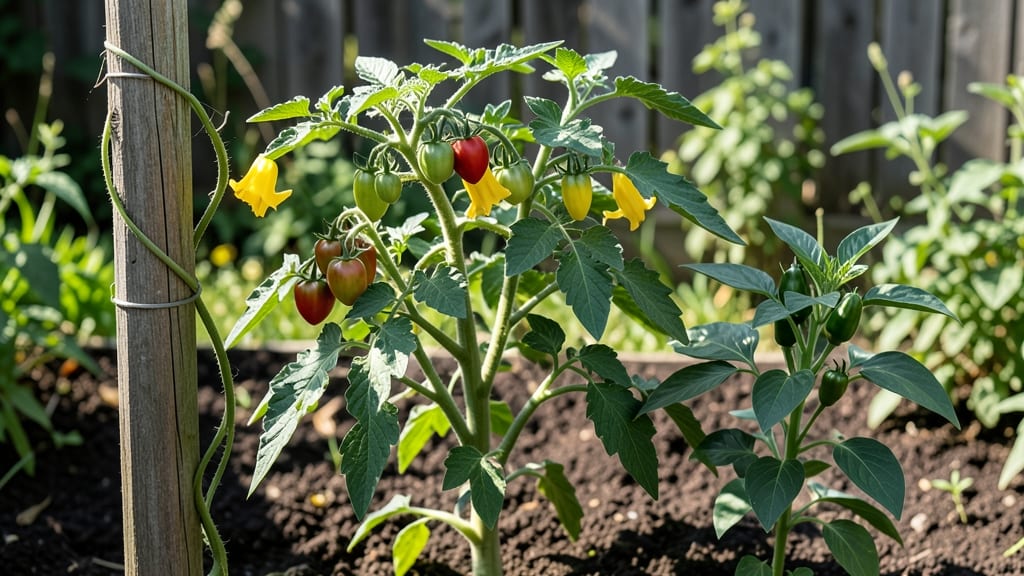
Bell peppers and tomatoes are not considered traditional companion plants because they share similar nutrient requirements and can compete for soil resources, which may reduce overall plant health. However, they can coexist in the same garden space with proper spacing and attentive care.
While they don’t share the classic companion benefits like pest deterrence or growth enhancement, these two plants can still thrive side by side under the right conditions. 🌱 The key lies in their spacing—keeping them at least 18-24 inches apart reduces competition for water and nutrients.
I’ve found that adding a layer of organic mulch helps conserve moisture while preventing soil-borne diseases from spreading between plants. If you’re growing them together, also monitor for shared pests like aphids and use row covers or neem oil as a preventive measure.
One surprising advantage is their shared tolerance for similar growing conditions—both prefer full sun (6-8 hours daily) and well-draining soil with a pH between 6.0 and 7.0. The trade-off?
Their proximity can increase the risk of fungal diseases like early blight, so rotating crops annually and avoiding overhead watering can make a big difference in long-term success.
💡 In This Article
- Why Bell Peppers and Tomatoes Aren’t Ideal Garden Companions
- Best Practices for Growing Bell Peppers and Tomatoes Together
Why bell peppers and tomatoes aren’t ideal garden companions
The core issue stems from their shared botanical family—both are part of the nightshade family (Solanaceae), which means they have remarkably similar growth requirements. This similarity creates a nutrient competition scenario where both plants vie for the same resources in the soil.
Studies show that when two plants with identical needs grow too closely, their root systems can overlap, leading to stunted growth and reduced fruit production.
For example, bell peppers and tomatoes both thrive in soil rich in nitrogen, phosphorus, and potassium, but when planted too near, they may exhaust these nutrients faster than the soil can replenish them.
Another critical factor is their shared vulnerability to pests and diseases. Aphids, whiteflies, and hornworms—common garden pests—target both plants with equal enthusiasm.
When these pests infest one plant, they quickly spread to its neighbor, creating a vicious cycle. 🌿 The situation worsens with fungal diseases like early blight (Alternaria solani), which can jump between plants through water splashes or contaminated tools.
Research from the University of California Cooperative Extension found that early blight spreads 30% faster in dense plantings of solanaceous crops, making proximity a major risk factor.
Root zone conflicts also play a role. Both bell peppers and tomatoes develop extensive root systems that spread horizontally, particularly as they mature. When planted within 12 inches of each other, their roots can tangle, limiting access to water and nutrients.
This competition isn’t just theoretical—gardeners often report seeing one plant’s leaves yellowing while the other thrives, a clear sign of uneven resource distribution. The deeper issue is that neither plant has a natural advantage in this dynamic; they’re essentially competing for the same real estate in the soil.
Even their growth habits clash. Tomatoes grow tall and sprawling, often requiring staking or caging, while bell peppers stay more compact but still need ample space.
When grown together, the taller tomato plants can shade the bell peppers, reducing their sunlight exposure—a critical factor since both need 6-8 hours of direct sunlight daily.
Shading can lead to leggy pepper plants with fewer fruits, while tomatoes may also suffer if their lower leaves don’t get enough light, increasing the risk of fungal infections.
What makes this dynamic even trickier is that neither plant offers the classic companion benefits you’d expect. Unlike basil, which repels pests and enhances tomato flavor, or marigolds, which deter nematodes, bell peppers and tomatoes don’t have a symbiotic relationship.
Their coexistence is purely about tolerance, not mutual benefit. This is why traditional companion planting guides often recommend keeping them separate unless you’re prepared to manage the risks actively.
One silver lining? Their shared needs can simplify garden planning in some ways. Since they prefer the same soil conditions—well-draining, slightly acidic to neutral (pH 6.0–7.0)—you can create uniform planting beds for both. However, this advantage is outweighed by the risks when space is limited.
The key takeaway is that while they can grow together, doing so requires extra vigilance to avoid the pitfalls of competition and disease spread.