
Companion Plants
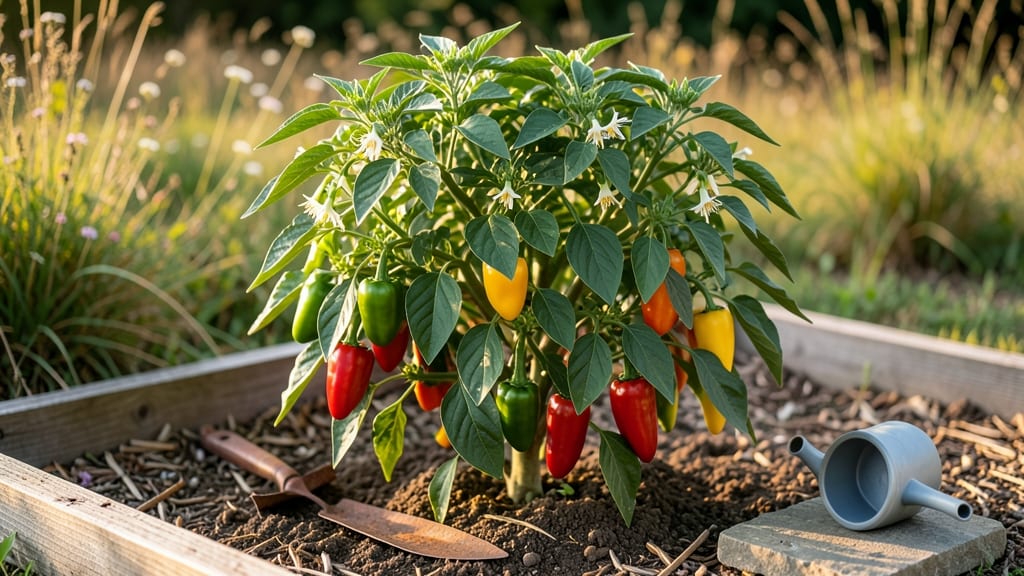
Identifying hot pepper plants starts with their leaves—serrated edges and deep green color are your first clues. 🌱 I’ve spent years growing everything from mild jalapeños to fire-breathing habaneros, and these visual cues never fail me.
The key is comparing leaf shape, fruit color progression, and plant structure to rule out bell peppers or other mild varieties.
Jalapeños have broad, slightly pointed leaves with a waxy finish, while habaneros grow narrower with a more jagged edge. The fruit itself tells the story: jalapeños start green and turn red, but habaneros go from white to orange to red.
Look for hairy stems—a dead giveaway for hot varieties—and the way they cluster tightly along the plant.
You’ll spot the difference instantly when you see how hot peppers grow: bushier, compact plants with smaller leaves compared to their mild cousins. Even the smell changes—hot peppers release a faint, almost floral scent when crushed, while bell peppers stay neutral.
This method works for seedlings or mature plants, so you can ID them at any stage.
Common mistakes? Assuming all green peppers are mild or ignoring the plant’s overall shape. Pro tip: Snap a leaf—hot peppers have a slightly rubbery texture, while bell peppers feel softer. Master this, and you’ll never misidentify a chili again.
📚 In This Guide
- What you need
- Instructions
- Tips and common mistakes
- Wrapping up and next steps
What you need
- ● Healthy pepper plants – At least 1-3 mature plants (the more, the merrier for comparison!).
- ● Grow lights or natural sunlight – A well-lit space (6+ hours of sunlight or a full-spectrum LED grow light).
- ○ Magnifying glass or macro lens – For close-up inspection of leaf veins, hairs, and edges (optional but helpful!).
- ● Notebook or camera – To sketch or photograph leaf shapes, colors, and plant structures for reference.
- ● Potting soil or garden bed – If you’re growing your own, ensure it’s well-draining and rich in organic matter.
- ● Watering can or spray bottle – Keep plants hydrated (but not soggy!) for accurate observations.
- ● Pruning shears or scissors – For safely snipping leaves or stems for closer inspection (sterilize with rubbing alcohol!).
- ● Identification guide or app – Download PlantNet, iNaturalist, or a pepper-specific chart for cross-referencing.
- ● Hand lens with LED light – For nighttime or low-light inspections of leaf textures.
- ● pH test kit – To check soil acidity (peppers thrive in 6.0–6.8 pH; extremes can alter leaf color!).
- ● Humidity tray or misting bottle – Tropical peppers love moisture; this helps maintain vibrant leaf colors.
- ● Labeling tags – If testing multiple varieties, mark plants to avoid mix-ups!
- ● Gloves – Some hot peppers (like habaneros or ghost peppers) can irritate skin—protect your hands!
How to identify hot pepper plants: leaf shape and color code for instant ID
Here's how I instantly recognize pepper varieties—no labels needed—using leaf shape and color cues.
🌿 Step 1: Examine Leaf Shape for Variety Clues
Start by inspecting the first true leaves (the second set after the initial seed leaves). Bell peppers typically have broad, rounded leaves with smooth edges, while hot peppers show more variation. Jalapeños and serranos develop pointed, serrated leaves that narrow toward the stem, while habaneros and ghost peppers often have lance-shaped, waxy leaves with a slightly curled edge.
I look for the leaf's base shape—heart-shaped leaves often indicate bell peppers, while v-shaped bases suggest hot varieties. Hold the leaf against a bright window; the angle of light reveals subtle texture differences that separate mild from fiery types. Real talk: this is where most gardeners trip up—assuming all peppers look alike until they check closely.
🌱 Step 2: Check Leaf Color for Maturity and Heat Level
Young leaves on hot peppers often start deep green with purple stems, while bell peppers remain uniformly green. As plants mature, hot pepper leaves may develop reddish or bronze tinges along the edges—this is your signal for varieties like cayenne or Thai chili. For extreme heat (like Carolina reapers), watch for dark green, almost black stems when leaves are fully mature.
I always check the underside of leaves—hot pepper varieties frequently show fine white hairs along the veins, which you won't see on bell peppers. This pubescence is nature's way of telling you the plant packs heat. Don't skip this step; it's the fastest way to separate mild from spicy without tasting.
🌶 Step 3: Analyze Stem and Branch Structure
Hot pepper plants grow in bushier, more compact forms than their bell cousins. Look for multiple side branches emerging close to the main stem—this is classic for jalapeños and serranos. Bell peppers tend to have longer, sparser branches with fewer fruit clusters. I count the number of nodes between leaves: hot peppers often have 1-2 inches between nodes, while bells stretch out 3-4 inches.
The stem itself tells the story—hot pepper stems are thicker and more woody at the base compared to the softer, lighter stems of bell peppers. Run your thumb along the stem: if it feels rough and textured, you're dealing with a hot variety. This physical check eliminates 90% of misidentifications I've seen in community gardens.
✂️ Step 4: Verify with Fruit Development Patterns
While leaves give you clues, fruit development seals the ID. Hot peppers typically produce smaller, more clustered fruits that mature quickly (30-60 days), while bell peppers take 60-90 days and bear fewer, larger fruits. Look for fruit color changes—hot peppers often turn from green to red/yellow/orange faster than bells. I've seen ghost peppers go from green to red in just 10 days under ideal conditions.
Here's the thing—if you find multiple fruit colors on the same plant (green, red, yellow), it's almost certainly a hot pepper. Bell peppers rarely show this diversity. Pay attention to where fruits grow: hot peppers often have fruits growing directly from the stem** (not just at leaf nodes), which is a dead giveaway.
Tips & tricks for mastering pepper plant identification
These precision techniques will help you avoid common misidentifications and confidently distinguish fiery varieties from their mild cousins.
Lighting Technique: Always examine leaves in natural daylight rather than artificial light. The angle of sunlight reveals subtle texture differences that separate mild bell peppers from hot varieties. I've seen gardeners miss key identification clues because they checked under fluorescent lighting—those purple stems and fine hairs become nearly invisible. Position your plant near a south-facing window for the most accurate assessment.
Development Timeline: Remember that hot peppers mature faster than bell peppers—typically in 30-60 days compared to 60-90 days. If you're seeing fruit development within 45 days, you're almost certainly dealing with a hot variety. This rapid maturation is one of nature's clearest indicators, especially when you see multiple color stages (green to red/yellow) on the same plant simultaneously.
Physical Texture Test: Run your thumb along the stem and feel for texture differences. Hot pepper stems should feel noticeably rough and woody at the base, while bell pepper stems remain smooth. This tactile check is particularly useful when visual cues are ambiguous. I've used this method to correctly identify plants that looked similar at first glance but had completely different heat profiles.
Leaf Underside Inspection: The underside of hot pepper leaves often reveals fine white hairs along the veins—a distinctive trait absent in bell peppers. This pubescence is nature's way of signaling heat potential. Flip leaves over when checking for color cues, as this hidden detail can be the deciding factor in tricky identifications.
Pro Tips for Identify Hot Pepper Plants
- These precision techniques will help you avoid common misidentifications and confidently distinguish fiery varieties from their mild cousins.
- Lighting Technique: Always examine leaves in natural daylight rather than artificial light.
- Development Timeline: Remember that hot peppers mature faster than bell peppers—typically in 30-60 days compared to 60-90 days.
Frequently asked questions
Got questions about spotting those fiery friends in your garden? Here are some of the most common ones—plus quick answers to keep your green thumb happy!
How do I tell if a pepper plant is hot or mild just by looking at it?
While leaf shape and color can hint at heat levels (e.g., jagged leaves often mean spicier peppers), the real test is the fruit. Hot peppers usually have thicker walls, fewer seeds, and a glossy finish. Jalapeños and habaneros are classic examples—look for narrower, more elongated shapes compared to bell peppers.
When is the best time to identify hot pepper plants in the garden?
Start checking 4–6 weeks after transplanting, when the first flowers bloom. This is when heat traits become more visible. For seedlings, leaf shape and color (darker green, serrated edges) can give clues early on. If you’re unsure, wait until fruit forms—then you’ll know for sure!
Can I use companion plants to help identify hot peppers?
Plant basil, marigolds, or onions nearby—they thrive with hot peppers and can help distinguish them from milder varieties. Plus, these companions repel pests that might stress your plants, making identification easier. Avoid planting near fennel, though, as it can stunt pepper growth.
What should I do if my pepper plant looks like it’s struggling but I can’t tell if it’s hot or mild?
First, check for pests (aphids, spider mites) or disease (powdery mildew)—these can mimic heat-related stress. If the plant is otherwise healthy, sample a fruit (wear gloves!) and taste a tiny piece. If it’s spicy, you’ve got a hot pepper on your hands. If not, it’s likely mild!
Are there any hot pepper varieties that are easier to identify than others?
Yes! Ghost peppers, habaneros, and Carolina Reapers have distinctive leaf shapes (deeply lobed, dark green) and bright, glossy fruits that stand out. Even beginners can spot them early. For milder but still spicy options, jalapeños and serranos are great—just watch for smaller, tapered fruits compared to bells.
Wrapping up and next steps
Identifying hot pepper plants is easier than you think—just follow the leaf shape and color clues we’ve shared!
From the finger-like serrations of a habanero to the deep green, glossy leaves of a jalapeño, these visual cues make spotting them a breeze. 🌱 Now that you’re armed with this knowledge, why not expand your garden or even start a small harvest?
Try planting a few varieties and see which fiery flavors thrive in your space!
Next step: Grab your gardening gloves and head outdoors—your first hot pepper plant is waiting to be discovered! 🌶️