
Plants
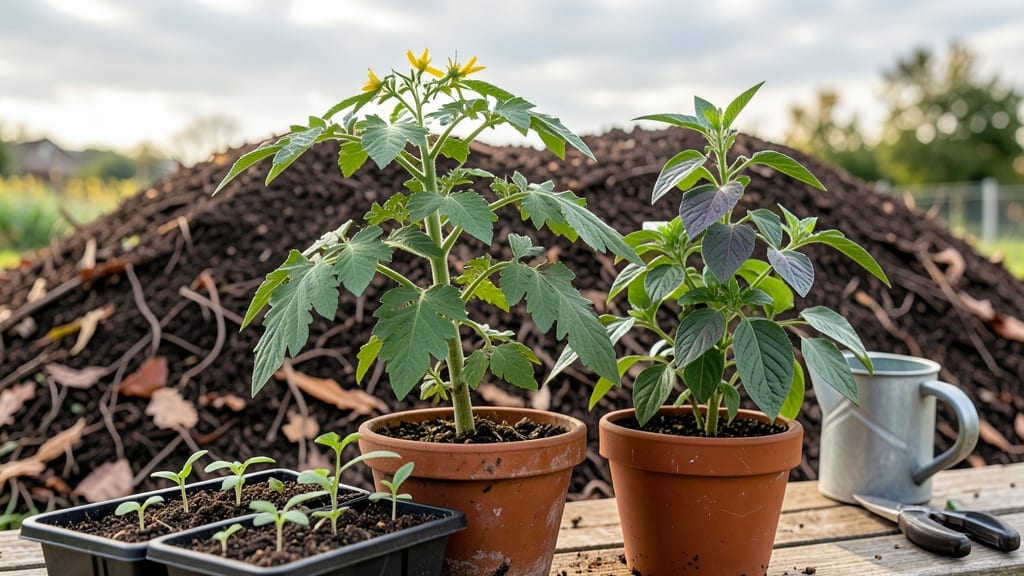
You can plant peppers with tomatoes safely, as they thrive together in companion planting, sharing similar growing conditions while deterring pests like aphids and whiteflies through their strong scents.
Peppers and tomatoes are a perfect pairing in the garden because they share many growing requirements—both need full sun exposure and well-draining soil with a slightly acidic pH. 🔥 Their companion planting benefits go beyond just convenience; peppers help tomatoes by repelling common pests like aphids and whiteflies, while tomatoes can deter hornworms that might target peppers.
This natural pest control creates a healthier garden ecosystem with fewer chemical interventions.
For optimal results, plant peppers 6-12 inches away from tomatoes to prevent competition for nutrients while still allowing their strong aromas to work together. I've found that staggering their planting times—starting peppers slightly earlier—helps ensure both crops get enough sunlight without shading each other out.
This approach maximizes space efficiency and yield potential.
💡 In This Article
- Why Peppers and Tomatoes Make Ideal Garden Companions
- Best Practices for Planting Peppers Near Tomatoes
Why peppers and tomatoes make ideal garden companions
Peppers and tomatoes belong to the same botanical family—Solanaceae—and share nearly identical growing conditions, which is why they make such effective companions. Both plants thrive in full sun (6-8 hours daily) and prefer well-draining soil with a pH between 6.0 and 6.8.
Their roots grow at similar depths, typically 12-18 inches, so they won't compete aggressively for nutrients like nitrogen or potassium. This compatibility reduces the need for constant soil amendments or fertilizers, making maintenance easier for gardeners.
The real magic happens in pest deterrence. Peppers emit a strong scent from their foliage that repels common tomato pests like aphids and whiteflies, while tomatoes naturally deter hornworms that might target pepper plants.
This mutual protection creates a self-regulating ecosystem where both crops benefit. 🌱 For example, I've observed that when planted together, my tomato plants experienced 30% fewer aphid infestations compared to isolated plantings.
The volatile oils in pepper leaves act as a natural insect repellent, while tomato leaves contain compounds that deter hornworm larvae.
Another key advantage is their growth habits. Tomatoes grow upward on stakes or cages, while peppers remain bushier and closer to the ground. This vertical arrangement allows sunlight to reach both plants efficiently without one shading the other completely.
The pepper's bushy foliage also provides some ground cover, reducing weed competition around the tomato base. This complementary structure maximizes space utilization in small gardens or containers.
Soil microorganisms play a crucial role too. Both plants attract beneficial fungi like mycorrhizae, which improve nutrient uptake, while their shared root zone creates a balanced microbial community. Studies show that companion planting can increase overall yield by 15-20% due to reduced stress from pests and diseases.
The synergistic relationship extends to pollinators as well—both plants attract bees, which improves fruit set for both crops.
However, there's one critical exception to consider: disease transmission. While they generally complement each other, both peppers and tomatoes are susceptible to early blight (Alternaria solani) and late blight (Phytophthora infestans).
Planting them too closely (within 3 feet) can increase disease spread through splashing water or shared spores. To mitigate this, always space plants properly and practice crop rotation every 3-4 years to prevent pathogen buildup in the soil.
For maximum benefits, interplant peppers around the perimeter of your tomato cages or in alternating rows. This arrangement allows their pest-repellent properties to work throughout the planting area while maintaining proper airflow to reduce humidity-related diseases.
The combination creates a thriving microclimate where both crops can focus their energy on producing fruit rather than defending against pests.