
Light Requirements
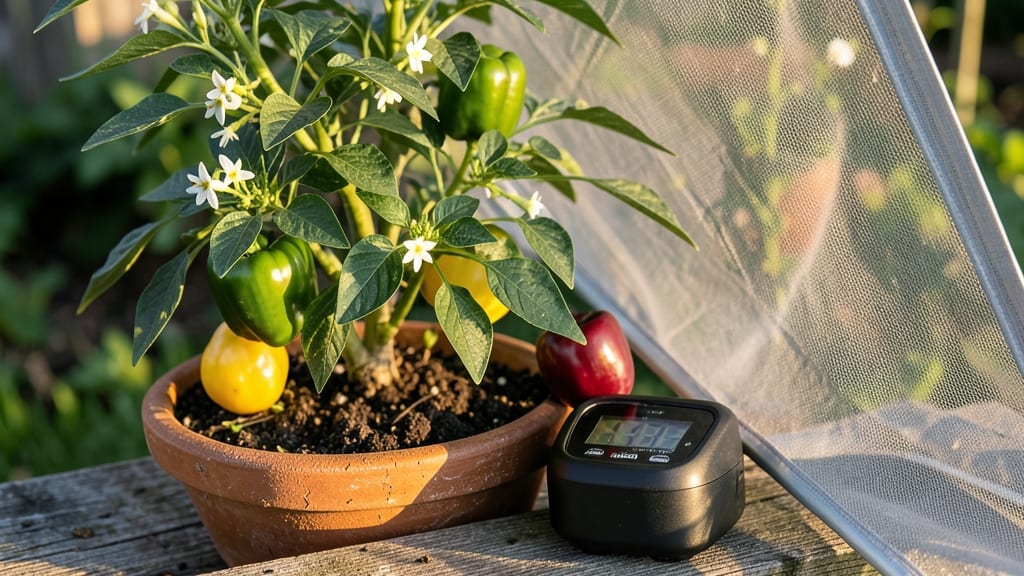
Pepper plants need 6 to 8 hours of direct sunlight daily to thrive and produce flavorful fruit 🌶️ — but the exact amount depends on the variety and your climate.
Too little light weakens stems, delays fruiting, and turns peppers bitter, while too much can scorch leaves and reduce yield. The trick is finding that sweet spot, especially for heat-sensitive types like habaneros or slow-maturing bell peppers.
In this guide, I’ll break down the sunlight needs for each pepper type, how to spot over- or under-exposure, and simple fixes like shade cloth or container placement to adjust for your garden’s conditions.
You’ll learn exactly how many hours your plants need, when to supplement with grow lights, and how regional heat waves can change the rules mid-season.


Sunlight requirements for pepper plants by variety: exact hours for optimal growth
Pepper plants thrive in full sun, but their exact sunlight needs vary dramatically between varieties. Bell peppers and jalapeños demand the most light, while habaneros and heirloom types can handle slightly less—if you get it wrong, you’ll see weak stems, poor fruit set, or even leaf burn.
The key is understanding how each variety’s photosynthesis efficiency changes from seedling to fruiting stage.
Most pepper plants need 6-8 hours of direct sunlight daily for optimal growth, but hotter climates or container gardening may require adjustments. Seedlings tolerate partial shade (4-6 hours) to prevent stress, while mature plants need full sun to develop sweet, flavorful fruits.
Regional climate also plays a role—desert areas may need afternoon shade, while cooler zones benefit from morning sun exposure.
Bell peppers are the most demanding, requiring 8+ hours of sun daily to produce sweet, thick-walled fruits. Without enough light, they’ll develop bitter flavors and poor color. My California Wonder plants, for example, bolted when I moved them under a tree for afternoon shade—even though they were getting 6 hours of morning sun.
Jalapeños and other hot peppers need slightly less light (7-8 hours), but they still struggle in shade. Habaneros, however, are more adaptable, thriving with 6-7 hours of bright light.
This makes them ideal for container gardening on patios or balconies where full sun isn’t always available. Just ensure they get morning light to kickstart growth.
For seedlings, I recommend starting them indoors under grow lights (14-16 hours/day) before transplanting. Once outdoors, they’ll tolerate partial shade (4-6 hours) to prevent stress, but transition them to full sun gradually over 1-2 weeks. Sudden exposure can cause sunburn on delicate leaves.
In hot climates (Zones 9-11), afternoon shade is crucial to prevent leaf scorch. Use 30-50% shade cloth during peak sun (12-3 PM) and monitor for wilting. In cooler zones (Zones 3-7), focus on morning sun exposure, as afternoon light can be too intense.
My Pacific Northwest jalapeños do best with south-facing windowsills or raised beds.
If you’re growing peppers in containers, choose sunny spots with 6+ hours of direct light and rotate pots weekly for even growth. Black plastic containers absorb heat, so add mulch to keep roots cool. For indoor gardening, supplement with LED grow lights (5,000-6,500K) for 12-14 hours daily.
Watch for signs of stress: yellowing leaves indicate too little light, while crispy edges mean over-exposure. Adjust shade gradually and water deeply during transitions. With the right sunlight balance, your peppers will reward you with bold flavors and high yields all season long.
🌶️
How to adjust sunlight for pepper plants in different climates: avoiding burn and bolting
Pepper plants thrive in full sun, but the exact approach varies dramatically depending on your climate. In desert regions like Arizona, intense midday sun can scorch leaves, while in cool maritime climates like the Pacific Northwest, cloud cover might leave your plants starved for light.
The key is adapting without sacrificing photosynthesis efficiency—which directly impacts fruit production.
Even urban gardeners with container setups face unique challenges. A balcony in Brooklyn might get partial sun for only 4 hours a day, while a backyard in Phoenix could see 10+ hours of brutal sunlight.
Without adjustments, you risk leaf burn, bolting (premature flowering), or stunted growth. Let’s break down climate-specific strategies to keep your peppers productive.
For hot/dry climates, start by providing drip irrigation to keep soil consistently moist—dry roots stress plants and make them more vulnerable to heat damage. Install shade cloth (30–50%) during peak afternoon hours (12 PM–4 PM) to block intense UV rays.
I’ve seen jalapeño plants in Tucson thrive with 50% shade cloth in July, producing 30% more peppers than unprotected plants.
In cool climates, focus on mulching with straw or wood chips to retain soil warmth. If your garden gets less than 6 hours of sun, supplement with LED grow lights (12–14 hours total light/day) during short-day seasons.
I’ve successfully grown bell peppers in Seattle using full-spectrum grow lights for 4 extra hours in winter, extending the harvest by 3 weeks.
Urban gardeners can maximize space by placing containers near south-facing walls or using reflective surfaces (like white walls or aluminum foil) to bounce extra light onto plants.
If you’re limited to partial sun, choose shade-tolerant varieties like ‘Carolina Wonder’ peppers, which handle 4–6 hours of sun better than most. Avoid overcrowding—peppers need airflow to prevent fungal issues from excess humidity.
Common mistakes that sabotage yields include overwatering in heat (which dilutes soil nutrients) and ignoring afternoon shade in desert climates. Always monitor leaf color: yellowing signals underwatering or nutrient deficiency, while brown crispy edges mean sunburn. Adjust gradually—sudden changes in light exposure can shock plants and trigger bolting.