
Plants
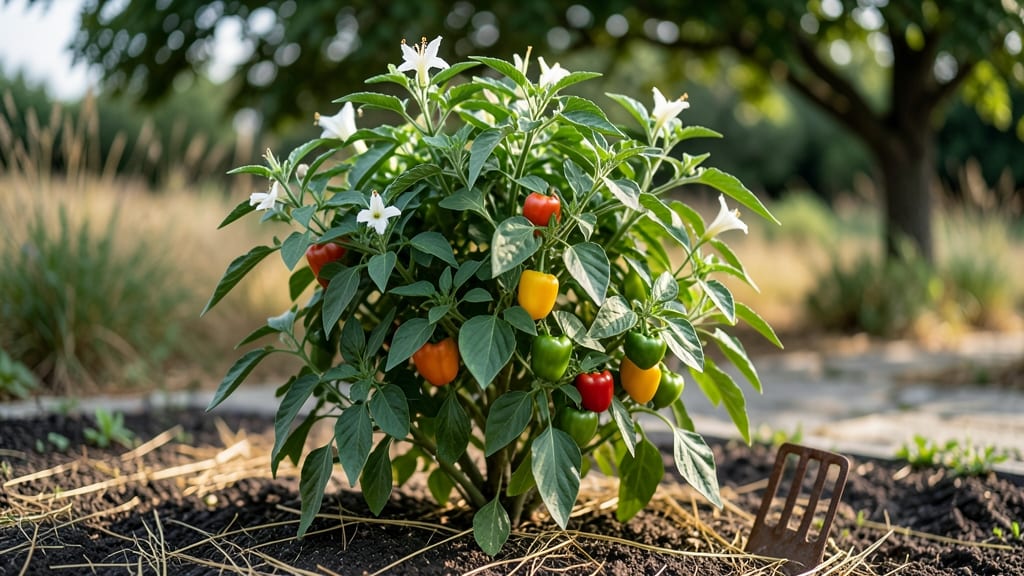
Hot pepper plants are not perennial in most climates—they die back after harvest when exposed to frost or cold temperatures below 40°F (4°C). However, in USDA Zones 10–12, they can overwinter outdoors with proper care, while gardeners in colder regions must treat them as annuals or save seeds for replanting.
Hot peppers originated in tropical regions, so their sensitivity to cold makes them behave as annuals in most areas. 🌱 The moment temperatures dip below 40°F (4°C), their cellular structure breaks down, causing irreversible damage.
Even in milder climates, they won't regrow naturally like true perennials such as asparagus or rhubarb—those plants have specialized underground structures to survive winter. Instead, peppers rely on human intervention to extend their lifespan through overwintering techniques or seed preservation.
What sets peppers apart from cold-hardy vegetables is their tropical heritage—most varieties simply can't tolerate frost, even briefly. Zone 10–12 gardeners have the advantage of mild winters, but even they need to protect plants from unexpected cold snaps.
For everyone else, saving seeds or moving plants indoors becomes essential to keep your favorite varieties alive year after year.
💡 In This Article
- Why Hot Peppers Die in Cold Weather: Science Behind Their Perennial Limits
- How to Overwinter Hot Peppers in Cold Climates: Step-by-Step Survival Guide
Why hot peppers die in cold weather: science behind their perennial limits
Hot peppers evolved in tropical climates where temperatures rarely drop below 60°F (15°C), making them fundamentally sensitive to cold. Their cellular membranes contain high levels of unsaturated fats that remain fluid only in warm conditions—when exposed to 40°F (4°C) or lower, these membranes stiffen and rupture, triggering cell death.
This process, called chilling injury, is irreversible and causes the plant's tissues to blacken and collapse, unlike true perennials like asparagus, which store energy in frost-resistant rhizomes.
The difference between peppers and cold-hardy vegetables lies in their biological adaptations. Plants like kale or Brussels sprouts produce antifreeze proteins that protect their cells during freezing, while peppers lack these mechanisms.
Even a light frost (32°F/0°C) can kill pepper plants within hours, whereas hardy greens can survive -10°F (-23°C) with minimal damage. The tropical heritage of peppers means their growth cycle is tied to warm seasons—once temperatures drop, their metabolic processes shut down permanently.
What most gardeners don't realize is that peppers' sensitivity extends beyond frost. Prolonged exposure to 50-55°F (10-13°C) for more than a week can stunt growth and reduce fruit production, even without visible damage.
This is why peppers grown in Zone 7-9 often struggle in fall—while they might survive light frosts with protection, their overall productivity declines compared to their tropical counterparts.
The key difference from true perennials is that peppers don't have dormant structures to regenerate; they're essentially annuals waiting for warm conditions to restart growth.
Comparing peppers to other nightshades highlights this vulnerability. Tomatoes, their close relatives, share similar tropical origins but can tolerate slightly cooler temperatures (45°F/7°C minimum). However, peppers' thinner leaves and more delicate stems make them particularly susceptible to cold stress.
When you see pepper plants wilting in 50°F (10°C) weather while tomatoes continue producing, you're witnessing this fundamental biological difference at work.
The science behind peppers' perennial limits also explains why seed-saving becomes crucial in colder climates. Unlike perennials that regrow from roots, peppers must rely on genetic continuity through seeds to preserve their traits year after year.
This is why gardeners in Zone 3-6 often treat peppers as annuals—they simply can't survive winter conditions without human intervention. The tropical adaptation that makes peppers thrive in summer gardens becomes their greatest limitation when autumn arrives.
Understanding this biological reality helps explain why peppers don't behave like true perennials. While you might see them regrow from the base in some cases, this is actually new growth from seeds that fell to the ground rather than true perennial regeneration.
The plant's entire structure is designed for warm-season productivity, not winter survival—making their annual classification in most climates a biological necessity rather than a gardening choice.