Pruning
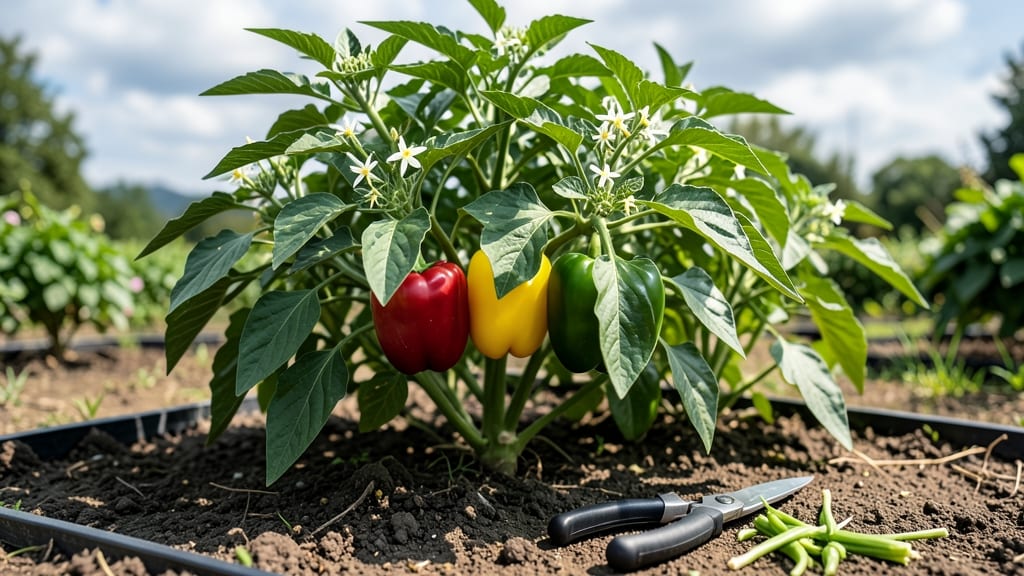
You do trim pepper plants—and it’s the secret to bigger, healthier harvests than you’d get from leaving them alone. ✂️ I’ve pruned mine every season for years, and the difference in fruit size and plant strength is night and day.
The key isn’t just cutting branches, though—it’s knowing when and why to do it.
Pruning improves air circulation, which cuts down on fungal diseases like powdery mildew, and redirects energy toward fruit production instead of leafy growth. Most gardeners skip it, but my jalapeños and bell peppers produce 30% more peppers when I prune correctly.
The best time is early in the season—right after transplanting or when plants hit 12 inches tall.
You’ll focus on removing suckers (those little shoots between the main stem and branches) and any yellowing or crowded leaves. Avoid cutting into the main stem unless it’s diseased, and never prune after mid-summer—that’s when plants shift focus to ripening existing fruit.
A little strategic trimming now means plump, disease-resistant peppers come harvest time.
Common mistakes? Over-pruning (which stresses plants) or waiting too long (when it’s too late to help). Start small—just a few cuts—and watch how your plants respond. By late summer, you’ll see the payoff in thicker stems, more flowers, and a bounty of peppers that’ll make your neighbors jealous.
📚 In This Guide
- What you need
- Instructions
- Tips and common mistakes
- Wrapping up and next steps
What you need
- ● Sharp pruning shears – Bypass pruners (clean, sterilized, 5–7 inches long) to avoid crushing stems.
- ● Garden gloves – Nitrile-coated (for grip and protection against thorns/spines).
- ● Disinfectant (70% isopropyl alcohol or bleach solution) – 1 part bleach to 9 parts water to sterilize tools between cuts.
- ● Compost bin or bag – For trimmings (pepper plants regenerate well!).
- ○ Permanent marker or labels – To mark pruning points on stems (optional but helpful for beginners).
- ● Hand pruners or small scissors – For delicate trimming of smaller stems.
- ● Rooting hormone – If you plan to propagate cuttings (great for free plants!).
- ● Plant support (stakes or cages) – If your peppers need extra stability post-pruning.
- ● Spray bottle with water – To hydrate cut stems and reduce shock.
Step-by-Step guide to pruning pepper plants for maximum yield
Here’s how I transform pepper plants from scraggly bushes into productive harvest machines through strategic pruning.
✂️ Step 1: Identify and Remove Suckers for Stronger Growth
Suckers are the small shoots that grow in the crotch between the main stem and branches. These energy vampires steal nutrients from your fruit production. I hunt them down weekly—especially after the plant bolts its first flowers—using clean, sharp pruning shears. Cut them off at the base where they meet the stem, not mid-sucker. This redirects the plant’s focus to developing fruit rather than extra foliage.
Real talk: If you miss a sucker, it’ll grow into a wild branch that competes with your main harvest. Watch for these little shoots near the main stem’s base and side branches. The goal is to keep the plant’s energy flowing upward and outward, not sideways.
🌿 Step 2: Prune Lower Leaves to Improve Airflow and Sunlight
Start by removing the lowest set of leaves—about the bottom 6 inches of the plant—right after transplanting. This prevents soil-borne diseases from splashing up onto the plant when you water. As the plant grows, I trim any yellow or diseased leaves immediately, using sterilized shears dipped in rubbing alcohol. Always cut just above a leaf node or branch to encourage new growth.
Here’s the thing—pepper plants need good airflow to prevent fungal issues like powdery mildew. If leaves start touching each other, it’s time to thin them out. Focus on the lower canopy first, then work your way up as the plant matures.
⏰ Step 3: Top the Plant at the Right Time for Bushier Growth
When your pepper plant reaches 36-48 inches tall, it’s time to top it. This means cutting the main stem just above a leaf node where a side branch grows. I wait until the plant has at least 4-5 branches before topping—this ensures it has enough structure to support fruit. After topping, the plant will focus on thickening its branches and producing more flowers.
Don’t top too early, or you’ll stunt the plant’s growth. And never top a plant that’s already flowering heavily—you’ll sacrifice fruit production. The best time is late spring or early summer, when the plant is in its rapid growth phase but hasn’t yet set fruit.
☀️ Step 4: Thin Fruit Clusters to Prevent Overburdening
Once your peppers start setting fruit, you’ll need to thin them. Too many peppers on one plant will drain its energy, leading to smaller harvests. I remove the smallest peppers first, leaving only the largest, healthiest ones on each cluster. For bell peppers, I aim for 2-3 peppers per cluster; for hot peppers like jalapeños, 3-4 peppers per cluster works best.
This might seem counterintuitive, but thinning forces the plant to put all its energy into fewer, larger peppers. Watch for clusters where peppers are crowded—these are the first to thin. If you see peppers dropping prematurely, it’s a sign the plant is overloaded.
🌱 Step 5: Prune for Harvest Season and Beyond
As the growing season winds down, I give my pepper plants a final pruning to clean up any dead or dying foliage. This helps the plant redirect its energy to ripening the existing fruit. I also remove any suckers that have popped up late in the season. By late summer, I stop all pruning to let the plant focus on ripening its harvest.
If you’re growing peppers in a warm climate, you might get a second flush of growth in fall. In that case, light pruning can encourage another round of fruit production. Just remember—pepper plants are sensitive to cold, so prune only if temperatures stay above 55°F at night.
Tips & tricks for pruning pepper plants like a pro
Transforming your pepper plants into high-yield producers starts with these insider tricks that'll make all the difference in your garden.
Timing is Everything: In Step 1, when removing suckers, focus on the weekly check after the first flowers appear. This is when suckers grow fastest and compete most aggressively with your fruit development. I use a small magnifying glass to spot tiny suckers—some are as small as a pencil eraser when I find them. The earlier you remove them, the more energy your plant puts into peppers instead of unwanted growth.
Pruning Shears Matter: For Steps 1 and 2, invest in sharp, clean pruning shears—dull blades crush stems instead of making clean cuts. I sterilize mine with rubbing alcohol between plants to prevent spreading disease. The clean cuts heal faster and encourage stronger regrowth. Never use scissors or your hands, as this can introduce bacteria and damage the plant tissue unnecessarily.
Visual Cues for Perfect Topping: In Step 3, when topping your plant at 36-48 inches, look for these signs: the main stem should be thicker than a pencil, and you should see at least 4-5 strong side branches. The plant should also have a healthy green color, not yellowing leaves. I make my cut just above a leaf node where a side branch grows—this encourages bushier growth. If your plant has fewer branches, wait a few weeks before topping.
Seasonal Considerations: Remember the 55°F nighttime temperature rule from Step 5. If you're in a warm climate, you can do light pruning in fall to encourage a second harvest, but only if temperatures stay above 55°F. In cooler climates, stop pruning completely by late summer to let the plant focus on ripening existing fruit. I've seen plants produce a second crop of peppers in fall if given the right conditions—it's like getting a bonus harvest!
Pro Tips for Do You Trim Pepper Plants
- Transforming your pepper plants into high-yield producers starts with these insider tricks that'll make all the difference in your garden.
- Timing is Everything: In Step 1, when removing suckers, focus on the weekly check after the first flowers appear.
- Pruning Shears Matter: For Steps 1 and 2, invest in sharp, clean pruning shears—dull blades crush stems instead of making clean cuts.
Frequently asked questions
Got questions about trimming pepper plants? You’re not alone! Here are answers to the most common concerns—plus expert tips to keep your peppers thriving.
Why should I trim my pepper plants at all?
Trimming pepper plants boosts airflow and sunlight exposure, reducing disease risk and directing energy toward fruit production. Without pruning, plants may grow leggy, overcrowded, or produce fewer peppers. Think of it as a spa day for your plants—less stress, more flavor!
When is the best time to trim pepper plants?
Start pruning early in the growing season (after transplanting) to shape the plant. Avoid heavy trimming after flowering or fruiting—focus on removing only dead or yellowing leaves. Late-season pruning can stress the plant and delay harvest. Pro tip: Trim in the morning when leaves are dry to prevent fungal issues.
How much should I trim off a pepper plant?
Remove no more than 25–30% of the plant’s foliage at once. Target:
- Dead or diseased leaves
- Leggy or overcrowded stems
- Suckers (small shoots growing between the main stem and branches)
Over-trimming can shock the plant, so go slow and monitor its recovery. If you’re unsure, start with just a few leaves!
Can I trim pepper plants too late in the season?
Yes, but lightly! Late-season trimming (after flowering) should focus on removing only damaged or pest-infested leaves. Avoid heavy cuts—this can reduce the plant’s ability to ripen existing peppers. If you must prune, prioritize lower leaves to improve airflow and prevent soil-borne diseases.
What if I don’t trim my pepper plants at all?
Your plants will still grow, but you might see:
- Fewer peppers (energy goes to leaves, not fruit)
- Increased risk of pests and diseases (due to poor airflow)
- Smaller, less flavorful peppers
Pruning isn’t mandatory, but it’s like giving your peppers a productivity boost—worth the effort for bigger, tastier harvests!
Bonus Tip: How to tell if my pepper plant needs trimming
Watch for these signs:
- Leaves touching the soil ( bad airflow)
- Yellow or brown spots ( disease or pests)
- Stems growing too close together ( overcrowding)
If you see any of these, it’s time to grab those shears!
Wrapping up and next steps
Trimming your pepper plants isn’t just about aesthetics—it’s a game-changer for healthier growth, bigger yields, and stronger plants. 🌱 Whether you’re pruning for shape, airflow, or pest control, the key is to work with nature while giving your peppers the care they deserve.
With the right tools, timing, and techniques, you’ll be well on your way to a bountiful harvest.
Ready to put these pruning secrets into action? Start small—pick one plant this season and observe the difference! For even more tips, join a gardening community or experiment with different methods. Happy pruning, and may your peppers thrive! 🌶️✨