Plants
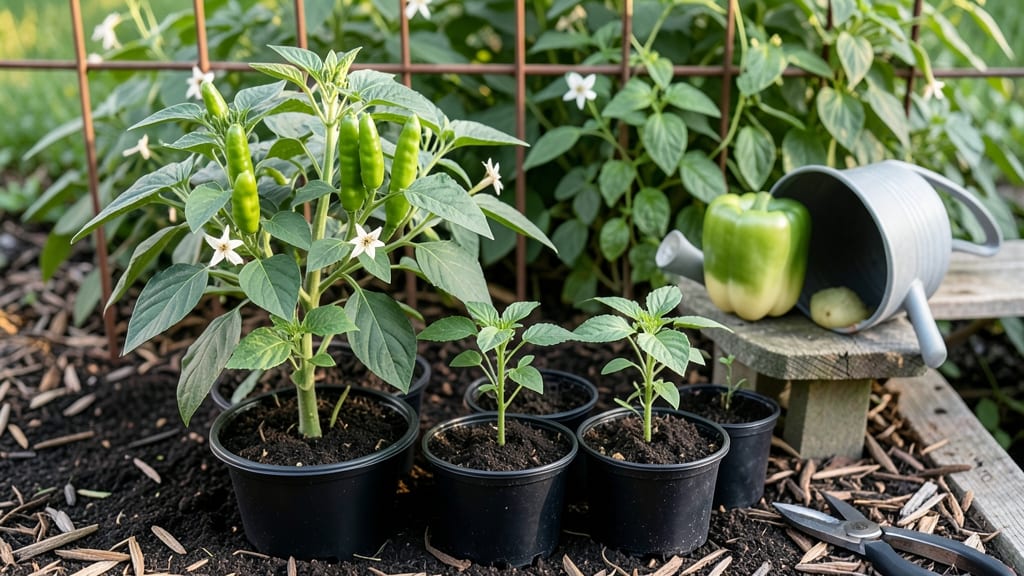
You can plant jalapeños next to bell peppers safely, as they share similar growing needs and complement each other's pest resistance. Just watch for cross-pollination if saving seeds for heirloom varieties.
Both varieties thrive in the same well-draining soil and full sun conditions, making them ideal neighbors in your garden. 🌱 Jalapeños actually help deter pests like aphids that target bell peppers, creating a natural defense system.
The key is proper spacing—give each plant at least 18 inches of room to prevent competition for nutrients, which could reduce yields. For seed-saving purposes, keep different pepper varieties separated by at least 10 feet to avoid accidental cross-pollination.
This pairing works particularly well in container gardens or raised beds, where you can control spacing more precisely. I've found that planting them together also maximizes your harvest space while creating a visually appealing, uniform crop display.
Just be mindful of watering needs—both peppers prefer consistent moisture but can suffer from overwatering in heavy clay soils.
💡 In This Article
- Compatibility Factors for Jalapeños and Bell Peppers
- Optimizing Yields When Planting Peppers Together
Compatibility factors for jalapeños and bell peppers
Jalapeños and bell peppers share nearly identical growing requirements, making them perfect neighbors in your garden. Both thrive in well-draining soil with a pH between 6.0 and 7.5, where they can access the nutrients they need without waterlogging.
Their roots prefer temperatures between 65°F and 90°F, and they both demand at least 6-8 hours of direct sunlight daily to produce their signature peppers. This shared environmental sweet spot means you can plant them side by side without worrying about one outcompeting the other for basic resources.
The real magic happens in their pest resistance synergy. Jalapeños naturally repel aphids, a common pest for bell peppers, thanks to their strong scent and volatile oils.
When planted together, the jalapeños act like a living shield, reducing the need for chemical interventions. 🌱 Additionally, both varieties are relatively resistant to common soil-borne diseases like verticillium wilt, which means they won’t spread issues to each other.
The only exception is bacterial spot, which can affect both—but proper spacing and good air circulation can minimize this risk.
Cross-pollination is the biggest consideration when planting these varieties together. While it won’t harm the current season’s harvest, it can create unpredictable flavors and sizes if you’re saving seeds. Jalapeños and bell peppers are both in the Capsicum annuum family, meaning their pollen can easily mix.
For seed-saving purposes, keep them at least 10 feet apart or use physical barriers like mesh bags. If you’re growing for immediate consumption, though, cross-pollination is rarely a concern—just enjoy the convenience of having both varieties in the same space!
Nutrient competition is another factor to monitor. Both peppers are heavy feeders, especially during fruiting season, so they’ll need regular applications of balanced fertilizer (10-10-10) or compost. Without proper nutrition, you might see smaller peppers or delayed maturity.
I’ve found that adding a layer of mulch around the base helps retain moisture and slowly releases nutrients, giving both plants the boost they need without overcrowding their root zones.
One sensory detail that often surprises gardeners is how the presence of jalapeños can actually enhance the flavor of nearby bell peppers. The strong aroma of jalapeños seems to stimulate the bell peppers’ natural sweetness, making them taste even more vibrant.
This isn’t just anecdotal—many home gardeners report richer flavors when these two grow together, likely due to shared microbial activity in the soil.
For container gardeners, this pairing is especially advantageous. Both peppers grow well in 5-gallon pots or larger, and their complementary heights (jalapeños typically stay shorter than bell peppers) make efficient use of vertical space.
Just ensure each plant has its own pot or a large enough container to prevent root competition, which can stunt growth and reduce yields.