
Planting
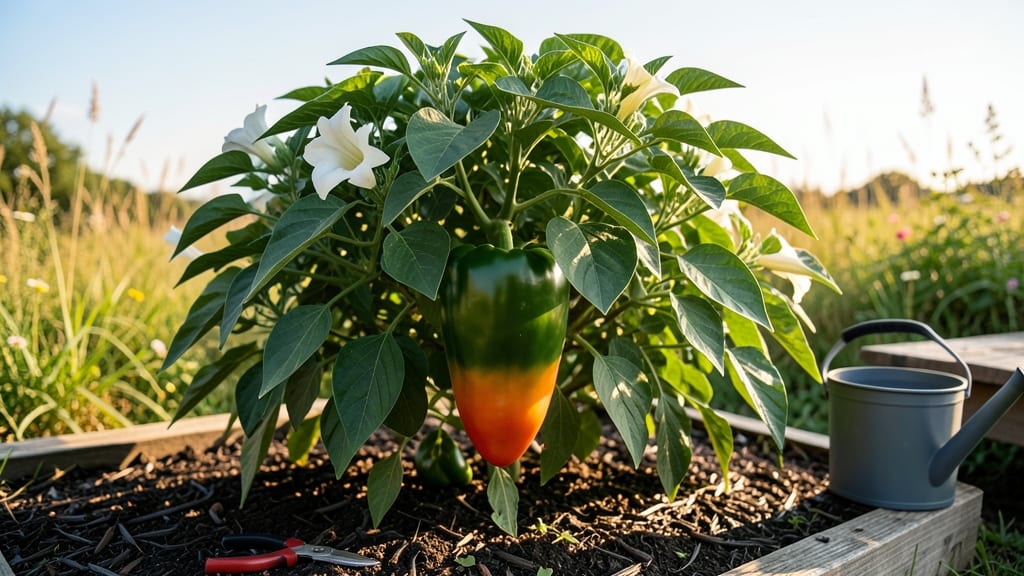
Growing Chinese giant peppers means harvesting fruits that weigh over a pound each—if you nail the heat zone and soil mix. 🌶️ These plants thrive in zones 9-11 but can be grown as annuals in cooler climates with proper winter protection.
The key isn't just warmth; it's matching their tropical roots to your growing conditions. Start with well-draining soil rich in organic matter (think 30% compost) and a location that gets 6+ hours of direct sun daily.
These peppers need space—plant them 18-24 inches apart—and consider a sturdy trellis for varieties that top 3 feet tall. The first harvest comes 90-120 days after planting, but only if you keep soil consistently moist (not soggy).
What you end up with are peppers that stay productive for months, with each fruit packing serious heat and sweetness. The plants themselves become lush, bushy shrubs that double as ornamental centerpieces. Prune regularly to encourage branching and remove any yellowing leaves immediately.
Works for both garden beds and large containers (use 20-gallon pots minimum). Here's how to keep them thriving through your growing season!
📚 In This Guide
- What you need
- Instructions
- Tips and common mistakes
- Wrapping up and next steps
What you need
- ● Chinese giant pepper seeds or seedlings: Choose heat-tolerant varieties like Capsicum annuum or Capsicum frutescens (e.g., 'Dragon’s Breath' or 'Habanero'). Start with 3-5 plants for a balanced harvest.
- ● Well-draining potting mix: A blend of 60% peat moss or coco coir, 30% perlite or vermiculite, and 10% compost (sterilized to prevent disease). 5-10 gallons per plant.
- ● Containers or garden bed: Containers: 5-gallon pots with drainage holes (minimum 12-inch diameter). Opt for fabric grow bags for better root aeration.
- ● Garden bed: Full sun exposure (6-8+ hours/day) with loose, fertile soil (pH 6.0-7.0). Amend clay soil with compost or sand.
- ● Fertilizer: Balanced starter fertilizer: 10-10-10 NPK (1 tbsp per gallon of water) for seedlings.
- ● Bloom booster: 5-10-10 or 7-9-5 NPK (high in phosphorus) once flowers appear.
- ● Watering can or hose with gentle nozzle: Avoid wetting leaves to prevent fungal issues.
- ● Pruning shears: Sharp, sterilized shears for trimming (disinfect with rubbing alcohol between cuts).
- ○ Support stakes or cages: 6-foot bamboo stakes or tomato cages (optional but recommended for heavy pepper clusters).
- ● Soil pH test kit: Ensure your mix is in the ideal range (💡 Pro tip: Adjust with lime to raise pH or sulfur to lower it).
- ● Heat mat or greenhouse: For seedlings in USDA Zones 8 and below (maintain 75-85°F soil temp).
- ● Mulch: Straw or black plastic to retain moisture and regulate soil temp.
- ● Pest control: Neem oil or insecticidal soap for aphids/spider mites.
- ● Yellow sticky traps to monitor whiteflies.
- ○ Growth regulator (optional): Paclobutrazol (e.g., Bonzi) to control overgrowth in high-heat zones.
- ● Harvesting gloves: Nitrile gloves (the peppers pack a serious kick!).
Instructions for growing Chinese giant peppers in your climate zone
Here’s how to give these heat-loving peppers the perfect conditions—whether you’re in a sweltering zone 10 or a cooler zone 7.
🌱 Step 1: Start Seeds Indoors 8-10 Weeks Before Last Frost
Chinese giant peppers need a long, warm growing season—so begin indoors under grow lights (not just a sunny windowsill) to ensure strong, healthy starts. Fill 2-3 inch deep pots with a sterile seed-starting mix (not garden soil) and sow seeds ¼ inch deep. Keep the soil consistently moist but never soggy; these seeds germinate best at 75-85°F.
Place pots under a humidity dome or cover with plastic wrap until germination, which typically takes 7-14 days. Once sprouts appear, remove the cover immediately to prevent damping-off. You’ll know they’re ready to harden off when seedlings have 3-4 true leaves—usually around 6-8 weeks after sowing.
☀️ Step 2: Transplant After All Frost Risk Has Passed
Chinese giant peppers cannot tolerate cold, so wait until soil temperatures reach at least 65°F before planting outdoors. Choose a full-sun location (6+ hours of direct light daily) with well-draining soil—these peppers wilt quickly in soggy conditions. Space plants 18-24 inches apart in rows 24-30 inches apart to allow airflow and prevent disease.
Dig holes slightly deeper than the root ball to encourage strong root development. Water deeply at planting to settle the soil, then mulch with 2-3 inches of organic mulch (like straw or shredded leaves) to retain moisture and regulate soil temperature. Avoid fertilizing at this stage—wait until flowers appear to feed.
💧 Step 3: Water Deeply and Consistently During Fruit Set
Once flowers form, water deeply 1-2 times per week, aiming for 1 inch of water per week. Chinese giant peppers are drought-sensitive during fruiting—they’ll drop blossoms if stressed. Water at the base of the plant in the early morning to reduce evaporation and fungal risks. You’ll see thick, waxy peppers forming within 60-90 days after transplanting.
To prevent cracking (a common issue with fast-growing varieties), keep soil evenly moist but not waterlogged. A drip irrigation system works best—it delivers water slowly at the roots without wetting the leaves. If your peppers start splitting, reduce watering slightly and harvest promptly.
✂️ Step 4: Prune and Support for Maximum Yield
Pinch off the first few flowers that appear to encourage bushier growth and larger peppers. Once the plant is established, prune suctioners (shoots growing from the stem) to redirect energy to fruit production. Use cage supports or stakes to keep plants upright—Chinese giant peppers can grow 3-4 feet tall and heavy with fruit.
Harvest peppers when they reach 6-8 inches long and develop their signature thick, glossy skin. Use pruning shears to cut stems cleanly—never twist or pull, which can damage the plant. The more you harvest, the more the plant produces. Store peppers in a cool, dry place (50-60°F) for up to 2 weeks or freeze for long-term use.
🌿 Step 5: Overwintering for Year-Round Harvests
In zones 8-10, Chinese giant peppers thrive year-round. In cooler zones (7 or below), dig up plants before the first frost, trim foliage, and pot them in 5-gallon containers. Move indoors near a south-facing window or under grow lights (12+ hours daily). Reduce watering slightly in winter but keep soil lightly moist.
If you’re in a zone 10+, mulch heavily around the base and protect from wind. These peppers can produce lightly even in winter with supplemental light. In spring, return potted plants to the garden after the last frost. With proper care, you’ll enjoy continuous harvests for 10+ months.
Tips & tricks for thriving Chinese giant pepper plants
Here's what nobody tells you about growing these heat-loving giants—details that make all the difference between a decent harvest and a jaw-dropping one.
Germination Temperature: Those seeds need warmth to wake up—75-85°F is non-negotiable. I use a seedling heat mat under my grow lights to maintain consistent temps. If your kitchen stays cooler, consider a small greenhouse or heated propagation station. Remember, uneven heat can cause patchy germination, so keep those pots grouped together where the warm air circulates evenly.
Transplanting Timing: The 65°F soil temperature threshold isn't just arbitrary—it's when these tropical plants finally feel at home. I test soil temp with a simple thermometer at the depth of my planting hole. If you're in zone 7, this often means waiting until late May or early June. Don't rush! Cold soil will shock your seedlings and stunt their growth for weeks.
Watering Strategy: The 1-inch-per-week guideline works, but timing matters more than you'd think. I water mine between 6-8 AM when evaporation is lowest. For the first 30 days after transplanting, I check soil moisture daily by sticking my finger 2 inches deep—if it's dry, water thoroughly. This prevents the blossom drop that frustrates so many gardeners. And never water the leaves—always direct the stream at the base.
Overwintering Hack: When moving plants indoors for winter, I give them a two-week "acclimation period" before full indoor exposure. Place them in a sheltered outdoor spot during the day and bring them in at night for several days first. This gradual transition prevents shock. Also, rotate your containers weekly so all sides get equal light—your peppers will thank you with better yields next season.
Pro Tips for Chinese Giant Pepper Plant
- Here's what nobody tells you about growing these heat-loving giants—details that make all the difference between a de...
- Germination Temperature: Those seeds need warmth to wake up—75-85°F is non-negotiable. I use a seedling heat mat unde...
- Transplanting Timing: The 65°F soil temperature threshold isn't just arbitrary—it's when these tropical plants finall...
Frequently asked questions
Got questions about growing your Chinese giant pepper plant? You’re not alone! Here are answers to the most common queries—from planting to harvest—to help you cultivate fiery success.
What’s the best heat zone for Chinese giant peppers?
Chinese giant peppers thrive in USDA Zones 9-11 year-round, but they’re also frost-sensitive. In cooler zones (7-8), grow them in containers and move them indoors or to a greenhouse during winter. For zones 5-6, treat them as annuals and plant after the last frost—just like tomatoes!
How long does it take for Chinese giant peppers to produce fruit?
Patience is key! From seed, expect 80–120 days to harvest, depending on your climate. If you start with transplants, you’ll see peppers in 60–90 days. Prune early for bushier growth, but avoid heavy pruning late in the season—you want those energy reserves for fruit production.
Why aren’t my Chinese giant peppers fruiting?
Common culprits include lack of sunlight (they need 6+ hours of direct sun dailynutrient deficiencies (feed with high-potassium fertilizer), or overwatering (soil should stay evenly moist but not soggy). Check for pests like aphids or spider mites, too—they can stress plants. If your plant is too leggy, it’s likely prioritizing foliage over fruit.
Can I grow Chinese giant peppers in containers?
They’re perfect for containers—just use a 5-gallon pot or larger with drainage holes. Choose a well-draining potting mix (add perlite or compost for fluffiness) and place the pot in full sun. Container-grown peppers may need more frequent watering and fertilizer (every 2–3 weeks). Bonus: You can move them to optimize sunlight or protect from frost!
What’s the difference between Chinese giant peppers and other hot peppers?
Chinese giant peppers (like ‘Dragon’s Breath’ or ‘Mala’) are huge (up to 6+ inches long!) and sweet-to-medium heat (500–2,500 SHU), making them great for stuffing, pickling, or fresh eating. Unlike habaneros (tiny, ultra-spicy) or jalapeños (smaller, crunchy), giants have thick flesh and a milder kick—ideal for beginners who want bold flavor without the burn.
Pro Tip: Pollination matters!
Chinese giant peppers are self-pollinating, but a gentle hand shake of the plant or a soft brush can boost fruit set. If you’re growing indoors, a small fan on low can help stir air and encourage pollinators (like bees) if they visit.
Wrapping up and next steps
Growing a Chinese Giant Pepper Plant is a rewarding journey that blends heat, patience, and a little green-thumb magic! 🌶️ With the right heat zone placement, soil care, and sunlight, you’ll unlock a bountiful harvest of fiery, flavorful peppers year-round.
Whether you’re a seasoned gardener or just starting, this guide gives you the confidence to nurture your plant from seed to spice.
Ready to take the next step? Start with a single plant—experiment with varieties, track your heat zone’s success, and soon, you’ll be sharing your homegrown giant peppers with pride! 🌱✨