
Vegetables
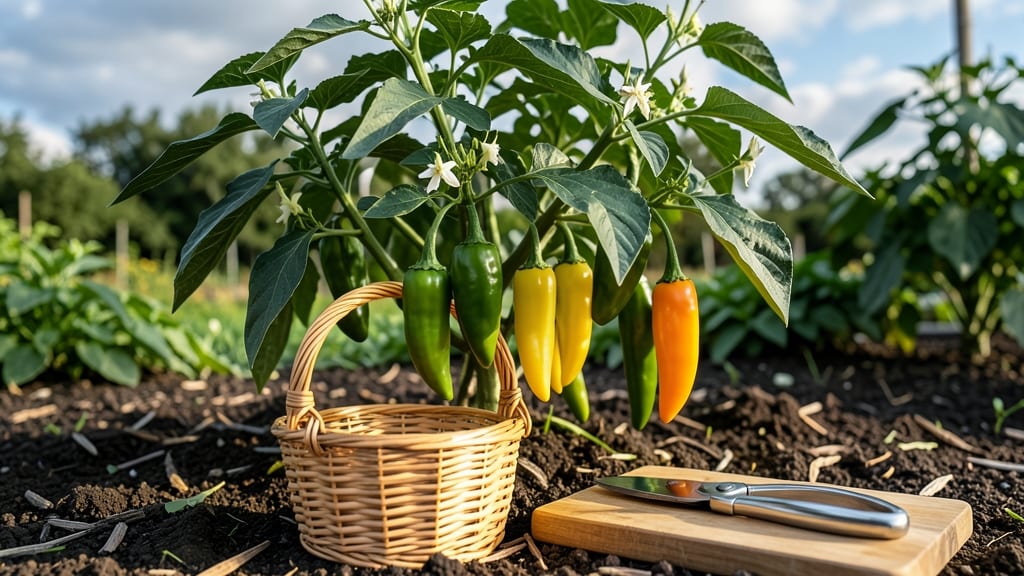
The banana pepper's Scoville heat rating ranges between 0–50 SHU, placing it among the gentlest peppers available. This mildness gives them a sweet, fruity profile that's less intense than bell peppers while still offering a faint, pleasant warmth.
This low heat level makes banana peppers incredibly versatile in the kitchen. 🌶️ Unlike hotter peppers that can dominate dishes, these mild varieties add subtle depth without overpowering flavors. Their capsaicin content is minimal, which is why they're often recommended for beginners or those sensitive to spice.
What's interesting is how their heat can vary slightly depending on ripeness—younger peppers tend to be sweeter, while slightly riper ones develop that signature gentle kick.
Beyond cooking, this mild heat makes them perfect for pickling or stuffing, where you want flavor without the burn.
Many gardeners also appreciate how easy they are to grow—they thrive in warm climates and produce abundant peppers that stay consistently mild, making them a reliable choice for home cooks and chefs alike.
💡 In This Article
- How Banana Peppers Compare on the Scoville Scale
- Best Uses for Banana Peppers in Gardening and Cooking
How banana peppers compare on the Scoville scale
Banana peppers sit at the very bottom of the Scoville scale, registering between 0–50 SHU, which is nearly indistinguishable from sweet bell peppers (0 SHU).
The key difference lies in their capsaicin content—while bell peppers contain almost none, banana peppers produce trace amounts (0.000005% by weight) that create that signature subtle warmth. This places them closer to the poblano (1,000–2,000 SHU) than to hotter peppers like jalapeños (2,500–8,000 SHU).
The warmth is so faint that most people mistake it for natural sweetness rather than heat.
The genetic makeup of banana peppers plays a huge role in their mildness.
They're a hybrid variety developed to combine the sweetness of bell peppers with just a hint of heat, achieved through selective breeding that reduces capsaicin production. 🌱 Unlike hotter peppers where capsaicin accumulates in the membranes between seeds and flesh, banana peppers distribute what little they have evenly throughout—meaning even the seeds and ribs are barely spicy.
This makes them uniquely safe for raw consumption, unlike peppers with concentrated capsaicin hotspots.
What's fascinating is how their heat develops as they ripen. Green banana peppers register closer to 0 SHU, while yellow or red varieties can reach up to 50 SHU—still mild, but with a more pronounced fruity depth.
This color change isn't just cosmetic; it's a biological process where sugars convert and capsaicin production peaks slightly before stabilizing.
The difference between green and red isn't dramatic, but it's enough to let you tailor dishes—use green for raw applications where you want pure sweetness, or red when you crave that barely-there warmth.
For perspective, consider this comparison: a single jalapeño contains about 2,500 SHU of heat, while you'd need to eat 50 banana peppers to match that level. The math gets even more extreme with hotter peppers—one habanero (100,000–350,000 SHU) equals the heat of 2,000+ banana peppers.
This extreme difference explains why banana peppers are often called "the pepper for people who hate spice"—they deliver just enough intrigue without the burn.
Their low capsaicin content also means they lack the chemical compounds that cause the lingering mouth-numbing sensation of hotter peppers. This makes them ideal for dishes where you want to preserve texture and flavor clarity, like stuffed peppers or fresh salsas.
The absence of capsaicin's pungent aroma also means they won't overpower delicate ingredients—unlike, say, a serrano (10,000–23,000 SHU) which would dominate a creamy sauce.
Interestingly, the Scoville scale itself has limitations when measuring peppers this mild. Traditional testing involves human tasters diluting pepper extracts until the heat is undetectable, but with banana peppers, the process often hits the scale's 0 SHU floor before any meaningful measurement can occur.
This is why many modern analyses use HPLC (High-Performance Liquid Chromatography) to measure capsaicin content directly—revealing those trace amounts that define banana peppers' unique character.
If you're curious about pushing boundaries, consider banana pepper hybrids like the Shishito (0–100 SHU) which sometimes gets confused with banana peppers. While both are mild, Shishitos have a more grassy note and slightly higher heat potential.
The takeaway? Banana peppers offer the perfect balance of sweetness and warmth—so mild they're practically foolproof, yet just spicy enough to keep things interesting. 🌶️