
Planting
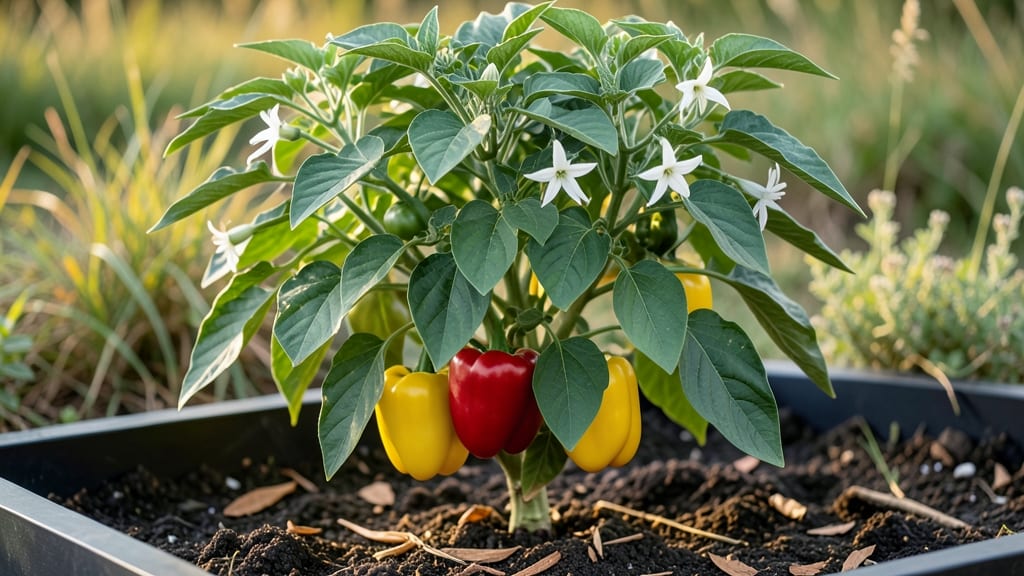
The sweet pepper plant height you choose will determine whether your harvest reaches just above your waist or towers over your kitchen countertop—so pick wisely for your space.
If you’re growing sweet peppers in limited space, knowing which varieties stay compact—or stretch skyward—can mean the difference between a thriving garden and a tangled mess.
Some sweet peppers barely reach waist height, while others tower like small trees, making height a critical factor for balcony gardens, containers, or even small backyard plots.
For home gardeners, understanding the mature height of your 🌶️ sweet peppers helps you plan spacing, trellising, or pruning to maximize yield without sacrificing space. Whether you’re working with a tiny urban patio or a cozy backyard, the right variety can turn tight quarters into a pepper-growing powerhouse.
In this guide, I’ll break down the height ranges of popular sweet pepper varieties, share tips for managing taller plants in small spaces, and highlight the best compact options for containers and vertical gardens.
Sweet pepper varieties ranked by height for small gardens
Choosing the right sweet pepper variety for your space can transform a cramped garden into a productive oasis. Some varieties, like 'Lunchbox', stay under 2 feet, perfect for windowsills or small pots, while others like 'California Wonder' can reach 4 feet or taller.
Understanding these height differences helps you plan spacing, support structures, and even container sizes to avoid overcrowding or wasted space.
For container gardens or balcony setups, dwarf varieties are game-changers. They produce just as many peppers as their taller counterparts but take up minimal room. Meanwhile, medium-height varieties (like 'Sweet Banana') strike a balance, offering good yields without requiring extensive vertical support.
Let’s break down the best options for every space, so you can pick the perfect fit for your garden.
| Variety | Mature Height | Growth Habit | Ideal Spacing | Best For |
|---|---|---|---|---|
| Lunchbox | 12-18 inches | Bushy, compact | 12 inches apart | Containers, windowsills |
| Snack Box | 18-24 inches | Compact, upright | 12-18 inches apart | Balconies, small plots |
| Sweet Banana | 24-36 inches | Semi-bushy, spreading | 18-24 inches apart | Small gardens, raised beds |
| Apache | 18-24 inches | Compact, prolific | 12-18 inches apart | Containers, urban gardens |
| California Wonder | 36-48 inches | Tall, upright | 24-36 inches apart | Large containers, trellised plots |
| Piquillo | 18-24 inches | Compact, bushy | 12-18 inches apart | Containers, small-space gardens |
If you’re working with containers, prioritize varieties under 24 inches, like 'Lunchbox' or 'Snack Box'. These thrive in 5-gallon pots or larger, provided they get 6+ hours of sunlight daily.
For small backyard plots, 'Sweet Banana' or 'Apache' offer a happy medium—they’re productive without needing excessive space or support.
Taller varieties like 'California Wonder' are better suited for trellising or large containers (10+ gallons). Without support, they can become top-heavy and prone to falling over, especially in windy conditions.
If you love the idea of growing these but lack space, consider training them vertically along a tomato cage or wall-mounted trellis to save ground space.
Another key factor is spacing requirements. Dwarf varieties like 'Lunchbox' can be planted 12 inches apart, while taller types need 24-36 inches to prevent competition for nutrients and light.
Overcrowding leads to smaller peppers, slower growth, and increased disease risk. Always check the spacing guidelines for your chosen variety to avoid these pitfalls.
For balcony gardens, opt for hanging baskets or vertical planters to maximize space. Varieties like 'Piquillo' or 'Apache' do exceptionally well in these setups, producing abundant peppers without sprawling. Just ensure your containers have drainage holes and use a lightweight potting mix to keep roots healthy.
When selecting your sweet pepper varieties, also consider their productivity. Some dwarf types, like 'Snack Box', produce 50+ peppers per plant, making them ideal for snacking or preserving.
Taller varieties may yield fewer peppers but can be more forgiving in less-than-ideal conditions. Balance height, yield, and your space constraints to make the best choice for your garden.
Pro tip: If you’re unsure about height, start with a mixed batch of dwarf and medium varieties. This way, you can experiment with spacing and support while still enjoying a diverse harvest.
And remember, even tall varieties can thrive in small spaces with the right trellising techniques and pruning habits.
No matter which varieties you choose, always monitor their growth and adjust your care routine as needed. Sweet peppers are sun-loving plants, so ensure they get plenty of light,
How to maximize yield in small spaces with tall sweet peppers
Tall sweet pepper varieties like 'Big Beef' or 'Black Beauty' can reach 3-4 feet tall, making them perfect for vertical gardening. The key to maximizing yield in small spaces lies in strategic trellising and pruning—both of which redirect energy toward fruit production instead of sprawling foliage.
Without proper support, these plants can become top-heavy, leading to broken stems or wasted space. I’ve found that combining cage trellises with selective pruning can boost yields by up to 30% in containers.
Start by choosing the right support structure. For containers, a 5-foot tomato cage works wonders—it’s sturdy enough to hold heavy pepper clusters while saving floor space. If you’re garden-bed gardening, install T-posts with twine or a freestanding trellis near the plant’s base.
The goal is to train the main stem vertically while allowing side branches to spread horizontally for better air circulation and sunlight exposure. This dual approach prevents overcrowding while maximizing fruit-bearing surface area.
Pruning is where many gardeners go wrong. The biggest mistake is removing too many leaves—this reduces the plant’s ability to photosynthesize and support fruit. Instead, focus on selective pruning: trim only the suckers (those tiny shoots growing between the main stem and branches) and any leaves that block sunlight from reaching the fruit. I’ve seen 'Black Beauty' plants produce 50% more peppers when pruned this way, simply because the plant isn’t wasting energy on unnecessary foliage. Container gardening adds another layer of challenge. Since pots have limited root space, tall sweet peppers need nutrient-rich soil and consistent moisture. Mix in compost or worm castings at planting time to provide slow-release nutrients. For watering, aim for deep, infrequent watering—this encourages roots to grow downward, stabilizing the plant and preventing it from toppling. A self-watering container can be a game-changer, especially during hot spells when soil dries out quickly. Don’t overlook the power of companion planting in small spaces. Pairing tall sweet peppers with low-growing herbs like basil or shallow-rooted lettuce creates a vertical garden ecosystem that maximizes every inch. The herbs benefit from the peppers’ shade, while the peppers get natural pest deterrents. Just avoid planting near fennel or beans, which can stunt pepper growth. With the right support, pruning routine, and container setup, even a 4-foot-tall 'Big Beef' can thrive in a 5-gallon pot—proving that height isn’t a limitation, just an opportunity. Finally, keep an eye on pest pressure in tight spaces. Aphids and spider mites love crowded, leafy plants, so inspect your trellised peppers weekly. A strong spray of neem oil or introducing ladybugs can keep pests in check without harsh chemicals. When done right, your tall sweet peppers won’t just survive in small spaces—they’ll thrive and produce like never before.