
Vegetables
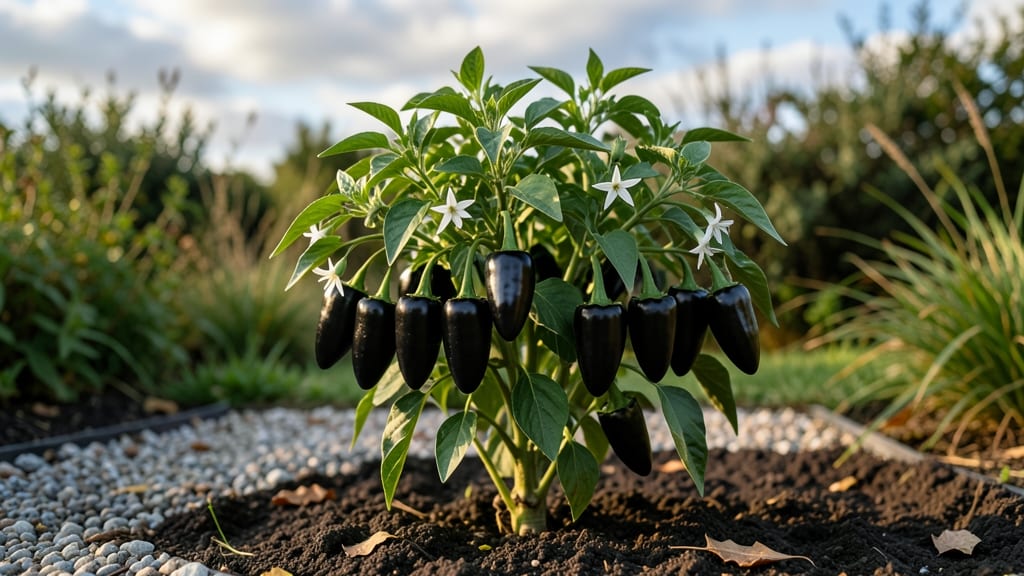
Growing ornamental pepper Black transforms your garden into a living spice rack with year-round drama. 🌿 These striking plants deliver glossy foliage, bold black fruits, and fiery color shifts—all while thriving in containers or garden beds.
The secret lies in mimicking their tropical roots: warm soil, bright light, and consistent moisture. Start with rich, well-draining soil (pH 6.0-6.8) and plant after your last frost when nighttime temps stay above 55°F.
Place them in full sun (6+ hours daily) and water at the soil line to prevent rot. Feed lightly with balanced fertilizer every 4-6 weeks, and pinch back leggy stems early to encourage bushier growth.
Harvest fruits when they turn black for the most dramatic display, and bring pots indoors before 40°F to extend their season.
📚 In This Guide
- What you need
- Instructions
- Tips and common mistakes
- Wrapping up and next steps
What you need
- ● Seeds or seedlings: 1–3 Black Pearl ornamental pepper plants (available at nurseries or online seed retailers).
- ● Containers or garden bed: For containers: 5–10-inch pots with drainage holes (3–5 plants per container for fuller growth).
- ● For garden beds: Well-draining soil in a sunny spot (6+ hours of sunlight daily).
- ● Potting mix: 1 bag of high-quality, well-draining cactus/succulent mix (or amend garden soil with perlite/vermiculite for aeration).
- ● Fertilizer: Balanced, water-soluble fertilizer (e.g., 10-10-10) or organic options like compost or worm castings.
- ● Hand trowel or small shovel (for transplanting).
- ● Spray bottle (for gentle watering of seedlings).
- ● Pruning shears (to shape plants and encourage bushiness).
- ○ Grow lights (optional, for indoor growing or early starts).
- ● Mulch or pebbles (to retain moisture and add aesthetics).
- ● Support stakes or cages (if plants grow tall in your climate).
Step-by-step guide to growing ornamental pepper 'black'
This vibrant plant thrives with minimal fuss—here's how to coax its striking foliage and bold fruits.
🌱 Step 1: Start Seeds Indoors 8-10 Weeks Before Last Frost
Fill 2-3 inch deep seed trays with sterile seed-starting mix (never garden soil—it's too dense). Plant 2 seeds per cell at a depth of ¼ inch, pressing gently but not compacting. I like to use a toothpick to make small holes first—it keeps seeds at the perfect depth.
Cover lightly with additional mix and mist the surface until evenly moist. Place trays in a warm spot (70-75°F) with bright, indirect light. Germination takes 10-14 days, so be patient—you'll see tiny sprouts push through the soil when they're ready. Keep the mix consistently moist but never soggy during this time.
☀️ Step 2: Provide Full Sun and Gradual Hardening
Once seedlings have 2-3 sets of true leaves, move them to a south-facing window or under grow lights for 14-16 hours daily. Ornamental peppers need plenty of light to develop their signature deep purple-black foliage. You'll notice leaves turning pale or stretching? That's a sign they need more light—adjust immediately.
Two weeks before transplanting, start hardening off seedlings by placing them outside in partial shade for 1-2 hours daily. Gradually increase exposure over 7-10 days until they can handle full sun. This toughens them up and prevents shock when they go into the garden. Watch for wilting—they're telling you to slow down.
🪴 Step 3: Transplant After All Frost Risk Has Passed
Choose a location with full sun (6+ hours daily) and well-draining soil. Dig holes twice as wide as the root ball but only as deep. Amend the soil with compost if your garden is heavy clay—ornamental peppers hate soggy roots. Space plants 18-24 inches apart to allow for their bushy growth.
Remove seedlings carefully from their trays, keeping the root ball intact. Place each plant in its hole, then fill with soil, pressing gently to eliminate air pockets. Water deeply right after planting—this helps settle the soil and encourages root growth. You'll see new leaves emerging within 7-10 days as a sign they're settling in.
💧 Step 4: Water and Fertilize for Vibrant Growth
Water at the base of the plant 1-2 inches deep whenever the top inch of soil feels dry. Ornamental peppers are drought-tolerant once established, but consistent moisture during flowering and fruiting keeps the foliage rich and dark. Avoid wetting leaves—this can cause fungal issues, especially in humid climates.
Feed with a balanced fertilizer (10-10-10) every 4-6 weeks during the growing season. You'll notice slower growth or pale leaves? That's a sign they need nutrients. Stop fertilizing in late summer to encourage the plant to focus on developing its signature black fruits rather than new growth.
✂️ Step 5: Prune and Maintain Year-Round Interest
Pinch back the tips of young plants to encourage bushier growth. Remove any leggy stems or flowers that appear early in the season—this redirects energy to foliage development. Once the plant is established, you can let it flower and fruit naturally. The dark purple-black peppers add stunning contrast to the deep leaves.
In fall, cut back any dead or diseased foliage. Ornamental peppers are tender perennials in warm climates but often grown as annuals in cooler areas. If you live in a mild zone, mulch around the base to protect roots over winter. You'll be rewarded with new growth in spring—proof that this plant is built to last.
Tips & tricks for growing ornamental pepper 'black'
Here's what I've learned from growing these stunning plants—simple tricks that make all the difference for deep color and lush growth.
The Light Factor: Those 14-16 hours of light are non-negotiable for that signature purple-black foliage. If your seedlings start stretching toward the light (a condition called etiolation), it's time to move them closer to your grow lights or south-facing window. I've seen plants with pale, weak leaves just because they weren't getting enough light—don't let that happen to yours!
Seed Starting Secret: When planting your 2 seeds per cell, use a toothpick to make those small holes first. This keeps the seeds at the perfect ¼ inch depth without compacting the soil around them. I learned this the hard way after planting too deep and waiting weeks for germination that never came. The seeds need good airflow to sprout properly.
Hardening Off Strategy: The gradual increase from 1-2 hours to full sun is crucial—don't rush it! I've seen seedlings wilt dramatically when moved too quickly to full sun. Start with partial shade and watch for wilting as your signal to slow down. This process takes 7-10 days, but it's worth it to prevent transplant shock.
Soil Prep Tip: Before transplanting, mix compost into heavy clay soil to improve drainage. Ornamental peppers hate soggy roots, and their unique color fades when they're stressed. I've noticed my plants develop that rich, deep purple-black color most vibrantly when they're thriving in well-draining soil with plenty of organic matter.
Pro Tips for Ornamental Pepper Black
- Here's what I've learned from growing these stunning plants—simple tricks that make all the difference for deep color and lush growth.
- The Light Factor: Those 14-16 hours of light are non-negotiable for that signature purple-black foliage.
- Seed Starting Secret: When planting your 2 seeds per cell, use a toothpick to make those small holes first.
Frequently asked questions
How long does it take for Ornamental Pepper Black to produce fruit?
With proper care, you can expect Ornamental Pepper Black to start showing color in 6–8 months from seed. If you’re growing from a young plant, fruit may appear in 3–4 months. Patience pays off—these peppers are worth the wait for their deep, glossy hues!
Can I grow Ornamental Pepper Black indoors?
This pepper thrives indoors with 6+ hours of sunlight daily (use grow lights if natural light is limited). Keep temperatures between 65–80°F and ensure well-draining soil. A sunny windowsill or a grow tent works well—just monitor for pests like spider mites.
Are the peppers edible, or are they just for decoration?
While Ornamental Pepper Black isn’t typically eaten (they’re very mild or bitter), they’re 100% non-toxic! You can use them in dried arrangements, potpourri, or even as a unique garnish for cocktails or desserts. Just avoid overconsumption—they lack the heat or flavor of culinary peppers.
How do I overwinter Ornamental Pepper Black?
Since this pepper is tender and frost-sensitive, bring potted plants indoors before temperatures drop below 50°F. Trim back foliage, reduce watering, and place in a bright, cool spot (55–65°F). Resume regular care in spring. With proper care, your plant can live for years!
What’s a good alternative if my Ornamental Pepper Black isn’t thriving?
If your pepper struggles with pests, disease, or slow growth, try these low-maintenance alternatives:
All three offer year-round interest and are easier to grow in cooler climates.
Wrapping up and next steps
The Ornamental Pepper Black isn’t just a stunning addition to your garden—it’s a versatile, low-maintenance plant that brings year-round color, texture, and even culinary potential to your space.
Whether you’re growing it for its striking foliage, spicy kick, or pollinator-friendly charm, this plant proves that beauty and function go hand in hand. 🌿✨
Ready to dive in? Start by gathering your supplies, then pick your preferred growing method—whether it’s containers, garden beds, or even indoor pots. With just a little care, you’ll have a thriving Ornamental Pepper Black that turns heads (and taste buds!) all season long. What’s stopping you?
Plant one today! 🌱