Pruning
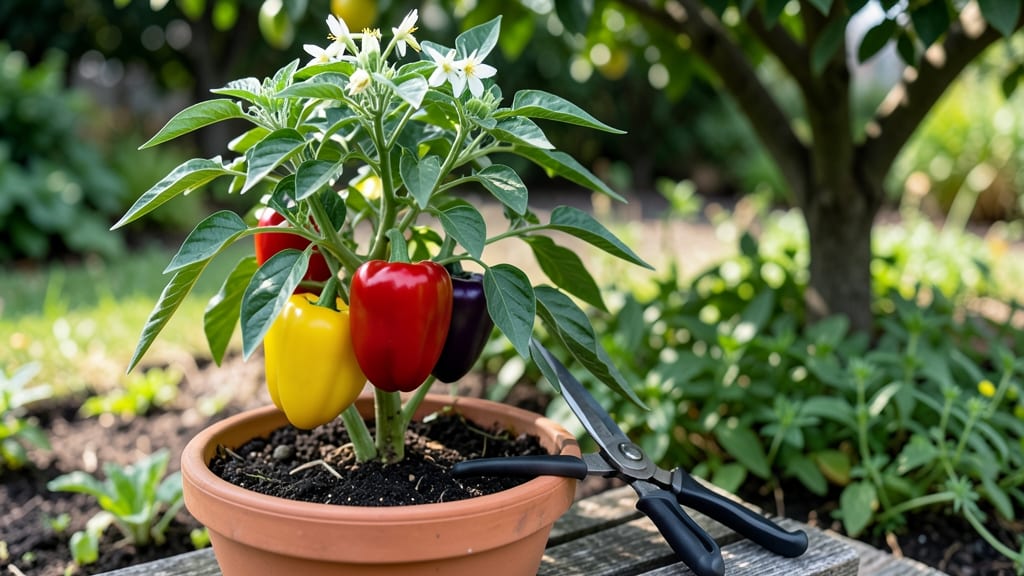
Pruning bell pepper plants turns scraggly stems into bushier producers—here’s how to do it right. 🌱 I used to skip pruning until my peppers grew tall but produced only a handful of fruit. Now, I shape them early for better air flow and more peppers by harvest time.
Start when plants are 12-18 inches tall, pinching off the first few leaves at the base to encourage branching. Use clean pruners to trim suckers (those little shoots between stems and branches) and any yellow or diseased leaves.
The goal is to keep the plant focused on fruit production, not just growth. You’ll see thicker stems and more flowers within weeks, leading to a heavier harvest. The plants stay healthier too, with fewer pests hiding in dense foliage.
This method works for both bush and vine varieties, so give it a try this season! Fair warning: Over-pruning can stress plants, so keep it to about 10-20% of the foliage. And always prune on a dry day to avoid spreading disease. Your peppers will thank you!
📚 In This Guide
- What you need
- Instructions
- Tips and common mistakes
- Wrapping up and next steps
What you need
- ● Sharp pruning shears – A bypass pruner (not anvil-type) is ideal for clean cuts. Look for sterilized, stainless-steel blades (e.g., Felco F-2 or similar) to prevent disease spread.
- ● Hand pruners or scissors – For smaller stems or pinching (e.g., Fiskars 10-inch pruning shears or Corona 4-in-1 pruners).
- ● Rubbing alcohol (70% or higher) – 1 small bottle to sterilize tools between cuts and prevent bacterial/fungal infections.
- ● Gloves – A pair of gardening gloves (nitrile or leather) to protect hands from thorns and sap.
- ● Disposable pruning bags or bucket – A 5-gallon bucket or mesh bag to collect pruned debris and keep your workspace tidy.
- ○ Garden twine or zip ties – 5–10 feet (optional but helpful for staking or securing heavy branches post-pruning).
- ● Horticultural spray (neem oil or copper fungicide) – A small spray bottle to treat cuts if signs of disease appear.
- ● Plant tie clips – For securing branches to stakes if your peppers are top-heavy.
- ● Marking twine or flags – To label pruned areas if you’re training plants for specific shapes (e.g., bush vs. trellis).
- ● Safety glasses – If pruning near your face or working with thorny varieties like ‘Carolina Wonder’.
Step-by-Step guide to pruning bell pepper plants
Bushier plants mean more peppers—and healthier ones. Here’s how I prune mine for maximum yield.
🌿 Step 1: Wait Until Plants Are Established
Don’t rush—wait until your bell pepper plants are at least 2-3 feet tall with 4-6 true leaves before pruning. This usually happens 4-6 weeks after transplanting, when the main stem is sturdy and roots are settled. Pruning too early stresses young plants and slows growth.
Check the base of the plant for small side shoots (suckers) emerging from the stem’s junction with the soil. These are your first targets. If you see dark spots or weak stems, hold off—your plant might be struggling with disease or pests first.
✂️ Step 2: Pinch Off Suckers at the Base
Suckers are the small shoots growing between the main stem and branches. Use clean, sharp pruning shears or your fingers to pinch them off right at the base, where they meet the stem. Never leave a stub—this prevents rot and encourages cleaner regrowth.
Focus on the lower half of the plant first. These suckers drain energy from fruit production. I like to work in the morning when the plants are dry—it’s easier to see what you’re doing, and the cuts heal faster in cooler temperatures.
☀️ Step 3: Thin Overcrowded Branches
Once your plant has 3-4 main branches, remove the weakest one by cutting it back to the main stem. This improves airflow and sunlight penetration, which reduces disease risk. Aim to leave 2-3 strong, upward-facing branches per plant for best fruit production.
Look for branches growing straight down or inward—these block light and compete with fruit-bearing branches. Snip them off just above a leaf node (the bump where leaves grow). You’ll notice the remaining branches thicken and grow more vigorously within 2-3 weeks.
🌱 Step 4: Encourage Bushier Growth with Strategic Pruning
After the first flush of flowers, prune back the tips of the main branches by about ½ inch to encourage side shoots. This is where most of your peppers will form. Avoid heavy pruning—you’re not shaping a topiary, just guiding growth toward a fuller, more productive plant.
Watch for yellowing leaves or stunted growth after pruning. If this happens, your plant might be overpruned. Next time, remove only 10-15% of the plant’s foliage at a time. Healthy plants bounce back quickly, but aggressive pruning can set them back for weeks.
⏰ Step 5: Time Your Final Pruning for Late Season
Stop pruning 6-8 weeks before your first frost date. This gives your plant enough time to recover and set new fruit before cold weather arrives. In late summer, focus on removing only diseased or damaged leaves—no more aggressive trimming.
Before the first frost, harvest any remaining peppers and prune back all foliage to 6 inches above the ground. This helps the plant redirect energy to root storage for next season. Mulch the base with 2-3 inches of straw to protect roots from freezing.
Tips & tricks for pruning bell pepper plants
Here's what I've learned after years of pruning my own pepper plants—these tricks will help you avoid common mistakes and get the bushiest, most productive plants possible.
Timing is Everything: The 4-6 week wait before pruning in Step 1 is crucial—this gives roots time to establish. I've seen beginners rush and end up with stunted plants that never recover. Wait until you see those first suckers at the base, which means the plant has enough energy to handle pruning. Confession: I skipped this once and my plants took weeks to bounce back!
Tool Tip: While fingers work for small suckers, invest in a pair of clean pruning shears for larger branches. Sterilize your tools with rubbing alcohol between plants to prevent spreading disease. I keep a small bottle in my gardening toolbox—it's saved me from multiple outbreaks over the years. The key is making clean cuts right at the base, never leaving stubs that can rot.
Visual Growth Guide: When you're thinning branches in Step 3, look for the "V" shape where branches meet the main stem. This is your leaf node—always cut just above it. I like to think of it as giving the plant a "haircut" that follows its natural growth pattern. After pruning, you should see new side shoots forming within 2-3 weeks if you've done it right.
Seasonal Strategy: That 6-8 week window before frost in Step 5 is non-negotiable. I've learned this the hard way—pruning too late can leave your plants vulnerable to cold damage. Mark your frost date on your calendar and count backward. For late-season maintenance, focus only on removing diseased leaves—never aggressive pruning at this stage.
Pro Tips for Prune Bell Pepper Plants
- Here's what I've learned after years of pruning my own pepper plants—these tricks will help you avoid common mistakes and get the bushiest, most productive plants possible.
- Timing is Everything: The 4-6 week wait before pruning in Step 1 is crucial—this gives roots time to establish.
- Tool Tip: While fingers work for small suckers, invest in a pair of clean pruning shears for larger branches.
Frequently asked questions
Got questions about pruning bell pepper plants? You’re not alone—this step can feel tricky at first! Below, we’ve rounded up the most common queries to help you prune like a pro and keep your plants thriving.
When is the best time to prune bell pepper plants?
Prune your bell pepper plants early in the morning when the plants are turgid (full of water) and the air is cool. Avoid pruning during extreme heat or after heavy rain, as this can stress the plant. The best time to start is when the plant is 6–8 inches tall and has 3–4 true leaves, but you can continue pruning throughout the growing season to encourage bushier growth.
How much should I prune bell pepper plants?
Don’t go overboard! Aim to remove only 10–20% of the plant’s foliage at a time. Focus on pinching off the topmost leaves (the apical bud) to encourage branching, and trim any yellow or diseased leaves. Avoid cutting into the main stem or removing too many leaves at once, as this can reduce fruit production and stress the plant.
Will pruning bell pepper plants increase yield?
Yes—if done correctly! Pruning redirects the plant’s energy toward producing more and larger peppers by encouraging bushier growth and better air circulation. However, over-pruning can reduce yield, so balance is key. Focus on removing only weak or crowded growth while leaving healthy leaves to photosynthesize.
What should I do if my bell pepper plant looks stressed after pruning?
If your plant wilts or droops after pruning, it’s likely temporary shock. Water the plant deeply and provide shade for a day or two to help it recover. Avoid fertilizing immediately, as this can further stress the roots. Most plants bounce back within a few days—just monitor for pests or disease, which can worsen stress.
Can I prune bell pepper plants after they start fruiting?
In fact, light pruning can still benefit mature plants by improving air flow and reducing disease risk. Focus on removing yellow leaves, dead growth, or suckers (the small shoots that form in the leaf axils). Avoid heavy pruning late in the season, as the plant may not have enough time to recover before harvest.
Wrapping up and next steps
Pruning your bell pepper plants might seem like a small task, but it’s a game-changer for healthier, more productive vines!
By removing suckers, thinning foliage, and promoting airflow, you’ll encourage bushier growth and bigger harvests—all while keeping pests at bay. 🌱 With the right tools, timing, and techniques, you’re well on your way to a thriving garden.
Ready to put your new skills to work? Grab those shears and start pruning! For even more tips, check out our guide on when to harvest bell peppers—your next step to a bountiful season. Happy gardening! 🌟