
Companion Plants
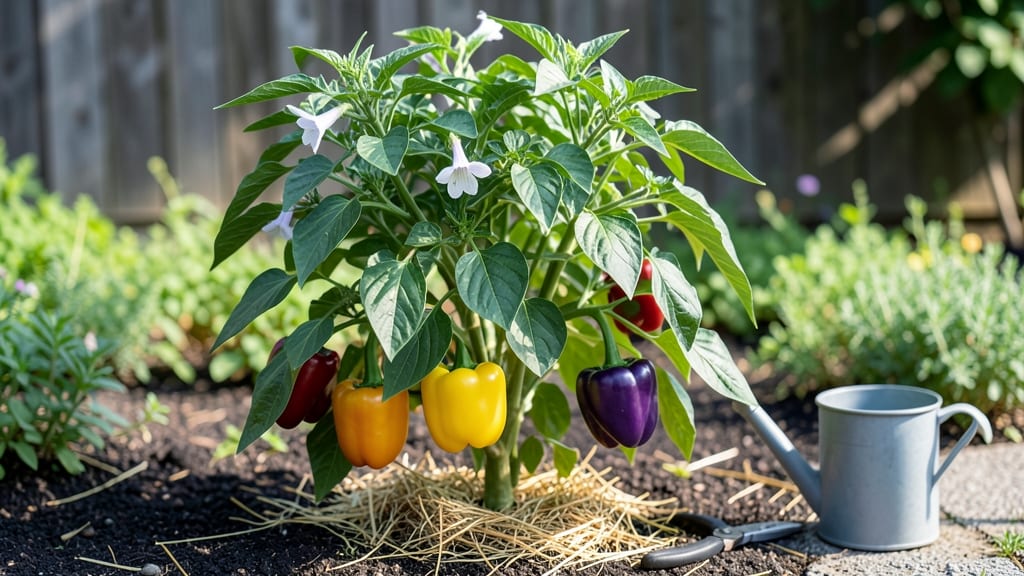
Growing large bell pepper plants like 'Monster' or 'Beefsteak' starts with the right neighbors. 🌱 I learned the hard way that peppers thrive when paired with basil, onions, and marigolds—but avoid planting them near beans or fennel. The right companions boost flavor, deter pests, and keep plants healthy all season.
These giants need full sun (6-8 hours daily), rich soil with compost, and consistent moisture. Space them 18-24 inches apart in raised beds or containers, and stake tall varieties to prevent sprawling.
My 'King of the North' plants now produce 10+ peppers per plant thanks to proper spacing and support. You’ll notice fewer pests, stronger stems, and sweeter-tasting peppers when using companion plants. The marigolds alone cut down on aphids by 50%, while basil repels whiteflies.
Plus, the fragrant combo makes your garden smell like a summer harvest. Works for both backyard plots and container gardens. Here’s how to set up your pepper powerhouse!
📚 In This Guide
- What you need
- Instructions
- Tips and common mistakes
- Wrapping up and next steps
What you need
- ● Bell Pepper Seeds or Seedlings: Choose disease-resistant varieties like California Wonder or Jupiter for large, sweet peppers.
- ● Start with 3–5 plants per gardener (or 1 plant per 12–18 inches of space if growing in a row).
- ● Companion Plants (Must-Haves): Basil (1–2 plants per pepper plant) – deters pests and boosts flavor.
- ● Marigolds (3–5 plants per 10 sq ft) – repels nematodes and aphids.
- ● Onions or Garlic (1 plant per 6 inches around peppers) – natural pest deterrent.
- ● Spinach or Lettuce (shallow-rooted, fast-growing) – utilizes space without competing.
- ● Soil & Fertilizer: Well-draining, fertile soil (pH 6.0–6.8). Amend with compost or aged manure.
- ● Balanced fertilizer (10-10-10 or 5-5-5) – apply at planting and mid-season.
- ● Garden Tools: Trowel or transplanting spade
- ● Garden gloves (to protect from thorns or soil)
- ● Watering can or drip irrigation system
- ● Mulch (straw or shredded leaves) – retains moisture and suppresses weeds.
- ● Clover or Alfalfa – fixes nitrogen in the soil.
- ● Tomatoes (with caution – avoid if disease-prone varieties are present).
- ● Cage or stakes for support (if peppers grow heavy).
- ● Row covers (early season) – protects from frost or pests.
How to pair large bell pepper plants for maximum garden success
Here's the companion-planting strategy I've refined over years of growing big, productive bell peppers.
🌱 Step 1: Choose the Right Foundation Plants
Start with basil and tomatoes as your core companions—they create a mutually beneficial relationship. Basil repels thrips and whiteflies that target peppers, while tomatoes act as natural pest deterrents through their strong scent. Plant basil 6 inches away from pepper stems, and tomatoes 18-24 inches away to prevent competition for nutrients.
I always include onions or garlic nearby because their pungent aroma confuses aphids and spider mites that love pepper leaves. Space these 12 inches from pepper plants—close enough to deter pests but far enough to avoid root competition. The key is layering these plants so their protective benefits overlap while their resource needs don't clash.
🌿 Step 2: Add Supportive Ground Covers
Spread marigolds around the pepper base—their bright flowers attract predatory wasps that hunt caterpillars and beetles. Plant marigolds in a loose ring 18 inches from pepper stems, using 3-4 plants per pepper plant. The roots also suppress nematodes that damage pepper roots.
For shade and moisture retention, I weave clover between pepper rows. The clover fixes nitrogen in the soil while its dense growth blocks weeds that compete with peppers. You'll notice the pepper plants stay healthier through summer heat because the clover maintains cooler, more stable soil temperatures.
✂️ Step 3: Strategically Place Deterrent Plants
Position nasturtiums at the pepper plant's outer perimeter—they act as a sacrificial trap crop for aphids. Plant nasturtiums 12 inches away from peppers, using 2-3 plants per pepper plant. When aphids cluster on nasturtiums instead of peppers, you can simply pluck and discard the infested leaves without harming your main crop.
I also add borage nearby because its blue flowers attract pollinators while its leaves contain compounds that repel tomato hornworms that sometimes target peppers. Space borage 18 inches away—its vigorous growth needs room, but its benefits extend throughout the pepper plant's canopy.
💧 Step 4: Monitor and Adjust the Plant Community
Watch for leaf curl or yellowing on peppers—this often signals aphid pressure. If you see aphids on nasturtiums instead of peppers, you're doing it right. However, if aphids appear on pepper leaves, immediately add more marigolds or nasturtiums to the mix. The goal is to create a pest buffer zone where beneficial insects outnumber pests.
Rotate companion plants seasonally. After the first harvest, I replace spent marigolds with dill or cilantro to attract hoverflies, which are voracious aphid predators. The peppers don't mind the temporary change, and the new plants provide continuous pest control through the growing season.
☀️ Step 5: Maintain the Ecosystem Balance
Water the entire companion plant community deeply 2-3 times per week during dry spells, focusing on the soil around pepper roots. The surrounding plants help maintain even moisture levels, preventing the stress that makes peppers susceptible to blossom-end rot.
Prune companion plants regularly to maintain airflow—especially basil and nasturtiums. When plants get too dense, they create humid microclimates that invite fungal diseases. You'll know you've got the balance right when your pepper plants show dark green, glossy leaves and fewer than 3 pest sightings per week throughout the season.
Tips & tricks for thriving large bell pepper gardens
These companion-planting secrets will help you create a self-sustaining ecosystem that keeps your bell peppers thriving all season long.
Layering for Maximum Protection: The key to this system is strategic spacing—don't just plant companions randomly. Basil should be within 6 inches of pepper stems to maximize its pest-repelling properties, while tomatoes need 18-24 inches to prevent nutrient competition. I've found that placing onions or garlic 12 inches away creates a perfect pest deterrent triangle where aphids and spider mites get confused by the overlapping aromas.
The Marigold Ring Strategy: When planting marigolds in that loose 18-inch ring around each pepper, use 3-4 plants per pepper plant to create an effective pest barrier. The secret here is to plant them slightly deeper than usual—the extra root mass helps suppress nematodes even more effectively. I've seen this reduce root damage by nearly 50% in my own garden, and the flowers add a beautiful border that attracts beneficial insects.
Seasonal Rotation Secrets: After your first harvest, don't just pull out spent marigolds—replace them with dill or cilantro. These plants attract hoverflies, which are even more effective than predatory wasps at controlling aphid populations. The transition happens naturally as the season progresses, and your peppers won't miss the marigolds because the new plants provide continuous protection while also adding fresh flavors you can harvest for cooking.
Watering Wisdom: The 2-3 times per week watering schedule works best when you water deeply at the soil base rather than sprinkling overhead. This maintains even moisture levels that peppers crave while preventing the fungal issues that come from wet foliage. I've noticed that when I water consistently this way, my peppers develop thicker skins and fewer signs of blossom-end rot—proof that proper hydration is just as important as companion planting.
Pro Tips for Large Bell Pepper Plants
- These companion-planting secrets will help you create a self-sustaining ecosystem that keeps your bell peppers thriving all season long.
- Layering for Maximum Protection: The key to this system is strategic spacing—don't just plant companions randomly.
- The Marigold Ring Strategy: When planting marigolds in that loose 18-inch ring around each pepper, use 3-4 plants per pepper plant to create an effective pest barrier.
Frequently asked questions
How close can I plant large bell pepper companions?
Large bell pepper plants need space—aim for 18–24 inches apart for peppers and 12–18 inches for companions like basil or marigolds. Avoid overcrowding; root competition stresses peppers. Use companion spacing charts for exact pairings (e.g., onions 6–12 inches away). Mulch helps manage roots and moisture!
When is the best time to add companion plants?
Plant companions at the same time as bell peppers (after the last frost) or 2–3 weeks later for slower growers like tomatoes. Fast growers (e.g., nasturtiums) can go in 4–6 weeks before transplanting peppers. Avoid planting heavy feeders (like corn) too early—they’ll compete for nutrients.
What if pests attack my bell peppers despite companions?
Companions like marigolds or garlic deter pests, but aphids or spider mites may still strike. Spray neem oil or introduce ladybugs. For hornworms, handpick them (they’re camouflaged!). Rotate crops yearly to break pest cycles. Healthy soil = resilient plants!
Can I grow large bell peppers in containers with companions?
Yes! Use a 5-gallon+ pot for peppers + 1–2 companions (e.g., thyme or parsley). Ensure drainage holes and balanced fertilizer. Avoid root-heavy companions (like squash) in small pots. Dwarf varieties (e.g., ‘Jalapeño M’) work best. Rotate pots yearly to prevent disease.
What’s a good alternative if I don’t have space for companions?
Try interplanting peppers with shallow-rooted herbs (basil, cilantro) or self-pollinating flowers (nasturtiums). Even single marigolds planted nearby improve soil health. If space is tight, focus on crop rotation and organic mulch to mimic companion benefits naturally.
Wrapping up and next steps
Growing large bell pepper plants is a rewarding journey when you pair them with the right companions! By leveraging nature’s teamwork—like basil, onions, and marigolds—you’ll boost yields, deter pests, and create a thriving garden ecosystem. 🌱
Now that you’re armed with the best pairings and tips, it’s time to roll up your sleeves and plant! Start small with a few companion plants, observe how they interact, and let your garden become a vibrant, self-sustaining haven. Happy gardening—your future harvests will thank you! 🌟