
Propagation
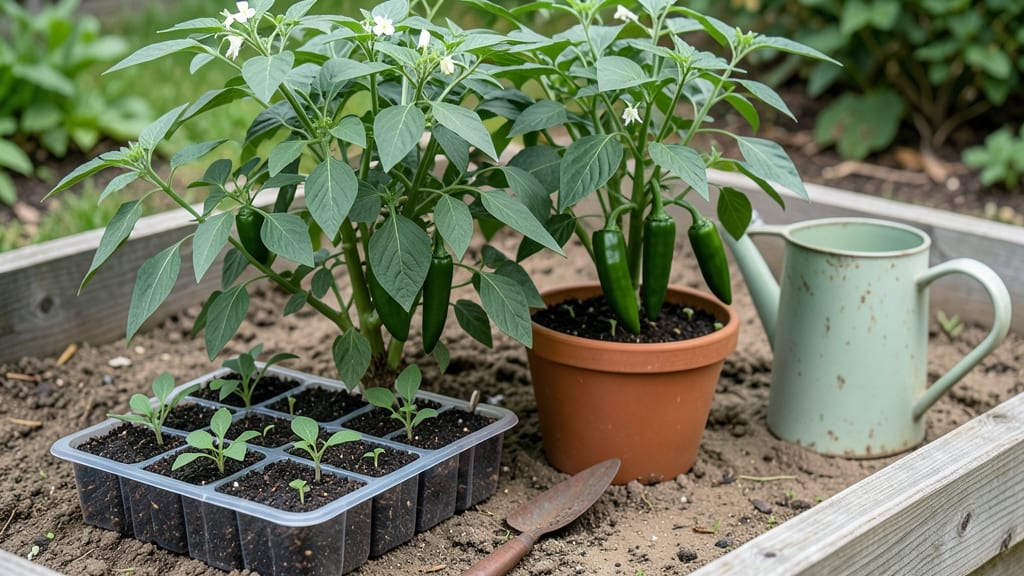
Growing early jalapeño pepper seeds means fiery harvests by summer’s end. 🌱 I’ve turned my backyard into a spice factory by starting seeds indoors in February—no greenhouses or fancy setups required. The key is timing, soil warmth, and a little patience as those first green shoots break through the soil.
Most gardeners overlook the soil temperature trick: keep it between 70-85°F for consistent germination. Use seed-starting trays with a heat mat if your home runs cooler, and watch those seeds sprout in 7-14 days.
Once they’ve got their first true leaves, transplant them into larger pots or directly into the garden after the last frost—60 days later, you’ll be snipping peppers for salsa, pickling, or grilling.
What you end up with is a plant that keeps producing all season long, with peppers ripening faster than store-bought varieties. The first harvest is always the sweetest—bright green, crisp, and packed with heat—and you’ll know exactly where they came from.
This method works for any climate, from container gardens to in-ground beds. Let’s get those seeds sprouting and your spice game on fire!
What Triggers Early Germination
Early jalapeno pepper seeds don’t just sprout on their own—they respond to a mix of environmental and biological cues. Understanding these triggers helps gardeners optimize conditions for fast, reliable growth. Here’s why your seeds might be waking up sooner than expected (or why they’re not):
Seeds need warmth to break dormancy, but too much or too little can stall them. Jalapenos thrive in 70–90°F (21–32°C) soil temperatures, but they’re sensitive to extremes:
- Cold Stress: Below 50°F (10°C), enzymatic activity slows, delaying germination. Action: Use a seedling heat mat or place trays near a sunny window to maintain warmth.
- Hot Spikes: Above 95°F (35°C), seeds can dry out or rot. Action: Keep seeds in a shaded, humid environment (like a propagator) until sprouts appear.
- Day/Night Swings: Seeds germinate fastest with consistent warmth (e.g., 80°F/27°C daytime, 70°F/21°C nighttime). Pro Tip: A grow light on a timer mimics natural cycles better than random sunlight.
Water is the catalyst, but too much or too little throws off the process.
Jalapeno seeds need: - Even Moisture: Drying out stops germination; soggy soil suffocates roots. Action: Use a spray bottle to mist seeds daily until sprouts emerge (then switch to bottom-watering). - Oxygen Access: Compacted soil cuts off airflow. Action: Mix seeds into light, airy potting mix (e.g., 50% peat, 30% perlite, 20% vermiculite). - Humidity Boost: Low humidity (<40%) slows growth. Pro Tip: Cover trays with plastic wrap (remove after sprouts appear) or use a humidity dome.
Old or poor-quality seeds germinate slower—or not at all.
Jalapenos lose viability after 1–2 years if stored improperly: - Fresh Seeds: New seeds (less than 6 months old) germinate in 5–10 days. - Stored Seeds: After 1 year, germination drops to 50–70%. Action: Test viability by soaking 10 seeds in water—if fewer than 8 float, discard the batch. - Hybrid vs. Heirloom: Hybrid seeds (like ‘Early Jalapeño’) often sprout faster due to selective breeding for vigor.
Seeds don’t need light to germinate, but premature light can stunt early growth:
- Darkness First: Keep seeds in darkness until 1–2 inches tall to prevent leggy, weak sprouts.
- Weak Light Triggers Stress: Dim, indirect light (e.g., 100–200 foot-candles) is ideal post-sprout. Action: Use grow lights 12 inches above trays once seeds break soil.
Jalapenos prefer slightly acidic to neutral soil (pH 6.0–7.0).
Off-target pH levels can block nutrient uptake: - Too Acidic (<5.5): Aluminum toxicity stunts roots. Action: Add lime to raise pH. - Too Alkaline (>7.5): Calcium locks out magnesium. Action: Mix in sulfur or peat moss. - Salinity Buildup: Over-fertilized soil (especially with synthetic mixes) delays germination. Pro Tip: Use rainwater or distilled water for the first 2 weeks.
Some jalapeno varieties are bred for early maturation, while others take longer:
- Fast Varieties: ‘Early Jalapeño’, ‘Jalapeño M’, or ‘Super Jalapeño’ often sprout in 3–7 days under ideal conditions.
- Slow Varieties: Heirloom types (e.g., ‘TAM Mild Jalapeño’) may take 10–14 days.
- Hybrid Advantage: Many commercial seeds are F1 hybrids, meaning they inherit consistent germination speed from parent plants.
Some seeds have hard seed coats that resist water absorption.
Jalapenos rarely need this, but: - Nick the Seed: Lightly scratching the seed coat with sandpaper can speed up water intake (use sparingly—over-scratching kills viability). - Soak Overnight: A 24-hour soak in warm water softens the coat naturally. Action: Drain and plant immediately—don’t let seeds dry out post-soak.
Beneficial (and harmful) microbes compete for resources:
- Good Bacteria: Rhizobium and Pseudomonas can enhance nutrient availability, speeding early growth.
- Bad Actors: Fungal infections (e.g., Pythium) cause damping-off, killing sprouts before they emerge. Action: Sterilize soil with hydrogen peroxide (3%) or baking soda (1 tsp/gallon of water).
Seeds packed too tightly compete for oxygen, slowing germination:
- Spacing Rule: Plant seeds ¼ inch apart, ½ inch deep in rows 2 inches apart.
- Thinning Early: Once sprouts have 2 true leaves, thin to 3–4 inches apart to reduce competition.
Key Takeaway: Early germination is a perfect storm of warmth, moisture, and genetics. Tweak just one factor (like soil pH or light), and you’ll see delays—or worse, failed sprouts. Start with consistent heat and humidity, then refine based on your seeds’ specific needs.
Quick fixes for pepper seed struggles
Growing early jalapeño pepper seeds can be a rewarding experience, but even the most enthusiastic gardeners may face challenges like slow germination, weak seedlings, or pests.
The good news? Most issues have simple, practical solutions. Below, we’ve mapped common problems to their fixes—plus tips to keep your spicy harvest on track.
Cause: Cold soil, old seeds, or improper moisture. Fix:
- Warm it up! 🔥 Place seeds in a seedling heat mat (70–85°F) or on top of a fridge (not inside—just the top) to mimic tropical conditions. Jalapeños love warmth!
- Soak first: 💧 Let seeds soak in warm water for 4–6 hours before planting to kickstart germination.
- Use a humidity dome: Cover trays with plastic wrap or a clear lid to trap moisture until sprouts appear (usually 7–14 days).
Prevention Tip: 🌡️ Store seeds in a cool, dry place (not the fridge) and plant within 6–12 months of purchase for best results.
Cause: Too much light or too little, overcrowding, or inconsistent watering. Fix:
- Adjust light: 💡 Move seedlings 2–3 inches from grow lights (14–16 hours/day) or rotate trays weekly to prevent leaning.
- Thin seedlings: 🔪 Use scissors to snip weak stems at soil level, leaving the strongest plant per pot (2–3 inches apart).
- Water wisely: 💦 Bottom-water trays (place in a shallow dish of water for 10 mins) to avoid damp soil that causes rot.
Pro Tip: ✨ Use a reflective surface (like aluminum foil) under trays to maximize light efficiency.
Cause: Fungal gnats, aphids, or spider mites love tender seedlings. Fix:
- Yellow sticky traps: 🕷️ Place near seedlings to catch flying pests like fungus gnats.
- Neem oil spray: 🌿 Mix 1 tsp neem oil + 1 tsp mild soap + 1 quart water, spray lightly (avoid seedlings’ faces).
- Cinnamon barrier: 🌶️ Sprinkle cinnamon around pots to deter ants and fungal growth.
Prevention Tip: 🎯 Keep humidity low (under 50%) and avoid overwatering to deter pests.
Cause: Drafts, sudden cold snaps, or overheating. Fix:
- Buffer extremes: 🏠 Place seedlings on a heat mat at night if temps drop below 55°F.
- Avoid cold drafts: 🚪 Keep trays away from windows, doors, or AC vents.
- Acclimate gradually: ⏰ Harden off seedlings by moving them outside for 1 hour/day, increasing time over 7–10 days.
Pro Tip: 🌡️ Use a small fan on low speed (24/7) to strengthen stems and prevent shock when transplanting.
Cause: Root disturbance or environmental stress. Fix:
- Burrow deep: 🕳️ Plant seedlings 1 inch deeper than their container height—jalapeños grow new roots from stems!
- Water before/after: 💦 Soak roots in water for 10 mins before transplanting, then water thoroughly after.
- Shade cloth: ☀️ Use 30% shade cloth for the first week to ease sun stress.
Prevention Tip: 🌱 Use biodegradable pots (like peat or coconut coir) to avoid root circling when transplanting.
Remember: Patience and consistency are key! With these fixes, your early jalapeño seeds will go from tiny sprouts to spicy, sun-ripened peppers in just 60 days. 🌶️🔥
Frequently asked questions
How soon can I expect to harvest peppers from early jalapeño seeds?
With proper care, you can harvest your first peppers in just 60 days from planting! Early jalapeño varieties are bred specifically for fast maturation, so if you start seeds indoors in late winter or early spring, expect tiny peppers by mid-summer. The key is maintaining consistent warmth and light during the seedling stage.
Can I plant early jalapeño seeds directly in the garden?
Yes, but only after your soil reaches at least 60°F and all frost danger has passed. For fastest results, start seeds indoors 8-10 weeks before your last frost date, then transplant seedlings when they're 4-6 inches tall. This gives them a head start on the growing season.
What's the best way to store jalapeño seeds for next year?
Store seeds in a cool (40°F), dry place in a sealed container with silica gel packets. For best viability, use them within 1-2 years. To collect seeds, let peppers fully ripen (turn red), remove seeds, rinse, and dry completely before storage.
Why are my early jalapeño seeds taking so long to sprout?
Slow germination usually means your seeds need more warmth or moisture. Try placing them on a seedling heat mat (70-85°F) and keeping the soil consistently moist. If they've been stored for over a year, their viability may have decreased—test them by soaking 10 seeds in water (if fewer than 8 float, they're still good).
How do I know when my jalapeño seedlings are ready to transplant?
Seedlings are ready when they have 2-3 true leaves (not just the initial seed leaves) and are 4-6 inches tall. Before transplanting, harden them off by placing them outside for gradually increasing periods (starting with 1 hour/day) over 7-10 days to prevent shock.