
Watering
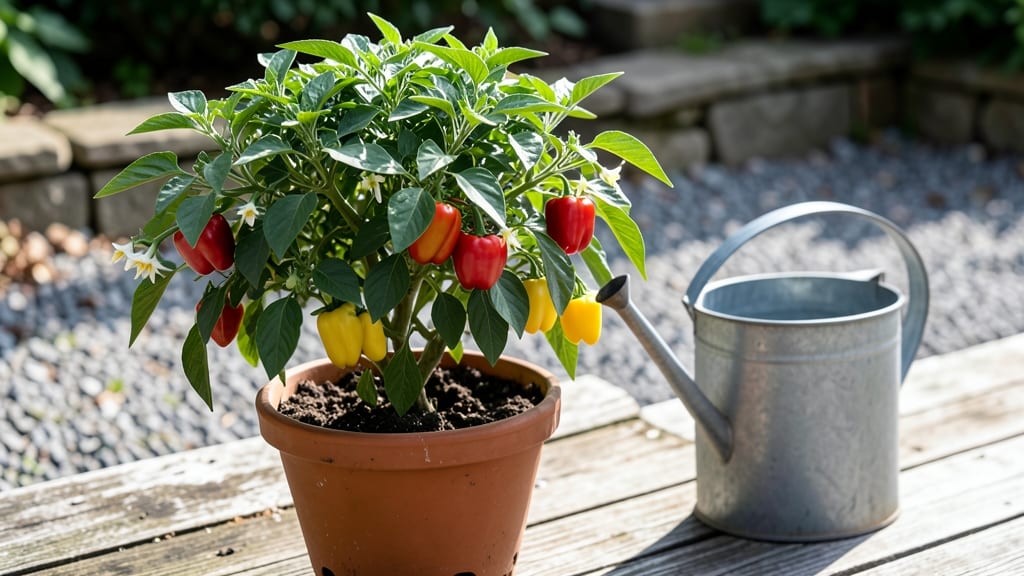
Watering pepper plants in pots every 1-2 days keeps them thriving—unless you live in a heatwave, where they’ll need daily drinks.
Here’s the catch: most gardeners overdo it, turning their pots into soggy graves for roots. A quick finger test (stick your finger an inch deep—if it’s dry, water; if damp, wait) saves 90% of the guesswork.
Container size, soil mix, and even your local humidity play a role. A 5-gallon pot dries faster than a raised bed, and coconut coir holds moisture longer than plain potting mix. I’ll break down the exact schedule by season so you never play Russian roulette with your peppers.
By the end, you’ll know when to water, how much to give, and the telltale signs your 🌶️ plants are either begging for a drink or drowning in kindness.
The perfect watering schedule for pepper plants in pots based on soil moisture
Pepper plants in pots demand a precise watering routine—too much or too little, and you’ll watch your homegrown harvest wither. Unlike in-ground plants, potted peppers dry out 3x faster due to limited soil volume and rapid evaporation.
The key? Mastering the finger test and adjusting for seasonal heat and pot size. I’ve grown jalapeños and bell peppers in containers for years, and this schedule keeps them thriving from seedling to harvest.
Most gardeners water by guessing days, but peppers need consistent moisture—not a rigid schedule. Smaller pots (1-gallon) dry out in 12-24 hours on hot days, while 5-gallon containers may last 3-4 days.
The soil moisture test (insert your finger 1 inch deep) is your best tool. If it feels dry, water thoroughly until it drains from the bottom. If it’s damp, wait another day.
Seasonal shifts drastically change your watering frequency. In spring, when temps hover around 60°F, peppers need water every 1-2 days. By summer, when 90°F+ heat waves hit, daily watering becomes essential—especially for black and red varieties that wilt faster. Evenings in fall slow evaporation, so you can stretch watering to every 2-3 days.
| Season | Pot Size | Watering Frequency | Finger Test Depth | Water Amount |
|---|---|---|---|---|
| Spring (50-65°F) | 1-gallon | Every 1-2 days | 1 inch | ½ cup per watering |
| Spring (50-65°F) | 5-gallon | Every 2-3 days | 1-2 inches | 1-2 cups per watering |
| Summer (75-95°F) | 1-gallon | Daily (morning) | ½ inch | ½ cup per watering |
| Summer (75-95°F) | 5-gallon | Every other day | 1 inch | 1-2 cups per watering |
| Fall (55-70°F) | 1-gallon | Every 2-3 days | 1 inch | ½ cup per watering |
| Fall (55-70°F) | 5-gallon | Every 3-4 days | 1-2 inches | 1-2 cups per watering |
Pot size isn’t just about water volume—it’s about root space. A 1-gallon pot holds 1 cubic foot of soil, while a 5-gallon offers 5x the root zone.
Larger pots retain moisture longer, but their surface area also increases evaporation. I’ve noticed jalapeños in 3-gallon pots need water 25% less frequently than those in 1-gallon containers during summer.
Morning watering is non-negotiable. Why? Evening water lingers in pots, promoting fungal diseases like powdery mildew. Water between 7-9 AM when temps are cool, and the soil absorbs moisture efficiently.
Pro tip: Use a watering can with a rose attachment to direct water to the soil base, not the leaves. This mimics natural rainfall and prevents leaf scorch.
Watch for seasonal cues
Signs your pepper plants are thirsty (or drowning) and how to Fix it
Potted pepper plants 🌶️ are finicky about water—too little and they wilt, too much and their roots suffocate.
The key is learning their subtle signals before damage sets in. Yellowing leaves or drooping stems aren’t always obvious, so I’ve trained myself to check soil moisture daily by sticking my finger 1-2 inches deep. If it feels dry, it’s time to water; if it’s soggy, hold off.
First, underwatered peppers show classic signs like crispy leaf edges and a leathery texture. The plant may also pull inward at midday, then "perk up" after evening moisture.
This is your pepper’s way of saying, "I need hydration now!" In extreme cases, leaves may curl upward or fall off entirely—a cry for immediate attention.
🔍 PROS-CONS BOX: Overwatering vs. Underwatering in Potted Peppers 🔍
- 🌱 Yellow leaves (especially lower)
- 🌱 Mushy stems when pressed
- 🌱 Root rot (black, foul-smelling roots)
- 🌱 Slow growth despite frequent watering
- 🌱 Wilting (even in morning)
- 🌱 Dry, crispy leaf edges
- 🌱 Soil pulls away from pot sides
- 🌱 Dull, gray-green leaves
For emergency recovery, I’ve saved stressed plants by pruning damaged leaves (use clean scissors) and adjusting watering habits. If roots are rotting, trim the blackened parts with sterilized shears and repot in fresh, well-draining soil. Pro tip: Add perlite or coconut coir to improve aeration—peppers hate soggy feet!
Morning is the best time to water, as it gives leaves time to dry before nightfall (preventing fungal diseases). If your peppers are drooping by afternoon, they’re likely thirsty—give them a deep drink and move them to partial shade until they recover.
Consistency is key: aim for 1-2 inches of water per week, but always check the soil first.
One trick I swear by? The "lift test": Pick up the pot—if it feels light, it’s dry; if it’s heavy, hold off. This beats guessing and saves peppers from root stress.
And remember: Yellow leaves ≠ always thirst—they could signal overwatering, nutrient deficiency, or even too much sun. Always check the soil first!
When in doubt, underwater slightly. Potted peppers forgive occasional dryness more than they forgive soggy roots. With practice, you’ll spot the difference between a happy, hydrated plant and one begging for help—before it’s too late. 🌱