
Watering
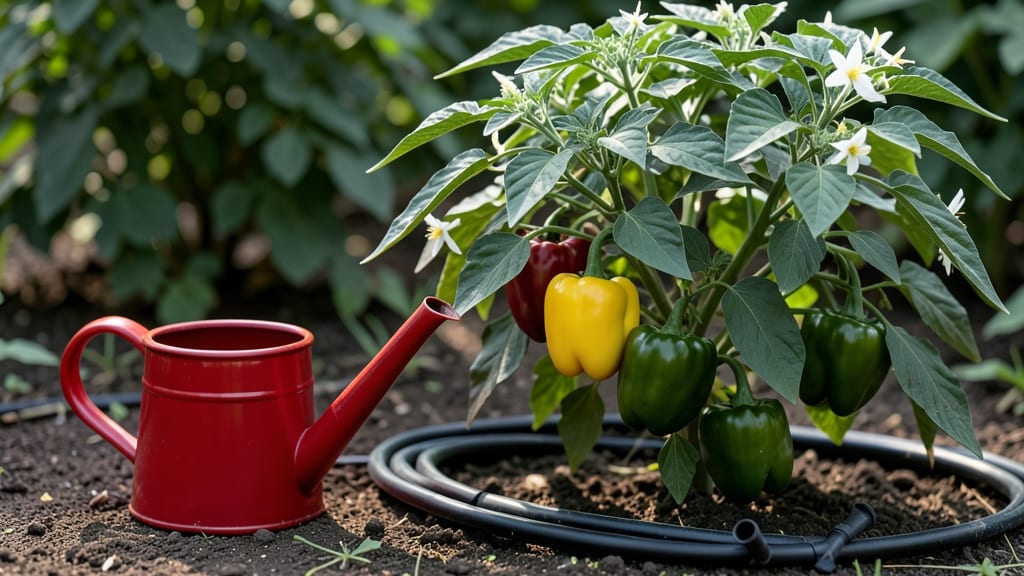
Watering bell pepper plants the right way means keeping the soil consistently moist—not soggy, not bone-dry—so they thrive from seedling to harvest.
Here’s the truth: guessing how often to water leads to wilted leaves or worse, blossom end rot, and even experienced gardeners get it wrong. The secret? A simple soil test that tells you exactly when your 🌶️ plants need a drink.
Bell peppers hate dry spells but can’t handle waterlogged roots, so timing matters. In USDA Zone 6a, I’ll show you how to adjust watering from spring planting through fall harvest—plus how mulch and drip irrigation can save you hours of trial and error.
By the end, you’ll know the perfect moisture balance for your garden, whether you’re growing in pots or in the ground, and how to spot trouble before it starts.
The ideal watering schedule for bell pepper plants by growth stage
Bell pepper plants 🌶️ thrive on consistency, but their watering needs change dramatically from seedling to fruiting stage. Unlike drought-tolerant herbs, bell peppers demand precise moisture control—too much or too little stresses the plant and reduces yields.
The key? Adjusting your schedule based on growth phase, container size, and local climate.
I’ve grown bell peppers in both raised beds and 5-gallon pots, and the biggest mistake I see is treating all stages equally. Seedlings need gentle hydration, while flowering plants require deep soaks to support fruit development. Let’s break it down by phase so you can water with confidence.
Pro Tip: Always water at soil level (not leaves) to prevent fungal diseases like Phytophthora. Use a drip irrigation system or watering wand for precision, especially during the fruiting stage when peppers are most vulnerable to cracking.
Notice how the watering depth increases as peppers mature? This mirrors their root growth. Young seedlings have shallow roots, while fruiting plants need deep hydration to support heavy peppers. I once saw my Jalapeño plants drop fruit because I kept watering shallowly—until I switched to deep watering and mulched.
For container-grown peppers, the rules change slightly. Smaller pots dry out faster, so check soil moisture daily in summer. Stick your finger 2 inches deep—if it’s dry, water thoroughly.
In-ground peppers can handle slightly longer intervals because soil retains moisture better. Always adjust for rainfall: skip watering if you’ve had ½ inch of rain in 24 hours.
Visual Cues to Avoid Overwatering: Healthy bell pepper soil should be dark brown and crumbly when lightly squeezed. If it’s grayish or stays clumped, you’re overwatering. Underwatered soil will be light tan and powdery. I keep a small soil moisture meter ($10 on Amazon) near my pepper patch to double-check.
One final tip: Morning watering is non-negotiable. Watering at night encourages fungal growth, and peppers are especially prone to Alternaria leaf spot. I’ve lost entire plants to this disease—don’t make my mistake! Aim to finish watering by 10 AM so foliage dries quickly.
By tailoring your watering to these stages, you’ll see fewer cracked peppers, healthier foliage, and a bumper crop. Start with the schedule above, then adjust based on your local microclimate. Happy growing!
How to perform a soil moisture test (the 3-Finger method for bell peppers)
Bell peppers need consistent moisture to thrive, but guessing your watering schedule can lead to root rot or stunted growth. The 3-finger method gives you an instant, science-backed way to check soil moisture without fancy tools.
This tactile test helps you water bell peppers just right—neither too dry nor soggy—so your plants stay healthy and productive all season.
Here’s why this method works: Bell pepper roots thrive in moist but well-draining soil. When the top 1-2 inches of soil feel dry, it’s time to water. The 3-finger test mimics how roots absorb moisture, giving you a real-time read on your plant’s needs.
Plus, it’s perfect for container gardens or in-ground beds where soil conditions vary.
Step-by-Step 3-Finger Soil Moisture Test
- Step 1: Choose a representative spot near your bell pepper’s base, about 2-3 inches from the stem. Avoid areas with mulch or recent water splashes.
- Step 2: Gently stick your index, middle, and ring fingers into the soil up to your second knuckle (about 1 inch deep). Press lightly to feel moisture.
-
Step 3:
Assess the soil texture:
- Dry: Fingers come out clean—water immediately.
- Moist: Soil clings slightly but crumbles—water in 2-3 days.
- Wet: Soil feels soggy or sticks to fingers—skip watering to avoid root rot.
-
Step 4:
Adjust your watering schedule based on results:
- Hot/dry days: Test soil daily—peppers need more frequent watering.
- Cooler weather: Extend watering to every 4-5 days.
- Containers: Soil dries faster—test every 2 days.
- Step 5: Supplement with mulch (2-3 inches of straw or wood chips) to retain moisture and reduce evaporation. For extreme heat, consider drip irrigation on a timer.
One common mistake gardeners make is overwatering when the soil is already moist. Waterlogged soil cuts off oxygen to roots, leading to blossom end rot or yellowing leaves.
If you find soggy soil, hold off on watering and improve drainage by adding compost or perlite to the top inch of soil. For container-grown peppers, ensure pots have drainage holes and use a well-draining potting mix.
For young seedlings, keep the soil evenly moist but not waterlogged. As your bell peppers mature and start fruiting, they’ll need 1-1.5 inches of water per week, delivered deeply to encourage strong root growth.
The 3-finger test helps you adjust on the fly, whether you’re dealing with a heatwave or sudden rain.
Remember: Consistency is key for bell peppers. By mastering this simple test, you’ll avoid the guesswork and give your plants the perfect moisture balance for lush foliage and high-yielding peppers. Happy growing! 🌶️💧