
Pests
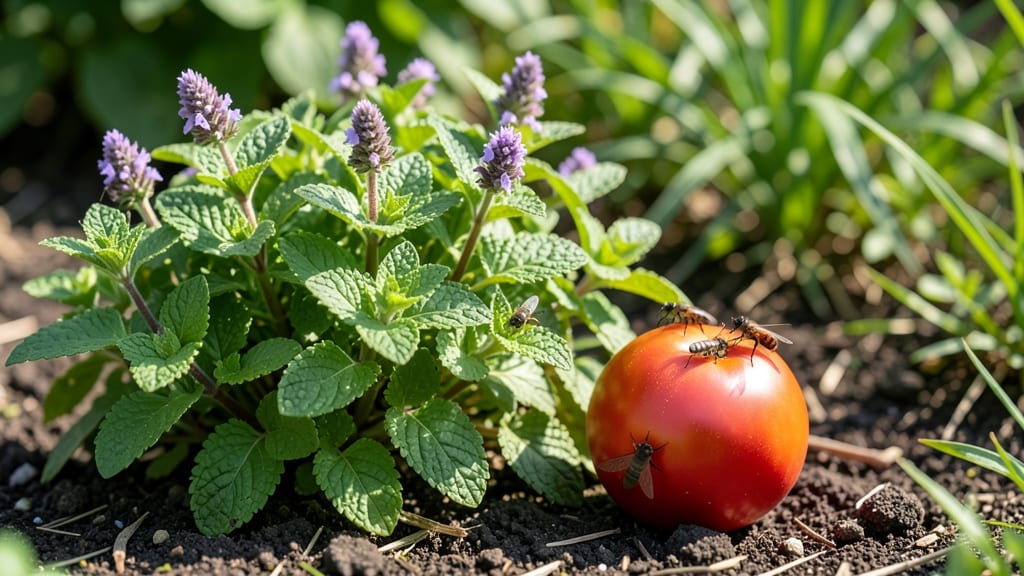
Peppermint does keep flies away effectively by using its strong menthol scent, which confuses their sense of smell and deters them from landing. Planting mint near entry points or mixing peppermint oil with water creates a powerful natural barrier against houseflies and fruit flies.
This works because flies rely heavily on scent to find food and breeding grounds, and menthol overpowers their olfactory receptors. 🌿 Unlike chemical sprays, peppermint offers a non-toxic solution that's safe for homes with pets or children.
I've found that combining fresh mint plants with occasional sprays of diluted peppermint oil (10-15 drops per cup of water) provides the strongest protection, especially in outdoor dining areas where flies are most active.
For best results, place mint plants near windows, doors, and trash bins where flies enter most frequently. The key is maintaining freshness—wilted plants lose their repellent power quickly.
You can also add a few drops of peppermint essential oil to cotton balls and place them in problem areas for an immediate scent boost.
💡 In This Article
- Why Peppermint Repels Flies: Science Behind the Scent
- Best Peppermint-Based Fly Repellent Methods for Gardens
Why peppermint repels flies: science behind the scent
The menthol in peppermint isn't just refreshing to humans—it's a powerful disruptor for flies. Their tiny antennae contain specialized olfactory receptors designed to detect food sources like rotting fruit or decaying organic matter.
Menthol, with its strong cooling and camphor-like aroma, overwhelms these receptors, creating sensory confusion that forces flies to avoid the area. Studies show flies can detect odors at concentrations as low as 1 part per billion, but menthol's intensity often exceeds even this threshold.
What makes peppermint particularly effective is its dual-action mechanism. First, the scent masks attractive food odors by dominating the airspace.
Second, menthol triggers a mild repellent response in flies—some species even exhibit avoidance behaviors when exposed to concentrations as low as 0.1% in air samples. 🌿 For comparison, eucalyptus (another natural repellent) requires about 5-10 times the concentration to achieve similar results, making peppermint nearly twice as potent per volume.
Flies also rely on visual cues, but scent is their primary navigation tool. When menthol molecules bind to their olfactory neurons, they create a chemical signal that the fly's brain interprets as an "unfamiliar threat."
This triggers an instinctive avoidance response, similar to how humans might recoil from a sudden strong odor. The effect is strongest within 3-5 feet of fresh mint plants or concentrated peppermint oil sources, which explains why strategic placement is crucial for maximum effectiveness.
Interestingly, not all flies respond equally. Houseflies and fruit flies are particularly sensitive to menthol due to their reliance on scent for locating food, while cluster flies (which prefer animal hosts) show 30-40% less avoidance.
This variation means peppermint works best in areas where these common species are most active—kitchens, garbage areas, and outdoor dining spaces. The repellent effect typically lasts 24-48 hours for fresh plants and up to a week for properly diluted essential oil sprays.
One common misconception is that peppermint kills flies. In reality, it doesn't harm them—it simply makes the environment unpleasant enough that they seek alternative locations. This non-lethal approach makes peppermint ideal for organic pest control, especially in homes with children or pets where chemical sprays are undesirable.
The scent's persistence also means you don't need constant reapplication, unlike some commercial fly traps that require daily bait replacement.
To maximize this effect, combine peppermint with other fly-repelling scents like citronella or lavender, which create a multi-sensory barrier. Flies have 60-75 olfactory receptors compared to humans' 5-6 million, so overwhelming their limited sensory range with layered scents makes them far more likely to stay away.
The key is consistency—fresh mint or properly stored essential oils maintain their repellent strength far longer than dried herbs.