
Picking
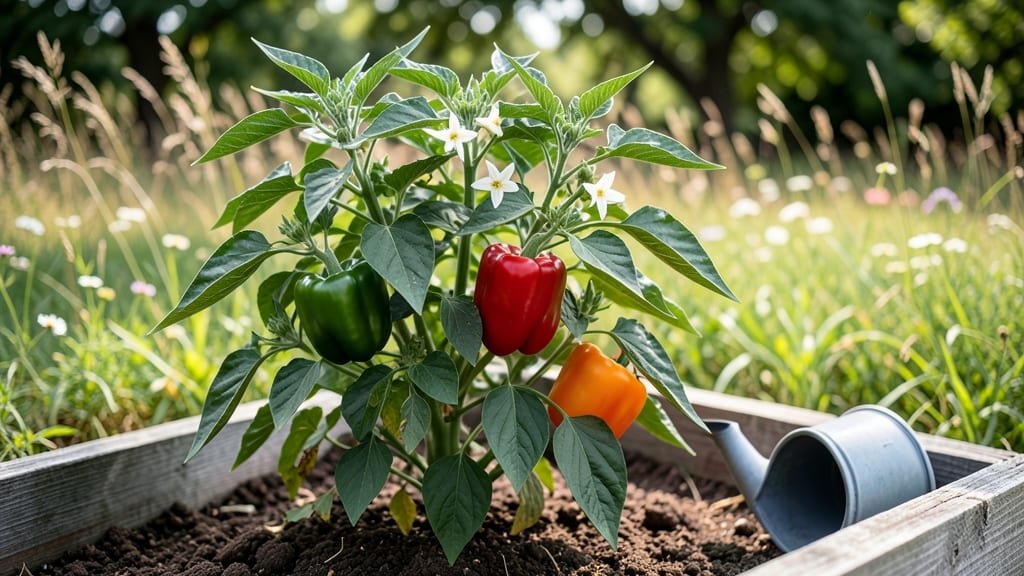
Growing Big Daddy sweet peppers means foot-long peppers that outshine everything else in your garden. 🌶️ These heat-resistant beauties stay productive when other varieties wilt, and their thick walls make them perfect for stuffing, grilling, or fresh eating.
The secret? Starting seeds early, giving them enough space, and keeping the soil consistently moist but not soggy.
These peppers thrive in full sun (6+ hours daily) and well-draining soil with a pH between 6.0 and 6.8. They’re perfect for zones 4-10, making them one of the most adaptable sweet peppers out there.
Plant them after the last frost, spacing them 18-24 inches apart—they need room to grow those massive fruits without crowding.
Once established, they’re surprisingly low-maintenance. A balanced fertilizer every 4-6 weeks keeps them happy, and mulching helps retain moisture while keeping roots cool. You’ll start seeing fruit in 70-80 days, and with proper care, each plant can produce 10-15 peppers—or more if you’re lucky.
Blossom end rot? Too much water or uneven moisture. Slow fruit set? Try hand-pollinating with a small brush. And if your peppers crack? It’s usually a sign they need more consistent watering. With these tips, you’ll be harvesting sweet, thick-walled peppers all season long.
📚 In This Guide
- What you need
- Instructions
- Tips and common mistakes
- Wrapping up and next steps
What you need
- ● Big Daddy Sweet Pepper Seeds: 5–10 seeds (or 3–5 plants if starting with transplants). Look for heat-resistant or long-day varieties for best results.
- ● Containers or Garden Bed: For containers: 5–10 gallon pots (one per plant) with drainage holes.
- ● For garden beds: Well-draining soil in a sunny spot (6+ hours of sunlight daily). Space plants 18–24 inches apart.
- ● Potting Mix: 1–2 bags of high-quality, well-draining potting mix (or amend garden soil with compost).
- ● Fertilizer: Balanced fertilizer (10-10-10 or 5-5-5) for planting.
- ● Low-nitrogen, high-phosphorus fertilizer (e.g., 5-10-10) for flowering/fruiting.
- ● Mulch: Straw or shredded leaves to retain moisture and suppress weeds.
- ○ Support: Optional cages or stakes (3–4 ft tall) for taller plants.
- ● Basic Gardening Tools: Trowel, pruners, gloves, and watering can/hose.
- ○ pH Tester: Optional but helpful—aim for soil pH 6.0–6.8.
- ● Row Cover: Lightweight fabric to protect seedlings from pests or late frosts.
- ● Heat Tolerance: Big Daddy peppers thrive in warm climates (70–90°F). Use row covers or shade cloth if temps exceed 95°F.
- ● Patience! These peppers take 70–90 days to mature—plan accordingly!
Step-by-step instructions for growing Big Daddy sweet peppers
Here’s my foolproof method for cultivating these heat-loving giants—from seed to harvest.
🌱 Step 1: Start Seeds Indoors 8-10 Weeks Before Last Frost
Big Daddy peppers thrive with a long growing season, so begin indoors under grow lights or in a sunny window at 75-85°F. Fill 2-3 inch deep seed trays with sterile seed-starting mix (never garden soil—it’s too dense). Plant 2-3 seeds per cell at a ¼-inch depth, then lightly cover with mix. Mist the surface until evenly damp but not soggy.
Place trays under a humidity dome or cover with plastic wrap to retain warmth. Germination takes 7-14 days—patience is key. Once sprouts appear, remove the cover immediately to prevent damping-off. You’ll know it’s working when first true leaves (not the initial seed leaves) emerge in 2-3 weeks.
☀️ Step 2: Harden Off and Transplant After All Frost Risk Passes
Two weeks before your last frost date, begin hardening off seedlings by placing them outside in partial shade for 1-2 hours the first day. Gradually increase exposure over 10-14 days, ending with full sun and 6+ hours of light daily. Big Daddy peppers need warmth—wait until soil temps reach 60°F before transplanting.
Choose a sunny, sheltered spot with well-draining soil. Space plants 18-24 inches apart in rows 24 inches apart to allow airflow and prevent disease. Dig holes twice as wide as the root ball and mix in compost to enrich the soil. Transplant in the late afternoon to reduce shock, then water deeply at the base.
💧 Step 3: Water Deeply and Maintain Consistent Moisture
Big Daddy peppers hate soggy soil but need steady moisture. Water deeply 1-2 times per week, aiming for 1 inch of water per week. Let the top 2 inches of soil dry out between waterings—this prevents blossom-end rot. Use a drip irrigation system or water at the base to avoid wetting leaves, which reduces disease risk.
Mulch around plants with 2-3 inches of straw or shredded leaves to retain moisture and regulate soil temperature. You’ll see strong, bushy growth within 3-4 weeks if conditions are ideal. If leaves yellow or wilt, you’re either overwatering or underwatering—check soil moisture before reacting.
✂️ Step 4: Prune and Support for Maximum Yield
Once plants reach 12-18 inches tall, pinch off the tip of the main stem to encourage branching. This creates more fruiting sites. Remove suckers (shoots growing in the leaf axils) to direct energy to peppers. Install cages or stakes early—Big Daddy peppers can grow 3-4 feet tall and need support.
Fertilize every 2-3 weeks with a balanced 10-10-10 or 5-5-5 fertilizer once flowers appear. Stop fertilizing 4-6 weeks before harvest to improve flavor. Watch for first flowers in 6-8 weeks—they’ll turn into large, glossy peppers over 70-90 days. Harvest when peppers reach 8-12 inches long for peak sweetness.
Tips & tricks for growing Big Daddy sweet peppers
These heat-resistant peppers thrive with the right care—here's how to maximize your harvest from seed to table.
Seed Starting Secret: The 75-85°F temperature range for seed trays is non-negotiable—any cooler and germination slows dramatically. I use a seedling heat mat underneath my trays to maintain consistent warmth, especially if my windowsill gets chilly at night. For extra insurance, place a thermometer near the trays to monitor temperature continuously.
Harden Off Gradually: That 1-2 hour initial exposure on Day 1 might seem short, but it's crucial. Big Daddy peppers are sensitive to temperature swings. Increase exposure by 30 minutes each day—if you rush this process, seedlings can develop shock and fail to thrive. Watch for wilting as your indicator; healthy seedlings should perk up within an hour of returning indoors.
Soil Temperature Check: Never transplant until soil reaches 60°F—this is the absolute minimum for these heat-loving varieties. I use a soil thermometer to verify before moving plants outdoors. Cold soil shocks roots and delays establishment. If your soil runs cooler, consider using black plastic mulch a few weeks before transplanting to warm the soil naturally.
Pruning Strategy: When pinching the main stem at 12-18 inches, aim for a 45-degree angle cut just above a leaf node. This encourages bushier growth and more fruiting sites. I also recommend removing suckers within 24 hours of appearance—they compete with your main peppers for nutrients. Timing is everything with these large plants.
Pro Tips for Big Daddy Sweet Pepper
- These heat-resistant peppers thrive with the right care—here's how to maximize your harvest from seed to table.
- Seed Starting Secret: The 75-85°F temperature range for seed trays is non-negotiable—any cooler and germination slows dramatically.
- Harden Off Gradually: That 1-2 hour initial exposure on Day 1 might seem short, but it's crucial.
Frequently asked questions
How hot can Big Daddy peppers handle before they suffer?
The Big Daddy variety is bred for heat resistance, thriving in temperatures up to 95°F (35°C) with proper shade during peak afternoon sun. If temps hit 100°F+ (38°C+), provide afternoon shade and mulch to retain moisture. Overheating can cause blossom drop or sunscald—watch for yellowing or crispy patches on fruit.
When is the best time to pick Big Daddy peppers for maximum sweetness?
Harvest when peppers reach 6–8 inches long and are firm, glossy, and deep green (or their mature color if variegated). For peak sweetness, pick in the morning after dew has dried but before the heat of the day. Use pruning shears to avoid damaging the plant—never pull peppers off!
Can I grow Big Daddy peppers in containers, and what size pot do I need?
These peppers adapt well to containers, but aim for a minimum 5-gallon pot (bigger is better). Ensure pots have drainage holes and use a high-quality potting mix with added compost. Place containers in full sun (6+ hours/day) and fertilize every 2–3 weeks with a balanced formula (10-10-10 or similar).
What should I do if my Big Daddy peppers turn bitter or develop cracks?
Bitterness
often stems from stress—check for underwatering, overcrowding, or extreme temps. Cracks usually mean irregular watering (soak deeply, then let soil dry slightly between waterings). For cracked peppers, harvest immediately to prevent pests. Boost sweetness by reducing nitrogen-heavy fertilizers and increasing potassium (try a banana peel tea!).
Are there any companion plants that help (or hurt) Big Daddy peppers?
Great companions:
Basil, marigolds, onions, or spinach (they deter pests and improve flavor). Avoid: Fennel, beans, or brassicas (like cabbage), which can stunt growth or attract shared pests. Interplanting with nasturtiums also lures aphids away from your peppers!
How do I store Big Daddy peppers long-term without losing flavor?
Store unwashed peppers in the crisper drawer of your fridge (humidity: ~90–95%) for up to 2 weeks. For longer storage, freeze whole or sliced peppers (blanch for 3 mins first to preserve texture). Alternatively, ferment or pickle them—heat resistance makes them perfect for spicy-sweet preserves!
Wrapping up and next steps
Growing Big Daddy sweet peppers is a rewarding journey—packed with flavor, resilience, and a harvest that’ll make your taste buds dance! 🌶️ Whether you’re a seasoned gardener or a newbie, these heat-resistant beauties prove that success is just sunlight, patience, and a little love away.
Now that you’re armed with the secrets to thriving plants, roll up your sleeves and get planting!
Ready to take the next step? Start by marking your calendar for transplanting (or sowing seeds) and keep an eye on those first blossoms—they’re your sign to celebrate the hard work ahead! 🎉