
Vegetables
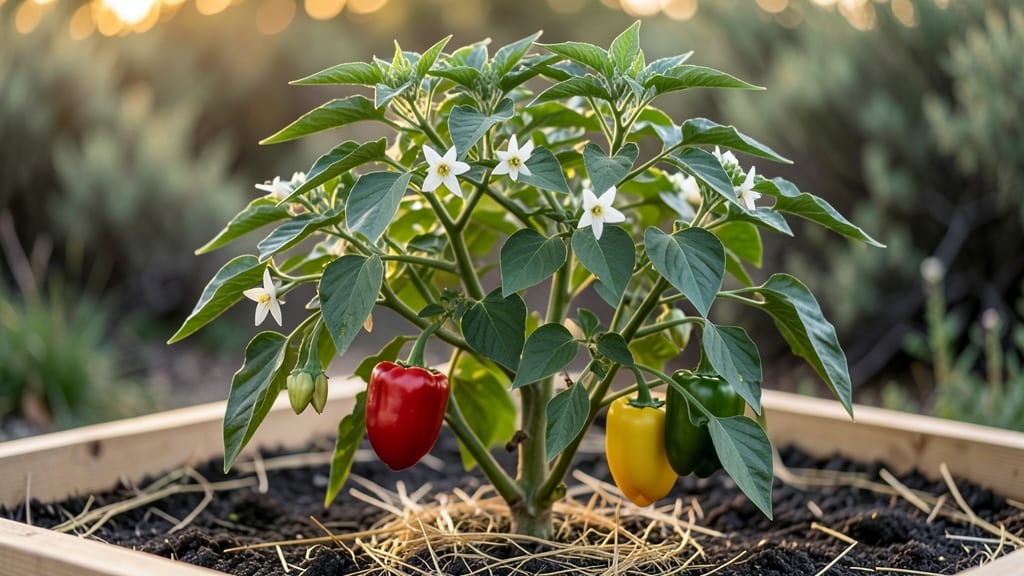
Peppers aren't true perennials in most climates, but they can grow back year after year in USDA zones 9-11 with winter protection, while gardeners in cooler areas must replant annually or use container growing to extend their lifespan.
Peppers act more like tender perennials—they thrive when temperatures stay above 50°F consistently, but even a light frost will kill them. 🌱 In warmer zones, their roots can survive winter if mulched heavily or covered, allowing regrowth each spring.
For cooler climates, overwintering in pots and moving them indoors gives you a head start next season, though they'll never be as hardy as true perennials like asparagus or rhubarb.
What makes this tricky is that peppers are sensitive to both cold and heat extremes—they need 60-85°F to produce well. That's why gardeners in zones 7-8 often treat them as annuals, replanting fresh seedlings each spring.
The good news? With proper care, you can get 2-3 years of harvests from the same plant in ideal conditions.
💡 In This Article
- Why Peppers Die in Cold Climates
- Extending Pepper Lifespan in Cooler Regions
Why peppers die in cold climates
Peppers are tropical plants at heart, and their sensitivity to cold stems from their biological origins in regions where temperatures rarely dip below 50°F. When nighttime temperatures fall to 40°F or lower, their cellular membranes begin to rupture, a process called cold shock.
This damage disrupts water uptake and nutrient transport, causing leaves to blacken and wilt within hours. Frost is even more devastating—ice crystals form in plant tissues, physically tearing cell walls and killing the plant within minutes.
The roots are particularly vulnerable because they can't regenerate quickly once damaged. Unlike true perennials like asparagus, which have thick, insulated root systems, pepper roots are fibrous and delicate.
A single 24-hour exposure to 32°F can kill even well-established plants, while temperatures between 32-40°F often result in stunted growth or death over time. This is why peppers in zones 8 and below rarely survive winter outdoors—their entire system shuts down when cold sets in.
What's fascinating is how peppers respond to temperature fluctuations. They enter a state of dormancy when stressed by cold, but unlike hardy perennials, they can't metabolize stored energy efficiently. Their energy reserves are primarily in the foliage, which dies back completely in frost.
Without protective measures, there's nothing left to regrow in spring. 🌡️ This is why gardeners in cooler zones must treat them as annuals—they simply can't withstand the seasonal temperature swings that true perennials endure.
Even in marginally warm zones (like zone 9), peppers need protection during unexpected cold snaps. A 5°F drop below their comfort zone can trigger irreversible damage.
The key difference between peppers and true perennials lies in their thermal tolerance range—peppers thrive in 60-85°F but can't handle anything below 50°F for extended periods, while perennials like lavender can survive 10°F or lower.
Another critical factor is their growth cycle. Peppers grow quickly in warm weather but have a 90-120 day window to mature before cold sets in.
This tight schedule means they can't "wait out" winter like biennials or true perennials—they must complete their entire life cycle within a single growing season in most climates. This biological constraint is why they're classified as tender perennials rather than true perennials.
Understanding this helps explain why peppers in containers fare better—their roots stay insulated by soil and pot material, maintaining slightly warmer temperatures than ground-planted roots. This is the same principle behind overwintering techniques we'll explore next. 🌿 The bottom line?
Peppers are tropical survivors that can't handle the temperature extremes of temperate climates without human intervention.