
Planting
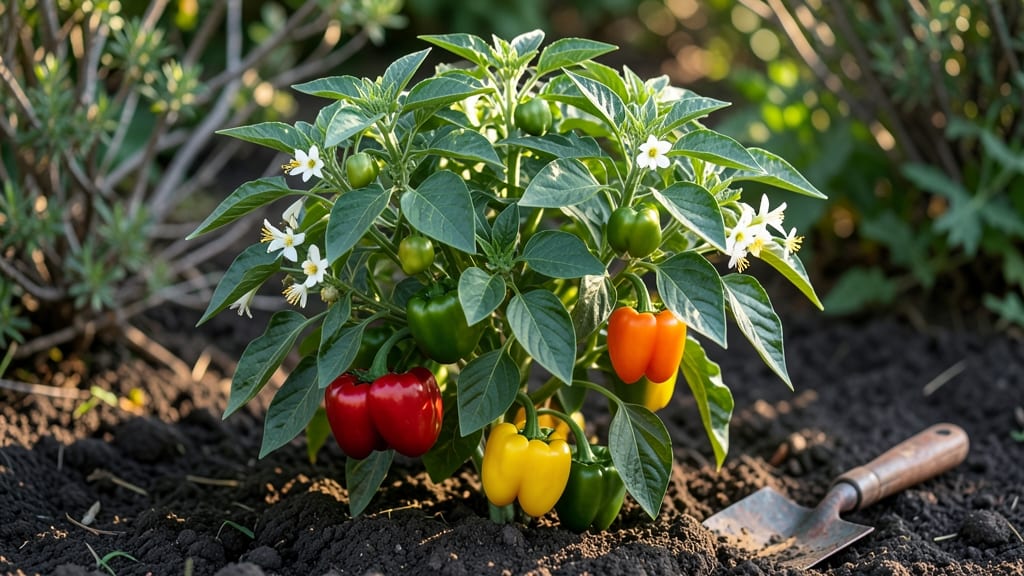
Growing multi-color pepper plants turns your patio into a living rainbow. 🌈 These peppers—like Rainbow Pepper or Colorado Pepper—pack vibrant hues into compact plants, perfect for small spaces or containers.
The secret lies in their genetic quirks: some develop stripes, others shift colors as they ripen, creating edible art on the vine.
Start with well-draining soil and a sunny spot—at least 6-8 hours of sunlight daily. Pepper plants thrive in 5-7 gallon pots if you're gardening in containers, and they love warmth.
Plant seeds indoors 8-10 weeks before your last frost, then transplant when soil temps hit 60°F. The key? Patience—color development takes time, but the payoff is worth it.
Water consistently to keep soil moist but not soggy, and feed with a balanced fertilizer every 2-3 weeks once flowers appear. These peppers are disease-resistant but watch for aphids—spray with soapy water if you spot them.
By midsummer, you’ll harvest peppers in shades of yellow, orange, red, and purple, each with its own mild, slightly sweet flavor.
Bonus: These peppers double as conversation starters. Use them fresh in salads, roast them for snacks, or dry them for winter spice blends. The best part? They keep producing all season long, so you’ll have a steady supply of colorful, homegrown flavor. Ready to grow your own edible rainbow?
📚 In This Guide
- What you need
- Instructions
- Tips and common mistakes
- Wrapping up and next steps
What you need
- ● Multi-color pepper seeds or seedlings – Choose varieties like ‘Colorado Scorch,’ ‘Rainbow F1,’ or ‘Apache’ for vibrant colors.
- ● Containers or pots – 5- to 10-gallon pots (or larger) with drainage holes. Pro tip: 💡 Use fabric grow bags for better aeration!
- ● High-quality potting mix – A well-draining blend (e.g., 60% peat/coir, 30% perlite, 10% compost). Avoid garden soil—it compacts too easily!
- ● Sunlight access – 6+ hours of direct sunlight daily (south-facing windows or grow lights work for indoors).
- ● Watering can or spray bottle – Keep soil consistently moist but not soggy.
- ● Balanced fertilizer – A 10-10-10 or 5-5-5 NPK blend (diluted to half-strength). Feed every 2–3 weeks during growing season.
- ● Garden trowel or small shovel – For transplanting seedlings.
- ● Pruning shears – To trim leggy stems or encourage bushier growth.
- ● Support stakes or cages – Peppers can get top-heavy! Use 3–4 ft stakes for taller varieties.
- ● Mulch (straw or shredded leaves) – Retains moisture and regulates soil temp.
- ● pH test kit – Aim for 6.0–6.8. Peppers thrive in slightly acidic soil!
- ● Grow lights (LED or fluorescent) – Essential if growing indoors year-round.
- ● Pest control (neem oil, insecticidal soap) – Preemptive strike against aphids or spider mites.
Step-by-step instructions for growing multi-color pepper plants
Here's how to coax vibrant, multi-hued peppers from seed—even in small spaces.
🌱 Step 1: Start Seeds Indoors for Early Growth
Fill 2-3 inch deep biodegradable pots with sterile seed-starting mix and moisten until damp but not soggy. Pepper seeds need warmth to germinate, so place pots on a seedling heat mat set to 75-85°F. Plant seeds ¼ inch deep, two per pot, and cover lightly with additional mix. Mist gently with water until the surface looks uniformly damp.
Cover the pots with a clear plastic dome or wrap to retain moisture and warmth. Keep them in a dark location until germination, which typically occurs in 7-14 days. Avoid watering from above once seeds sprout—you'll know moisture is right when the soil surface feels damp but not wet to the touch. Remove the dome immediately after sprouts appear to prevent fungal issues.
☀️ Step 2: Provide Bright Light and Prevent Leggy Growth
Move seedlings to a sunny windowsill or under grow lights as soon as they emerge. Peppers need 14-16 hours of light daily to grow compact and strong. If using natural light, rotate pots a quarter turn daily so plants grow upright instead of leaning toward the window. You'll see leggy growth as thin, pale stems with leaves spaced far apart—this means your light is too weak or distant.
Use a full-spectrum LED grow light positioned 2-4 inches above the seedlings if natural light is insufficient. Raise the light as plants grow to maintain that gap. Strong seedlings have thick stems, deep green color, and leaves spaced 1-2 inches apart. Pinch off the first flowers that appear to redirect energy into foliage growth—this ensures a stronger plant for later harvests.
🪴 Step 3: Transplant to Larger Containers or Garden
When seedlings have 4-5 true leaves and are 4-6 inches tall, transplant them to 5-gallon containers or directly into the garden after the last frost date. Choose a location with 6-8 hours of direct sun daily—peppers need plenty of warmth to develop their vibrant colors. Fill containers with well-draining potting mix amended with compost.
Dig a hole twice as wide as the root ball and place the seedling in, firming soil around the base. Water deeply to settle the roots and keep the soil moist but not waterlogged for the first 2 weeks. Mulch around the base with 2-3 inches of organic mulch to retain moisture and regulate soil temperature. Avoid overwatering—peppers are drought-tolerant once established, and soggy soil invites rot.
✂️ Step 4: Prune and Support for Optimal Fruit Production
Prune suckers—the small shoots that grow in the leaf axils—regularly to encourage bushier growth and more fruit. Use clean, sharp pruners to remove suckers when they're 2-3 inches long. This redirection of energy results in stronger stems and more vibrant peppers. Support taller varieties with stakes or cages as they grow to prevent stems from breaking under the weight of fruit.
Fertilize every 4-6 weeks with a balanced, organic fertilizer to encourage vibrant color development. Peppers need consistent nutrients to produce their signature multi-hued fruits. Harvest peppers when they reach 3-5 inches long for the best flavor and color intensity. Regular harvesting encourages more production and prevents overcrowding on the plant.
Tips & tricks for growing stunning multi-color pepper plants
Small adjustments in your approach can make all the difference when nurturing vibrant pepper varieties—here's what I've learned after years of experimenting with compact growing spaces.
Germination Warmth: That 75-85°F heat mat range is non-negotiable for pepper seeds, but I've found adding a second heat source like a small LED desk lamp (placed 6 inches above) creates a more consistent temperature zone. The seeds will sprout faster and more uniformly—just make sure the lamp doesn't get too close once they emerge. Watch for condensation on the dome cover as your first sign of successful germination.
Lighting Strategy: The 14-16 hours of daily light requirement is where most beginners struggle. If you're using natural light, place your seedlings on a rotating tray that turns automatically—this eliminates the need to remember to rotate them yourself. For grow lights, I recommend a T5 LED fixture with a full spectrum—it's more energy-efficient than traditional bulbs and produces better color development in the peppers later on. The 2-4 inch distance is crucial; too close causes burning, too far leads to leggy growth.
Transplanting Technique: When moving to 5-gallon containers, I've had the most success using the "watering trench" method: dig a small trench around the root ball, water it thoroughly, then let it absorb for 10 minutes before transplanting. This prevents transplant shock and gives the roots a head start. The 2-3 inches of mulch should be organic (like straw) to prevent soil compaction while regulating temperature—this is especially important if you're growing in containers where temperature swings are more dramatic.
Pruning Insight: Those 2-3 inch suckers you're supposed to remove? I actually wait until they're about 3-4 inches before pruning—the extra growth gives the plant more energy reserves. And here's a pro trick: when you remove suckers, place them in a small container of water. Many will root and become new plants! This gives you free propagation material while keeping your main plant healthy.
Pro Tips for Multi Color Pepper Plant
- Small adjustments in your approach can make all the difference when nurturing vibrant pepper varieties—here's what I've learned after years of experimenting with compact growing spaces.
- The seeds will sprout faster and more uniformly—just make sure the lamp doesn't get too close once they emerge.
- Lighting Strategy: The 14-16 hours of daily light requirement is where most beginners struggle.
Frequently asked questions
How long does it take for multi-color peppers to produce fruit?
Most multi-color pepper varieties (like the Colorado Scorch or Rainbow Mix) take 60–90 days to bear fruit after transplanting, depending on heat and sunlight. Start seeds indoors 8–10 weeks before your last frost for an earlier harvest. Patience pays off—those vibrant colors are worth the wait!
Can multi-color peppers survive cold weather?
Nope! These peppers are tender perennials and thrive in USDA Zones 9–11. If you live in cooler climates, grow them in containers and bring them indoors when temps drop below 50°F (10°C). A sunny windowsill or grow light keeps them happy until spring.
Are multi-color peppers spicier than regular bell peppers?
Not necessarily! Many multi-color varieties (like Black Pearl or Apache) are mild to medium-heat, similar to bell peppers. However, some hot varieties (e.g., Rainbow Habanero) pack a punch. Always check the seed packet for heat levels—taste-test a small piece first!
Why are my multi-color peppers turning yellow or brown?
Yellowing leaves often signal overwatering or poor drainage, while brown patches could mean sunburn, pests, or fungal issues. Ensure pots have drainage holes and peppers get 6–8 hours of sun daily. If pests strike, spray with neem oil or insecticidal soap. Prevention tip: Mulch to retain moisture and avoid wetting leaves.
How much space do multi-color pepper plants need?
Most varieties need 12–18 inches of space per plant (or 18–24 inches for bushier types). If growing in containers, a 5–7 gallon pot per plant works well. Pro tip: Use cascade or dwarf varieties (like Mini Bell Mix) for smaller spaces—perfect for balconies or windowsills!
Can I save seeds from multi-color peppers for next year?
Yes! Let a few peppers fully ripen on the vine, then scoop out the seeds, rinse them, and dry on a paper towel for 1–2 weeks. Store in a cool, dark place. Note: Some hybrid varieties (check seed packets) may not produce true-to-type peppers. For consistent colors, buy fresh seeds annually.
Wrapping up and next steps
Growing multi-color pepper plants is a rewarding way to add vibrant flavors and beauty to your compact garden—whether it’s a balcony, windowsill, or tiny backyard! 🌈 With the right care, these colorful varieties can thrive, offering both visual appeal and a bountiful harvest.
Now that you’re equipped with the knowledge, take the first step and plant your seeds or seedlings today—your future meals (and Instagram-worthy garden) will thank you!
Next up:
- 🌱 Start small: Try one or two varieties to test your growing conditions.
- 📅 Track progress: Use a journal or app to log growth and harvest dates.
- 🤝 Share the joy: Gift peppers to friends or swap tips with fellow plant enthusiasts!