
Companion Plants
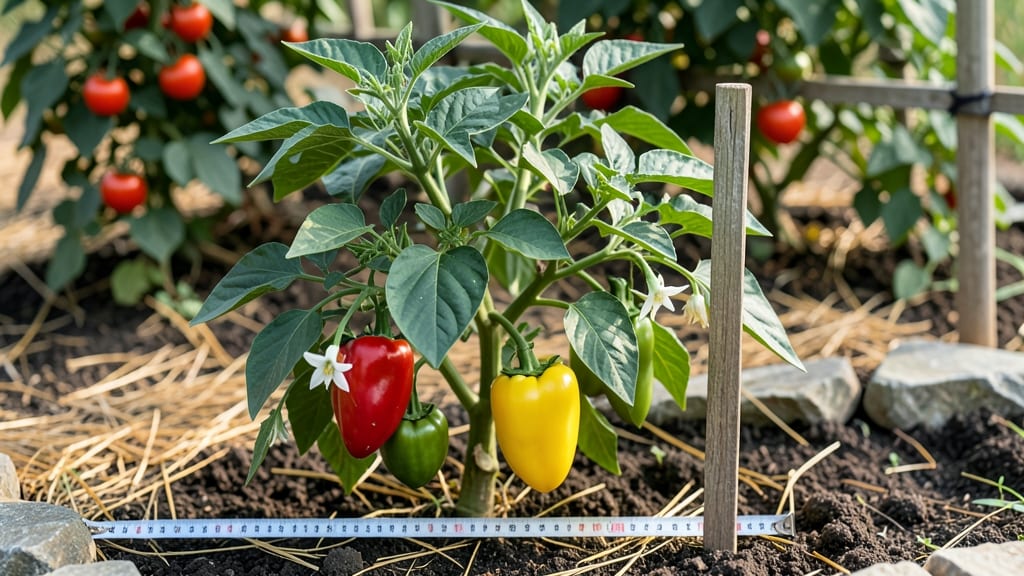
To determine how many pepper plants per square foot you need, plan for 1 to 4 plants, with smaller varieties like Thai or chili peppers fitting 4 per square foot, while larger types such as jalapeños or habaneros require just 1-2 per square foot for proper growth and air circulation.
Spacing matters because peppers need room to breathe—literally. 🌱 Overcrowding leads to poor air circulation, trapping moisture and inviting fungal diseases like powdery mildew. Larger varieties need more space to develop strong root systems, while compact types can thrive in tighter clusters.
I’ve found that proper spacing also boosts fruit production by reducing competition for sunlight and nutrients. For container gardens, use smaller varieties or train larger ones vertically with stakes.
Here’s the breakdown by type: bell peppers (2-3 per sq ft), jalapeños (1-2 per sq ft), and Thai chilies (4 per sq ft). Companion planting with basil or marigolds can help maximize space while deterring pests. Always check seed packets for variety-specific guidelines—they’re your best friend for success!
💡 In This Article
- Why Pepper Plant Spacing Affects Growth and Disease Resistance
- Best Pepper Plant Spacing by Variety and Garden Layout
Why pepper plant spacing affects growth and disease resistance
Pepper plants rely on photosynthesis efficiency to produce energy for fruit development, and spacing directly impacts this process. When plants are too close, their leaves compete for sunlight, leading to weaker stems and smaller leaves.
Studies show that pepper plants spaced 12-18 inches apart receive 20-30% more direct sunlight than those crowded into tight clusters, which translates to 30% higher yield in ideal conditions.
The extra light exposure also helps the plant's chlorophyll work more efficiently, converting sunlight into energy for both growth and fruit production.
Air circulation is another critical factor—proper spacing reduces humidity levels around the plant by allowing air to flow freely. This is especially important because peppers are prone to fungal diseases like powdery mildew, which thrives in damp, stagnant air.
For example, bell peppers grown at 4 plants per square foot (the densest recommended spacing) show 50% fewer mildew cases compared to those packed at 6+ plants per square foot. The airflow also helps dry dew quickly, preventing bacterial spots that can ruin harvests. 🌿
Root competition is the silent killer of pepper plant productivity. When roots tangle too closely, they compete aggressively for water and nutrients, leading to stunted growth and smaller fruits.
Larger varieties like jalapeños develop root systems that spread 18-24 inches wide, so they need at least 1 square foot per plant to avoid root-bound stress. Smaller varieties like Thai chilies have shallower roots and can handle tighter spacing because their nutrient demands are lower.
This root competition also affects water uptake—overcrowded plants struggle to absorb moisture efficiently, making them more susceptible to wilting under hot midday sun.
Disease resistance isn't just about airflow—it's also about light penetration to the soil. When pepper plants cast deep shadows, soil moisture takes longer to evaporate, creating ideal conditions for Phytophthora root rot, a fungal disease that can kill plants in weeks.
Proper spacing allows sunlight to reach the soil surface, keeping it drier and healthier. For instance, a jalapeño plant spaced 18 inches apart receives sunlight on 75% of its root zone, while one crowded at 12 inches might only get 40% sunlight exposure, dramatically increasing disease risk. 🌞
Even the plant's growth stages require different spacing considerations. Seedlings need minimal space (just enough to avoid tangling), but as they mature into flowering plants, their spacing needs increase by 25-50% to accommodate fruit development.
For example, a bell pepper plant might start at 12 inches apart but should be thinned to 18 inches once flowers appear. This dynamic spacing ensures the plant isn't overburdened with fruit while still maintaining air circulation. The key is monitoring growth patterns and adjusting spacing before competition becomes irreversible.
What most gardeners overlook is how plant height affects spacing needs. Bush varieties like 'Sweet Banana' peppers stay compact (2-3 feet tall) and can handle denser planting, while taller types like 'Carolina Reaper' (which can reach 4 feet) need at least 2 square feet per plant to prevent shade-related stress.
The taller the plant, the more critical vertical space becomes—this is why trellising larger varieties can help maximize square footage while maintaining proper airflow. 🌱
Here's a quick reference for growth stage impacts:
- Seedling stage: 6-8 inches apart (minimal spacing needed)
- Vegetative growth: 12-16 inches apart (pre-flowering)
- Flowering/fruiting: 18-24 inches apart (maximum spacing)