
Vegetables
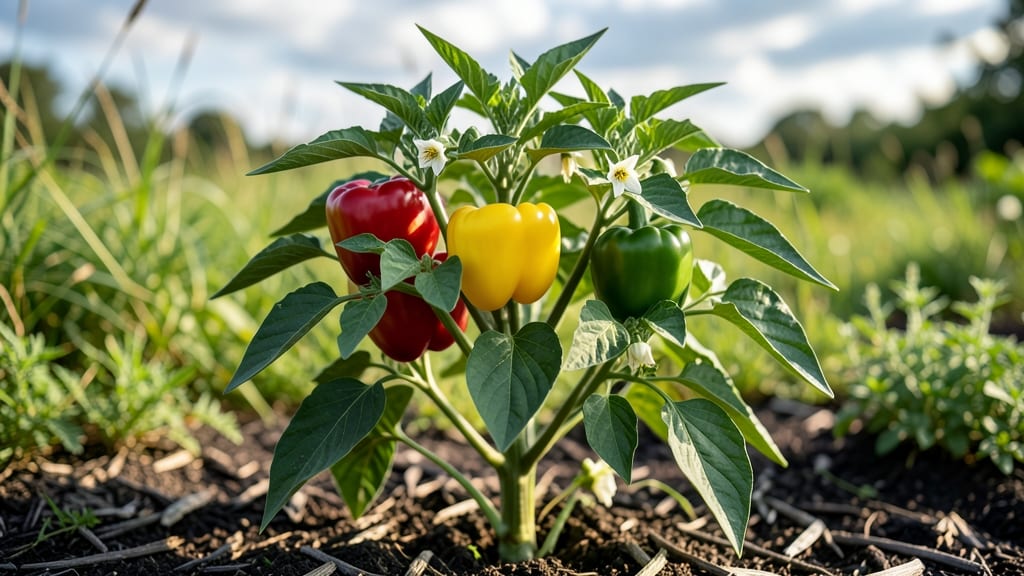
For optimal bell pepper yields, plant 3 to 4 plants per square foot to balance productivity with airflow and sunlight access, though adjustments are needed based on specific varieties and garden conditions.
This spacing strategy works because bell peppers need room to develop strong root systems and foliage without competing for nutrients. 🌱 Compact varieties like 'Snackable' or 'Mini Bell' can handle closer spacing (up to 4 plants per square foot), while larger types like 'California Wonder' thrive with 3 plants per square foot.
The key is matching plant size to your garden's available space—overcrowding leads to disease risks and lower yields.
What many gardeners overlook is how growth habits affect spacing. Upright varieties grow vertically, saving horizontal space, while trailing types spread wider. I've found that giving plants 18-24 inches of space between rows (depending on variety) makes a huge difference in airflow, which is critical for preventing fungal issues.
For container gardens, use 5-gallon pots with one plant per container to mimic this spacing.
💡 In This Article
- Optimal Bell Pepper Spacing by Variety and Growth Habits
- Adjusting Planting Density for Urban vs Rural Gardens
Optimal bell pepper spacing by variety and growth habits
Bell pepper varieties differ dramatically in size and growth patterns, which directly impacts how many you can plant per square foot. Dwarf varieties like 'Snackable' or 'Mini Bell' stay compact—typically reaching 12-18 inches tall and wide—allowing you to fit 4 plants per square foot without crowding.
These smaller types develop a root system that spreads only 6-12 inches wide, making them perfect for tight spaces or container gardens. 🌱 The trade-off? They produce smaller fruits, so you'll need more plants to match the yield of larger varieties.
Standard varieties such as 'California Wonder' or 'Jupiter' grow significantly larger, reaching 24-36 inches tall with a 18-24 inch spread. These need 3 plants per square foot to prevent competition for sunlight and nutrients.
The key difference lies in their root zones—larger plants develop extensive root systems that can spread 24-36 inches wide, requiring more space to avoid nutrient depletion.
What's fascinating is how their upright growth habit allows for vertical stacking in raised beds, where you can plant 2 rows of 3 plants each per square foot by staggering them.
Giant varieties like 'Monster' or 'Beefsteak' take up even more space, often needing 2 plants per square foot or more. These plants can reach 36+ inches tall with a 36-inch spread, and their heavy fruit production demands robust root systems.
The science here is about photosynthesis efficiency—when plants are too close, their leaves shade each other, reducing energy production by up to 30%. This is why even high-yield varieties like 'Big Jim' (which produces 10-12 peppers per plant) need proper spacing to maintain fruit quality.
Growth habits also play a critical role. Upright varieties grow straight up, saving horizontal space, while trailing types like 'Sweet Banana' spread outward, requiring 12-18 inches more space per plant.
I've noticed that trailing varieties often produce more fruit but need sturdy trellises to prevent sprawling, which can block sunlight for neighboring plants. For these, consider 2 plants per square foot with vertical support to maximize space efficiency while maintaining airflow.
Another factor is maturity timeline—fast-maturing varieties (60-70 days) can be planted more densely because they'll be harvested before overcrowding becomes an issue. Slow-maturing types (90+ days) need more space from the start to support their longer growth period.
For example, 'Carmen' (a slow grower) benefits from 3 plants per square foot even in early stages, while 'Early Prolific' (a fast grower) can start at 4 plants per square foot and be thinned later if needed.
Here's a quick reference for common varieties:
- Dwarf varieties: 4 plants/sq ft (e.g., 'Snackable', 'Mini Bell')
- Standard varieties: 3 plants/sq ft (e.g., 'California Wonder', 'Jupiter')
- Large varieties: 2 plants/sq ft (e.g., 'Monster', 'Beefsteak')
- Trailing varieties: 2-3 plants/sq ft with trellis (e.g., 'Sweet Banana')
Pro tip: Always check the seed packet for variety-specific spacing recommendations—some modern hybrids are bred for closer planting! 💫