
Companion Plants
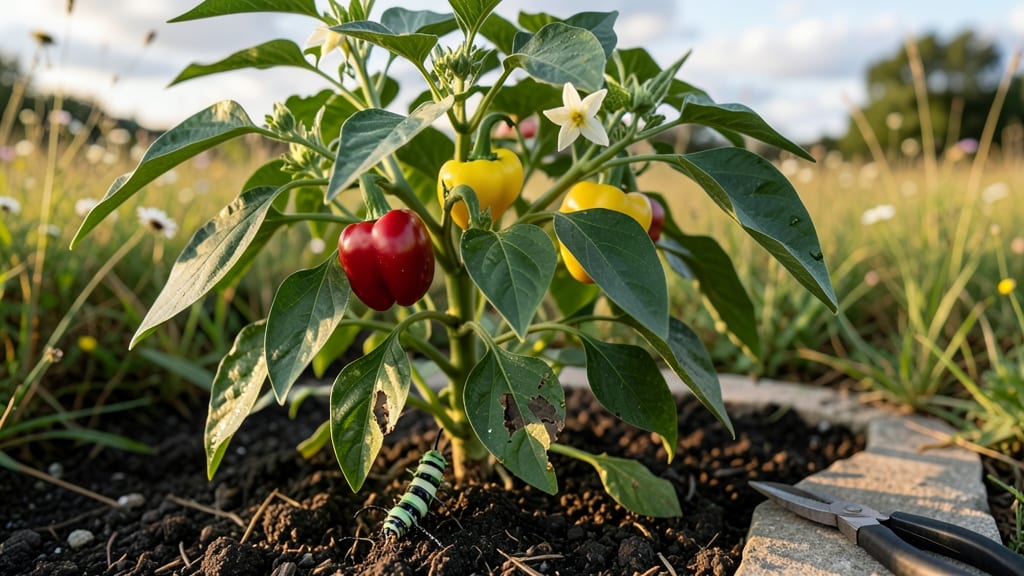
Hornworms do eat pepper plants aggressively, targeting leaves, stems, and even fruits, leaving skeletonized foliage and stunted growth. Their voracious appetite makes them a major garden pest for peppers and related plants like tomatoes and eggplants.
Hornworms have a particular fondness for peppers because these plants contain compounds that attract them—especially the volatile oils in leaves. 🌿 These caterpillars can devour entire leaves overnight, leaving only the tough veins behind, which severely weakens the plant's ability to photosynthesize.
What makes them particularly destructive is their rapid growth: a single hornworm can reach 4 inches in just a few weeks, consuming up to 8 square feet of foliage during that time. The damage often goes unnoticed until it's too late, as they're expert at camouflaging themselves among leaves.
While they primarily target peppers, they'll also attack tomatoes, eggplants, and even potatoes, making them a universal threat to nightshade family gardens. The key to managing them lies in early detection—look for black droppings on leaves or the distinctive green, spiny caterpillars hiding along stems.
Their feeding patterns leave unmistakable signs, so regular garden walks can save your harvest before it's too late.
💡 In This Article
- How Hornworms Target Pepper Plants and Other Nightshades
- Natural and Chemical Control Methods for Hornworm Infestations
How hornworms target pepper plants and other nightshades
Hornworms locate pepper plants using a combination of chemical cues and visual signals.
These caterpillars are drawn to the volatile organic compounds (VOCs) emitted by pepper leaves, particularly the terpenes and aldehydes that give peppers their characteristic aroma. 🌿 When a pepper plant is damaged—even slightly—the released compounds act like an all-you-can-eat buffet sign, attracting hornworms from up to 30 feet away.
Their compound eyes detect the plant's green hues, which stand out against garden soil, while their antennae pick up on the chemical trails left by other hornworms already feeding.
Their feeding strategy is ruthlessly efficient, with hornworms prioritizing the most nutritious parts first. Young caterpillars start with the tender leaf edges, using their mandibles to slice through tissue in a precise, scissor-like motion.
As they grow, they move to the central veins and stem tissues, which contain higher concentrations of nitrogen and water.
A single hornworm can consume 0.5 grams of foliage per day during its larval stage, and their excrement—dark, watery droppings—often accumulates in the feeding zones, further signaling to other hornworms that a food source is available.
What makes peppers particularly vulnerable is their fast growth rate compared to the hornworm's development cycle.
While a pepper plant might recover from minor damage, continuous feeding over 2-3 weeks (the typical hornworm larval period) can lead to 50-70% defoliation, severely compromising the plant's ability to produce energy through photosynthesis.
The caterpillars' spines also make them difficult to dislodge—even when manually removed, they often curl up and drop to the ground, continuing to feed until they pupate.
Hornworms exhibit a strong preference for nightshade family plants (Solanaceae) because these contain alkaloids like solanine, which are toxic to many insects but serve as a growth stimulant for hornworms.
Studies show that hornworms can metabolize these compounds, using them as a defense mechanism against predators while simultaneously gaining nutritional benefits. This chemical adaptation explains why they rarely bother other garden plants like basil or carrots, even when growing nearby.
Their feeding patterns also reveal a fascinating behavioral trait: hornworms are crepuscular feeders, meaning they're most active during dawn and dusk when temperatures are cooler and predators like birds are less active.
This explains why gardeners often notice new damage in the morning, only to find the culprit has vanished by midday. Their ability to mimic snake patterns with their spines and blend into foliage makes them nearly invisible until they're already well-fed.
Consider these key factors when assessing hornworm damage:
- Leaf skeletonization: Only veins remain, creating a lace-like pattern
- Black frass: Pile of dark, watery droppings near feeding sites
- Stunted growth: New leaves appear smaller or deformed
- Pupation signs: Brown, smooth cocoons (about 2 inches) on stems or soil
The most critical window for intervention is during the first 3-5 days of infestation, when hornworms are still small and their damage is localized. Waiting until you see large caterpillars means the plant has already suffered significant stress, making recovery much harder. 🌱