
Shrubs
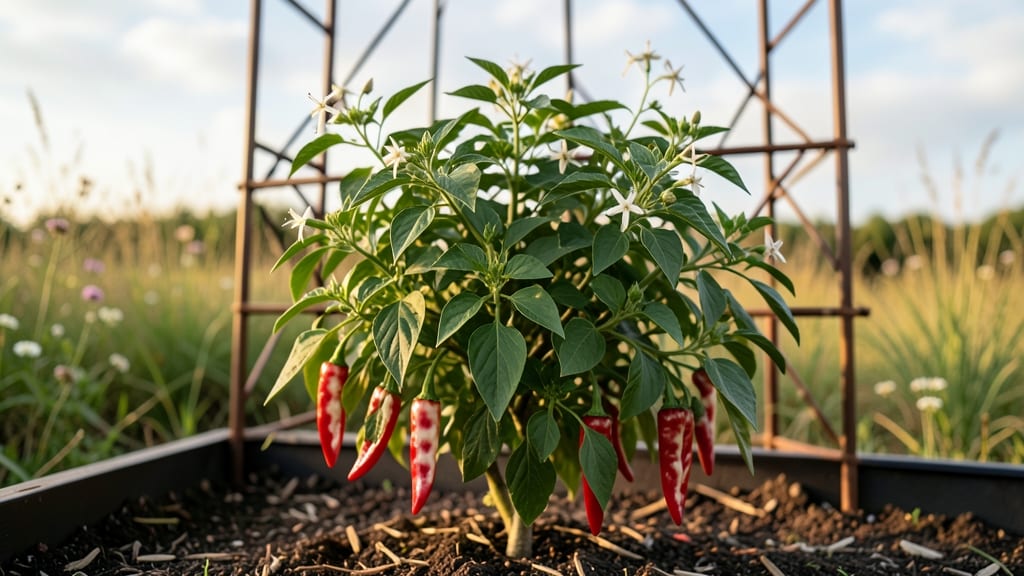
Growing candy cane red peppers means striped heat in your garden that tastes like summer. 🌶️ These aren’t your average peppers—their candy-striped skins hide a medium heat (5,000-10,000 SHU) that’s perfect for roasting or fresh salsas.
I’ve grown them for three seasons now, and the secret isn’t just the soil—it’s the timing of when you plant and how you handle the heat.
Start seeds indoors 8-10 weeks before your last frost, or buy transplants when nighttime temps stay above 55°F. They crave full sun (6+ hours daily) and well-draining soil with a pH of 6.0-6.8—think compost mixed into garden beds or raised beds.
Space plants 18 inches apart to give them room to bush out, and avoid planting where tomatoes or peppers grew last year (disease prevention is key).
Water deeply 1-2 times per week, aiming for 1 inch total, and mulch to keep roots cool. The real magic happens when you let them ripen—red with white stripes means peak flavor.
Harvest before first frost, and store in a cool, dark place for 2-3 weeks. These peppers are disease-resistant but watch for aphids; a strong spray of water usually does the trick.
Pro tip: If your stripes fade, it’s not a fail—just a sign they’re getting hotter. Save seeds from your best peppers, and next year’s harvest will be even bolder. Perfect for containers too—just use a 5-gallon pot for smaller varieties. Ready to grow yours?
📚 In This Guide
- What you need
- Instructions
- Tips and common mistakes
- Wrapping up and next steps
What you need
- ● Candy cane red pepper seeds: 5-10 seeds (look for varieties like 'Candy Cane' or 'Striped Pepper'—heirloom or hybrid, depending on your preference).
- ● Seed-starting mix: 1 small bag (sterile, well-draining blend, ~1 quart).
- ● Growing containers: 2-3 small pots (3-4 inches deep) for seedlings, or a seed tray with cell inserts.
- ● Mature planting pots: 5-inch pots (1 per seedling) or a raised bed/container (at least 12 inches deep and wide).
- ● Balanced fertilizer: 5-10-5 or 10-10-10 (organic or synthetic, ~1 tbsp per plant when transplanting).
- ○ Slow-release fertilizer (optional): Granules for long-term nutrient boost (follow package instructions).
- ○ Peat pellets or coir discs (optional): For easy seed starting and transplanting.
- ● Spray bottle: For gentle watering of seeds.
- ● Hand trowel: For transplanting seedlings.
- ● Pruning shears: To trim excess foliage or shape plants.
- ○ Garden twine or stakes (optional): If your pepper plants need support as they grow.
- ○ pH testing kit (optional): To ensure soil pH is between 6.0-6.8 (peppers love slightly acidic soil!).
- ○ Heat mat (optional): If starting seeds indoors in cooler climates (70-85°F is ideal).
- ● Warmth: Candy cane peppers thrive in Heat Zones 9-11 (or start indoors 8-10 weeks before your last frost).
- ● Sunlight: Full sun (6-8+ hours daily)—they’re heat-lovers!
- ● Well-draining soil: Mix in compost or perlite if your soil is heavy or clay-like.
- ● Patience: From seed to harvest, it takes 70-90 days—so plan ahead!
Step-by-step instructions for growing candy Cane red peppers
Here's how to coax those stunning striped peppers from seed to harvest—where heat-loving genetics meet bold flavor.
🌱 Step 1: Start Seeds Indoors with Precision Timing
Sow seeds 8-10 weeks before last frost in 2-3 inch deep cells filled with sterile seed-starting mix. Candy Cane peppers need warmth to germinate—place containers on a heat mat set to 75-85°F. Moisten the soil until evenly damp but not soggy, then press seeds just below the surface (¼ inch deep). Cover lightly with additional mix and mist with water.
Seal the tray with plastic wrap to retain humidity, but check daily for condensation. Remove the wrap immediately once 50% of seeds sprout—this prevents damping-off. Germination takes 10-14 days at ideal temperatures. Watch for the first true leaves (not the initial cotyledons) to appear before moving to brighter light.
☀️ Step 2: Provide High-Intensity Light for Strong Stems
Move seedlings under grow lights immediately after germination, positioning them 2-3 inches below the fixture. Candy Cane peppers need 14-16 hours of light daily—without it, they stretch weakly toward any available light source. Use full-spectrum LEDs or fluorescent bulbs rated for seedlings. Rotate the tray quarter-turn daily to prevent lopsided growth.
You'll know the light is sufficient when seedlings develop thick, dark green stems and leaves spaced 1 inch apart. If stems grow pale and leggy, lower the lights or increase bulb wattage. Harden off seedlings by gradually exposing them to outdoor conditions 10-14 days before transplanting—start with 1 hour of shade and increase daily.
🪴 Step 4: Transplant to Warm, Well-Drained Soil
Wait until soil temperatures reach at least 65°F before transplanting—Candy Cane peppers are sensitive to cold. Space plants 18-24 inches apart in full sun (6+ hours daily). Amend the soil with compost and a balanced fertilizer (10-10-10) at planting time. Dig holes slightly deeper than the root ball to encourage stability, then water deeply to settle soil around roots.
Mulch with 2-3 inches of organic mulch to retain moisture and regulate soil temperature. The striped pattern develops best in consistent warmth, so avoid transplanting until nighttime temperatures stay above 55°F. Prune suckers (side shoots) regularly to direct energy into fruit production—this is especially important for Candy Cane varieties, which need strong vines to support heavy peppers.
💧 Step 5: Maintain Consistent Moisture and Fertility
Water at the base 1-2 inches deep whenever the top inch of soil feels dry—never let the soil dry out completely, but avoid soggy conditions. Candy Cane peppers thrive with regular feeding every 3-4 weeks using a high-phosphorus fertilizer (like 5-10-10) to encourage fruiting. You'll notice the striped pattern intensify as peppers mature, especially under full sun exposure.
Harvest peppers when they reach 3-4 inches long and develop their signature candy-striped color. Use pruning shears to cut stems cleanly, leaving ¼ inch of stem attached. This encourages bushier growth and more fruit production. Store harvested peppers in a cool, dry place—ripe Candy Cane peppers can last 2-3 weeks in the fridge or be dried for long-term storage.
Tips & tricks for growing stunning candy Cane red peppers
These game-changing insights will help you cultivate showstopping striped peppers that rival the pros!
Heat Mat Precision: That 75-85°F heat mat range is non-negotiable for germination. I've seen seeds fail to sprout when temps dropped below 70°F—use a thermometer to monitor! For extra insurance, place a second heat mat beneath your primary one if your space runs cool. The consistent warmth triggers those striped genetics to activate properly.
Lighting Strategy: Those 14-16 hours of daily light are critical for developing the vibrant stripes we love. I recommend using a timer for your grow lights to automate this—set it for 16 hours on, 8 hours off. The quarter-turn rotation isn't just about aesthetics; it ensures even growth that prevents those leggy seedlings we all dread. Watch for leaves touching the light fixture—this means you need to raise it immediately!
Transplant Timing: Waiting for that 65°F soil temperature before transplanting pays off big time. I've learned this the hard way—cold soil shocks the roots and stresses the plants, which can dull those candy stripes. Check soil temps with a thermometer in the morning when it's coolest. The 55°F nighttime minimum is equally important for maintaining consistent warmth that brings out those bold patterns.
Fertilizer Technique: That 10-10-10 balanced fertilizer at planting time sets the foundation, but the high-phosphorus 5-10-10 every 3-4 weeks is what really makes those stripes pop. Here's what nobody tells you—mix your fertilizer with water first, then water the plants with this solution. This prevents root burn and ensures even distribution of nutrients that develop those stunning colors.
Pro Tips for Candy Cane Red Pepper
- These game-changing insights will help you cultivate showstopping striped peppers that rival the pros!
- Heat Mat Precision: That 75-85°F heat mat range is non-negotiable for germination.
- Lighting Strategy: Those 14-16 hours of daily light are critical for developing the vibrant stripes we love.
Frequently asked questions
Got questions about growing your own candy cane red pepper? You’re not alone—these striped beauties are as tricky as they are stunning! Here’s what growers ask most often, plus quick answers to save you time and stress.
Can candy cane red peppers grow in containers?
These peppers thrive in 5-gallon containers or larger, as long as they have drainage and 6+ hours of sunlight daily. Use a well-draining potting mix (like 60% peat/40% perlite) and fertilize weekly with a balanced formula. Just avoid overcrowding—space plants 18–24 inches apart.
How long does it take for candy cane red peppers to ripen?
Patience is key! From transplant to harvest, expect 70–90 days in warm climates (Zones 9–11). In cooler zones (7–8), extend the season with row covers or start seeds indoors 8–10 weeks before last frost. Watch for the stripes to deepen—this signals peak ripeness!
Why are my candy cane peppers losing their stripes?
Stripes fade due to heat stress, uneven sunlight, or over-fertilizing. Keep temps between 70–85°F and rotate plants weekly for even exposure. If stripes dull, prune leggy growth and reduce nitrogen-heavy fertilizers. Pro tip: Mulch with straw to stabilize soil temps!
What’s a good substitute if I can’t find candy cane seeds?
Try these stripe-loving cousins:
- ‘Rainbow of India’ pepper – Bold stripes, milder heat (30K–50K SHU)
- ‘Jalapeño M’ pepper – Classic stripes, medium heat (2,500–8,000 SHU)
- ‘Lemon Drop’ pepper – Citrusy flavor with subtle striping
Can candy cane peppers survive frost?
Not a chance! These tropical divas die at temps below 32°F. If frost threatens, harvest immediately or bring potted plants indoors. For overwintering, trim back plants, pot them, and keep in a bright, 50°F+ window until spring. Pro tip: Save seeds from ripe peppers for next year!
Wrapping up and next steps
Growing candy cane red peppers is a rewarding journey that blends creativity with bold flavors! With the right heat zone and care, you’ll unlock their stunning striped beauty and fiery-sweet taste—perfect for spicing up meals or gifting to fellow pepper enthusiasts. 🌶️✨
Ready to take the next step? Start by planting your seeds or seedlings this season and keep an eye on those vibrant stripes. Share your progress with fellow gardeners or experiment with recipes—your harvest could be the talk of the table! 🌱🔥