
Picking
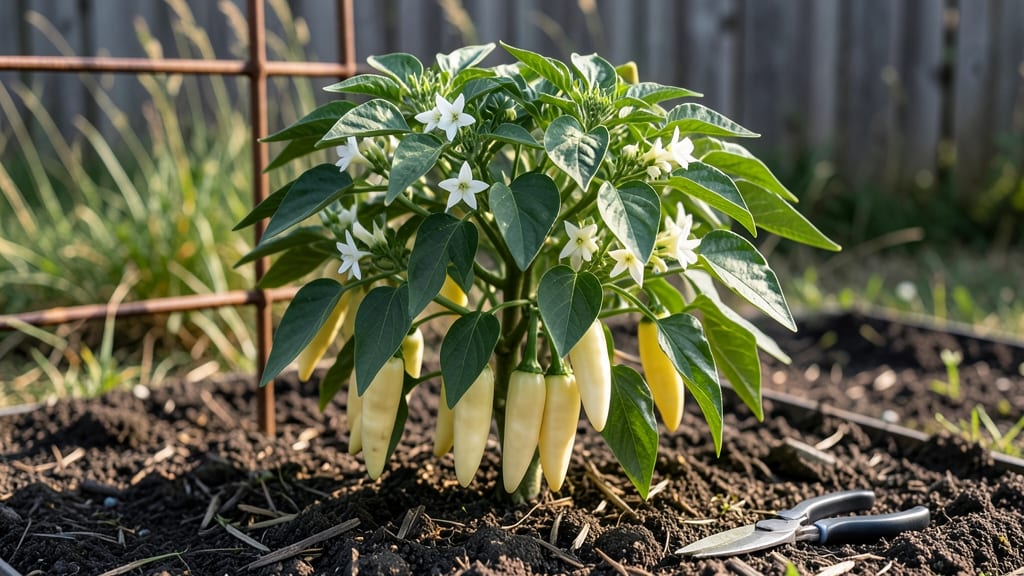
Growing Bounty Hybrid Banana Peppers delivers 90 days of sweet, mild heat that transforms your kitchen and garden. 🌱 These peppers pack a pound of fruit per plant—enough to pickle, stuff, or roast for a year—while staying true to their namesake flavor profile.
The secret lies in their compact growth habit and disease resistance, making them perfect for small spaces or first-time growers. Start with well-draining soil (amend with compost) and full sun (6+ hours daily). Water consistently at the roots—never overhead—to prevent blossom-end rot, the #1 killer of peppers.
A balanced fertilizer (10-10-10) every 2-3 weeks keeps plants bursting with energy, while pruning side shoots redirects resources to fruit production. By mid-summer, you’ll harvest bright yellow-green peppers that turn red when fully ripe. The flavor?
A crisp, tangy sweetness with just a hint of heat—ideal for fresh eating, pickling, or drying. Even experienced gardeners swear by these for their reliability and productivity. Troubleshoot stunted growth by checking for underwatering or overcrowding. Yellow leaves? Adjust sunlight or reduce nitrogen.
With proper care, one plant yields enough peppers to feed a family—and still have extras to share. Ready to grow your own spicy-sweet harvest?
📚 In This Guide
- What you need
- Instructions
- Tips and common mistakes
- Wrapping up and next steps
What you need
- ● Seeds: 3–5 Bounty Hybrid Banana Pepper seeds (or 1–2 plants if buying starts).
- ● Containers or Garden Bed: Containers: 5–10 gallon pots (with drainage holes) for each plant.
- ● Garden Bed: Well-draining soil in a sunny spot (6+ hours of sunlight daily).
- ● Potting Mix: High-quality, well-draining pepper-specific mix (or blend garden soil with compost and perlite).
- ● Fertilizer: Balanced 10-10-10 or 5-5-5 fertilizer (organic options like fish emulsion or compost work too!).
- ○ Optional: Calcium supplement (e.g., crushed eggshells or lime) to prevent blossom-end rot.
- ● Watering Can or Hose: With a gentle spray nozzle for even moisture.
- ● Gloves & Pruners: For handling plants and trimming (sterilize with rubbing alcohol!).
- ○ Support Stakes or Trellis: 3–4 ft tall (optional but helpful for bushier plants).
- ● Warmth: Banana peppers thrive in 70–85°F soil temps. Start indoors 8–10 weeks before last frost or wait until soil warms (use a seedling heat mat if needed).
- ● pH Level: Aim for 6.0–6.8 (test soil with a kit or vinegar/baking soda DIY method).
- ● Patience: These peppers take 90 days to harvest—plan ahead for a summer bounty! 🌿
Step-by-step instructions for growing Bounty Hybrid banana peppers
Here's how to coax those signature sweet-spicy peppers from seed to harvest in just three months.
🌱 Step 1: Start Seeds Indoors 8-10 Weeks Before Last Frost
Fill seed trays with sterile seed-starting mix and moisten until damp but not soggy. Press one seed ¼ inch deep in each cell—Bounty peppers germinate best when planted shallow. Cover lightly with additional mix and mist gently to settle.
Place trays in a warm spot (75-85°F) with bright light immediately. A seedling heat mat speeds germination to 7-14 days. Watch for first true leaves (the second set after the initial cotyledons)—that's your cue to remove any humidity domes to prevent damping-off.
☀️ Step 2: Provide Consistent Light and Fertility
Bounty peppers need 14-16 hours of light daily from day one. If natural light is insufficient, supplement with a full-spectrum LED grow light positioned 2-4 inches above seedlings. Raise it weekly as plants grow to maintain that gap.
When seedlings show 3-4 true leaves (4-6 weeks after sowing), transplant into 3-inch pots with fresh potting mix. Feed with a balanced liquid fertilizer (10-10-10) diluted to half-strength every 10 days to encourage strong root development.
🪴 Step 3: Harden Off and Transplant After Frost
Two weeks before your last frost date, begin hardening off by placing seedlings outside in sheltered, shaded conditions for 1-2 hours daily. Gradually increase exposure over 10-14 days, ending with full sun. Transplant after all danger of frost has passed into the garden or large containers with 5-gallon capacity.
Space plants 18-24 inches apart in full sun. Bury stems slightly deeper than in pots to encourage additional root growth. Water deeply at transplanting to settle soil and reduce shock, then maintain 1 inch of moisture weekly—never let soil dry completely between waterings.
✂️ Step 4: Prune and Support for Maximum Yield
When plants reach 18-24 inches tall, pinch back the main stem above the 4th leaf node to encourage bushier growth. Remove any suckers (side shoots) that form in the leaf axils to direct energy to fruit production. Stake or cage plants early to prevent wind damage as peppers develop.
Fertilize again with balanced fertilizer when flowers appear, then switch to a low-nitrogen, high-phosphorus formula (5-10-10) to boost fruiting. Mulch with 2 inches of organic mulch to retain moisture and regulate soil temperature—Bounty peppers thrive in 70-85°F soil temperatures.
🌿 Step 5: Harvest and Encourage Continuous Production
Harvest peppers when they reach 3-4 inches long for best flavor, using pruning shears to avoid damaging the plant. Regular harvesting stimulates more fruit production—check plants every 3-5 days during peak season. Store harvested peppers in the refrigerator for up to 2 weeks.
As summer progresses, prune any diseased or yellowing leaves immediately to prevent spread. If plants slow production in late summer, feed with a low-nitrogen fertilizer to revive growth. With proper care, Bounty peppers continue producing until first frost, often yielding 20-30 peppers per plant.
Tips & tricks for perfect Bounty Hybrid banana peppers
Took me a while to figure these out, so here goes—your shortcuts to stress-free pepper-growing success.
Germination Boost: The 75-85°F warmth requirement is non-negotiable for Bounty peppers. I learned this the hard way after ruining three batches with cold germination. Use a seedling heat mat if your home stays below 70°F—it cuts germination time from 14 days to just 7 days. Pro tip: Place your seed trays on top of the fridge (not inside) for free, consistent warmth without overheating.
Light Strategy: Those critical 14-16 hours of daily light are about more than just photosynthesis. Position your grow lights so they're just 2-3 inches above seedlings initially, then raise weekly. I use a simple timer to run my lights for exactly 16 hours daily—this prevents leggy seedlings that can't support themselves. If you notice stems stretching toward the light, you're too far away.
Transplanting Hack: When it's time to move seedlings to their 3-inch pots (after those 4-6 weeks), bury stems slightly deeper than they were in the trays. This buried stem develops new roots that strengthen the plant for transplanting. I also add a pinch of mycorrhizal fungi to the potting mix—it triples root development and means less shock when you finally plant outdoors.
Harvest Timing: The 3-4 inch size guideline is perfect, but here's what nobody tells you: Harvest in the morning when peppers are firmest. I check my plants every 3 days during peak season, but if you're aiming for maximum sweetness, pick when the peppers are still slightly firm to the touch—this is when their natural sugars peak. Store them in the fridge for up to 2 weeks, but use them within 5 days for best flavor.
Pro Tips for Bounty Hybrid Banana Pepper
- Took me a while to figure these out, so here goes—your shortcuts to stress-free pepper-growing success.
- Germination Boost: The 75-85°F warmth requirement is non-negotiable for Bounty peppers.
- Light Strategy: Those critical 14-16 hours of daily light are about more than just photosynthesis.
Frequently asked questions
How long does it take for Bounty Hybrid Banana Peppers to mature?
The Bounty Hybrid is a fast grower! With the right conditions (warm soil, full sun, and consistent water), you can expect to harvest peppers in just 90 days from transplanting. Early pods may appear as small, pale green fingers—wait until they’re 3–5 inches long and deep yellow-green for peak flavor and heat.
Can I save seeds from Bounty Hybrid Banana Peppers for next year?
Technically, yes—but with a caveat. Bounty Hybrid is an F1 hybrid, meaning its seeds won’t produce identical plants if saved. For reliable results, buy fresh seeds annually. If you’re curious, try it anyway! The offspring might surprise you with fun variations in size or heat.
What’s the best way to handle heat waves or cold snaps for these peppers?
Bounty Hybrids love warmth but can handle light frosts (down to 28°F) if protected. For heat waves, mulch heavily to retain moisture and shade plants midday. Cold snaps? Use row covers or cold frames—they’ll bounce back once temps rise. Pro tip: Prune leggy growth in spring to focus energy on fruit production!
What can I do if my Bounty Hybrid Banana Peppers turn bitter or too hot?
Bitterness or extra heat usually means stress—common culprits include overwatering, nutrient deficiencies, or uneven ripening. Fix it by:
- Adjusting watering to 1–1.5 inches per week (let soil dry slightly between waterings).
- Fertilizing with a balanced 10-10-10 or tomato-specific feed mid-season.
- Harvesting peppers at half-ripe (green-yellow) for milder flavor.
If the heat is still overwhelming, try roasting or pickling them—the caramelization mellows the spice!
Are there good substitutes if I can’t grow Bounty Hybrid Banana Peppers?
Swap in these mild-to-medium heat alternatives for similar results:
- Banana Pepper (non-hybrid): Classic sweetness, slightly hotter.
- Shishito Peppers: Delicate, mild, and great for grilling.
- Poblano Peppers (when young): Mild, meaty, and versatile.
- Hungarian Wax Peppers: Crisp, tangy, and a bit spicier.
For Bounty’s unique hybrid sweetness, try ‘Golden Banana’ or ‘Sweet Banana’ varieties!
Wrapping up and next steps
The Bounty Hybrid Banana Pepper is a game-changer for home gardeners—offering a fast-growing, high-yield harvest with a perfect balance of sweetness and heat. Whether you're a seasoned gardener or a curious beginner, these peppers prove that big rewards come in just 90 days! 🌱✨
Ready to grow your own flavor-packed bounty? Start by gathering your supplies, then dive into planting—your kitchen (and taste buds) will thank you! 🌿 Plant your seeds today and enjoy the harvest soon!