
Companion Plants
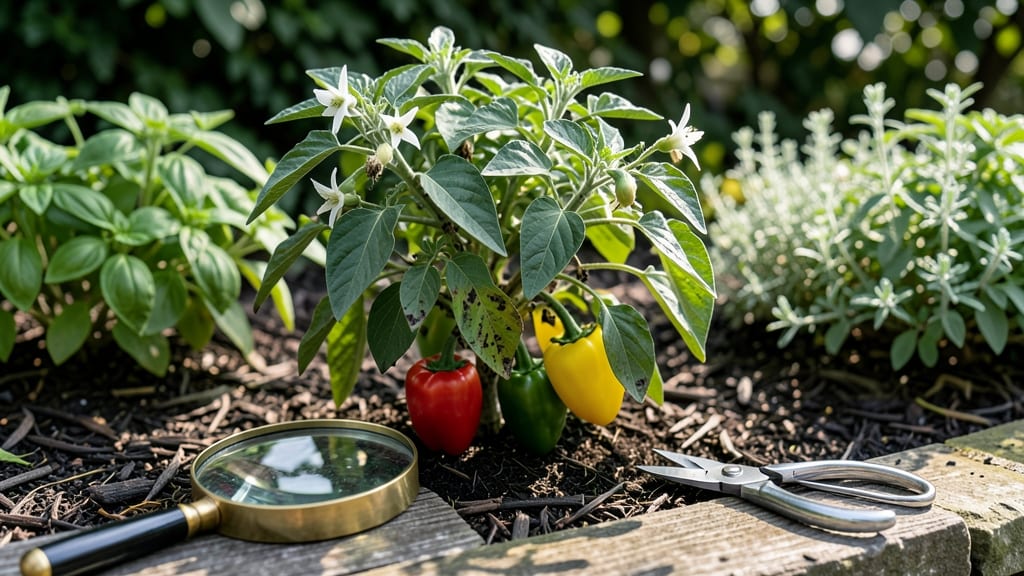
Black spots on pepper plant stems can turn your harvest from abundant to almost nonexistent if you don't act fast. 🌱 I've seen this ugly fungus ruin entire plants in just a couple weeks, but there's a straightforward way to stop it—copper fungicide works like a shield against the spread.
The key is catching it early, when the spots are still small and the plant can bounce back.
Most of the time, these black spots are caused by fungal infections like anthracnose or bacterial spot, especially when plants get wet leaves in humid weather. Overhead watering makes it worse, turning your garden hose into a disease spreader.
The good news? Copper fungicide isn't just effective—it's also one of the few treatments that actually prevents new infections while you clean up the existing damage.
What you'll end up with is a pepper plant that stops wasting energy fighting disease and starts putting all its power into producing those sweet, juicy peppers you planted for.
The spots will fade, new growth will emerge clean, and you'll avoid the heartbreak of losing your entire harvest to something that could've been prevented with a simple spray.
This method works for both garden beds and container-grown peppers, and the same principles apply whether you're dealing with bell peppers, jalapeños, or any other variety.
The only time you might need to call in professional help is if the entire plant is already mushy and rotting—otherwise, you've got this under control.
Root Causes Of Stem Discoloration
Black spots on pepper plant stems aren’t just an eyesore—they’re often a red flag from nature’s warning system. Understanding why these blemishes appear is the first step to saving your harvest.
Below, we break down the most common culprits, from microscopic invaders to environmental stressors, with the science behind each one.
Fungi are the #1 cause of black spots on pepper stems, thriving in damp, warm conditions. Here’s how they strike: - Anthracnose (Colletotrichum spp.) - How it spreads: Spores land on stems (especially near water droplets) and germinate when humidity stays above 70% for prolonged periods. - Science behind the damage: The fungus secretes enzymes that break down plant cell walls, creating dark, sunken lesions. In peppers, it often starts as tiny black specks that expand into oily, tar-like patches. - Tell-tale signs: Spots may ooze pink or orange spores in wet weather. Leaves nearby can develop yellow halos. - Phytophthora Blight (Phytophthora capsici) - Why it’s deadly: This water mold isn’t a true fungus but behaves like one, spreading through soil and water. It clogs plant xylem (water-conducting tissues), causing stems to blacken and wilt. - Key trigger: Overwatering or poorly drained soil turns roots into a fungal buffet. Warm nights (75–85°F) accelerate its growth. - Red flag: Blackened, water-soaked spots that spread rapidly, often near the soil line. - Alternaria Leaf Spot (Alternaria solani) - Spores vs. stems: While it targets leaves primarily, spores can hitchhike to stems, especially in crowded plants. High temperatures (80°F+) make peppers more susceptible. - Spot the difference: Lesions are concentric (like bullseyes) with dark centers and lighter edges. Stems may crack as the disease progresses. Not all black spots are fungal. Some are battle scars from pests that leave behind a trail of destruction: - Stem Borers (e.g., Pepper Weevil) - How they work: Adult weevils lay eggs in stem crevices. Larvae burrow into the pith, creating entry points for bacteria or fungi. Their frass (poop) and chewed tissue turn black as it dries. - Where to look: Check for tiny holes or sawdust-like frass near the stem base. Infested stems often split open. - Pro tip: 🔥 If you find weevils, prune and burn affected stems immediately—they’ll reinfest if left in compost. - Spider Mites - The stealth attack: These tiny arachnids suck sap, causing stippling (tiny black dots) on stems and leaves. Their webbing traps moisture, creating ideal conditions for fungal hitchhikers. - Clue: Look for fine webbing between stems and leaves, especially in dry, dusty conditions. Sometimes, the problem isn’t alive—it’s the weather. Extreme or inconsistent conditions can weaken stems, making them prone to discoloration: - Sunscald - What happens: Intense sunlight (especially after rain) can scorch stems, causing blackened patches. Young, tender stems are most vulnerable. - Why it’s confusing: Spots may look fungal but lack the raised edges or spore patterns. They often appear on the sun-exposed side of stems. - Fix: Use shade cloth or mulch to protect stems during heatwaves. - Chemical Burn - Common culprits: Over-application of herbicides, copper fungicides (if misused), or even harsh fertilizers (like ammonium sulfate) can irritate stems. - How to spot it: Blackened areas are usually dry and crispy, with no signs of moisture or fungal growth. Check your spray patterns—drifting chemicals are often the culprit. - Physical Injury - The domino effect: Cuts from pruning, hail, or even rough handling can create wounds. Bacteria or fungi then move in, turning the injury site black. - Prevention: Always sterilize pruners with rubbing alcohol and avoid pruning when stems are wet. While less common, nutrient imbalances can stress stems, making them susceptible to discoloration: - Potassium Deficiency - Symptoms: Black, necrotic spots (often at the stem tips or between leaf nodes) paired with yellowing leaf edges. - Why it happens: Potassium regulates water and disease resistance. Low levels weaken cell walls, making stems an easy target for pathogens. - Quick test: Check soil pH—potassium is less available in acidic soils (pH < 6.0). - Magnesium Deficiency - Stem vs. leaves: While leaves show classic interveinal chlorosis, stems may develop dark, irregular patches as the plant struggles to transport nutrients. - Solution: Apply Epsom salt (magnesium sulfate) to soil or foliage, but avoid overdoing it—excess magnesium can block other nutrients. Not sure what’s causing the spots? Ask yourself:- 🌧️ Is the area wet or humid? → Likely fungal (Anthracnose, Phytophthora).
- 🕷️ Are there tiny holes or webbing? → Pest damage (weevils, mites).
- ☀️ Are spots only on sun-exposed sides? → Sunscald.
- 💧 Did you recently fertilize or spray? → Chemical burn.
- 🍃 Are leaves also affected? → Nutrient deficiency or systemic disease.
Once you identify the cause, you’re one step closer to a targeted fix. Next up: How to Treat Black Spots Safely—without harming your peppers or the planet.
Fixing Stem Spots Naturally
Black spots on your pepper plant stems don’t have to spell disaster—with the right approach, you can revive your plants and prevent future outbreaks. Below are targeted solutions for each common cause, from quick fixes to long-term prevention, so you can get back to growing healthy, productive peppers.
---
Fix: Act fast to stop the spread and restore plant health.
#### 🔥 Step 1: Remove Infected Growth - Prune aggressively 🪒: Snip off (don’t pull!) any stems, leaves, or fruit with black spots using sterilized pruners (wipe with rubbing alcohol between cuts).
Dispose of infected plant debris in a sealed trash bag—do not compost it! - Focus on airflow: Thin crowded foliage to improve air circulation, which fungi love to exploit.
#### 🍳 Step 2: Apply Fungicide - Copper fungicide (organic option) 🌱: Spray stems and leaves with a copper-based solution (like copper sulfate or Bordeaux mixture) every 7–10 days until new growth appears.
Follow label instructions for dilution. - Baking soda spray (DIY fix) 🧂: Mix 1 tsp baking soda + 1 tbsp vegetable oil + 1 tsp mild soap in 1 quart of water.
Spray on dry leaves in the morning to prevent powdery mildew. - Neem oil (preventative) 🌿: Apply a 1% neem oil solution (1 tbsp neem oil + 1 tsp soap per quart of water) weekly to smother fungal spores.
#### ⏰ Step 3: Adjust Care Routine - Water wisely: Avoid overhead watering—use drip irrigation or soaker hoses 💦 to keep stems dry. Water in the early morning so foliage dries by evening. - Space plants: Ensure 12–18 inches of space between pepper plants to reduce humidity buildup.
#### 💡 Prevention Tips - Rotate crops: Don’t plant peppers (or other nightshades like tomatoes) in the same spot next year—fungi linger in soil. - Solarize soil (for severe cases): Cover infected beds with clear plastic for 4–6 weeks in summer to kill fungi.
---
Fix: Eliminate pests and repair plant stress.
#### 👨🍳 Step 1: Blast Off Pests - Spray with soapy water 🧼: Mix 1 tsp mild dish soap in 1 quart of water and spray directly on pests (especially undersides of leaves). - Introduce beneficial insects 🐞: Ladybugs, lacewings, and predatory mites devour aphids and spider mites.
Release them at dusk when pests are active. - Use horticultural oil 🛢️: Apply dormant oil spray (like Neem Bliss) to smother scale insects and their eggs.
#### 🥘 Step 2: Strengthen the Plant - Fertilize lightly: Add balanced fertilizer (10-10-10) or compost tea to boost recovery. Avoid nitrogen-heavy feeds, which encourage soft, pest-attracting growth. - Prune damaged leaves: Remove heavily infested leaves to redirect energy to new growth.
#### 🎯 Prevention Tips - Inspect plants weekly 🔍: Check undersides of leaves and stems for early signs of pests. - Use reflective mulch: Cover soil with silver or aluminum mulch to deter whiteflies and spider mites (they hate the glare!).
---
Fix: Shield plants from extreme conditions.
#### 🌿 Step 1: Provide Shade - Use shade cloth (30–50%) ☀️: Hang lightweight fabric over plants during peak sun (11 AM–3 PM) to prevent scorching. - Plant near taller crops: Grow corn, sunflowers, or trellised cucumbers nearby to offer natural shade.
#### 💧 Step 2: Hydrate Properly - Deep watering: Soak the root zone 1–2 inches deep every 2–3 days (morning is best). Avoid shallow watering, which stresses plants. - Mulch heavily: Apply 2–3 inches of straw or wood chips to retain moisture and cool roots.
#### ✨ Prevention Tips - Acclimate seedlings: Harden off young plants gradually over 1–2 weeks before transplanting to full sun. - Choose heat-tolerant varieties: Opt for ‘Carmen,’ ‘Arpad,’ or ‘NuMex Heritage’ peppers, bred to handle high temps.
--- | Cause | Immediate Fix | Prevention | |-------------------------|--------------------------------------------|-----------------------------------------| | Fungal infections | Prune + copper fungicide | Improve airflow, rotate crops | | Pests | Soapy water spray + beneficial insects | Weekly inspections, reflective mulch | | Sunscald/heat stress| Shade cloth + deep watering | Gradual acclimation, mulching |
--- Remember: Consistency is key! Monitor your plants daily, and don’t hesitate to reapply treatments every 7–10 days until spots disappear. With these steps, your pepper plants will bounce back—and next season, they’ll be even more resilient! 🌱🔥
Frequently asked questions
Can I still save my pepper plant if the black spots have spread to the main stem?
If the main stem shows black spots, the plant may already be too compromised to recover. However, try these steps immediately: prune all infected branches below the damage, apply copper fungicide, and ensure proper airflow. If the stem is mushy or oozing, the plant is likely beyond saving—focus on preventing spread to nearby plants.
How often should I spray copper fungicide to prevent black spots?
For prevention, spray copper fungicide every 7–10 days during humid or rainy seasons. If you see early signs of spots, increase to weekly applications until the threat passes. Always follow label instructions—overuse can harm plants or beneficial insects. Rotate with neem oil every other week for better results.
Will black spots on pepper stems affect the taste or safety of the peppers?
Only remove and discard peppers with black spots—they may harbor fungi or bacteria. Healthy peppers from unaffected parts of the plant are safe to eat. The spots themselves don’t transfer to the fruit unless the disease has spread systemically, which is rare. Always wash peppers thoroughly before eating, even if they look healthy.
Can I use household vinegar as a fungicide for pepper plant stems?
Undiluted vinegar can burn plant tissue, but a 1:1 vinegar-water solution (5% acetic acid) can work as a fungicide when sprayed on leaves/stems. Mix 1 part white vinegar + 1 part water + 1 tsp dish soap, spray in the morning, and rinse off after 2 hours. Test on a small area first—peppers are sensitive to acidity.
Why do my pepper plants keep getting black spots even after treating them?
Persistent spots often mean the root cause isn’t fully addressed. Check for these common mistakes:
- Overhead watering (keeps stems wet)
- Poor airflow (crowded plants)
- Reusing contaminated pruners or tools
- Not rotating crops (fungi in soil)