
Picking
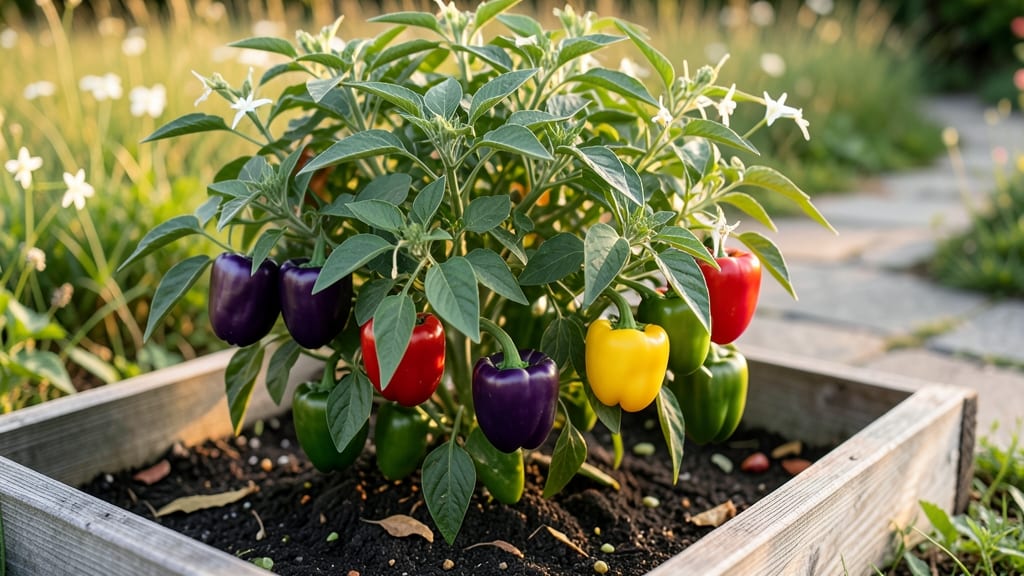
Growing multi-colored peppers transforms your garden into a living rainbow. 🌈 The secret lies in selecting heirloom varieties like 'Rainbow Pepper' or 'Colorado Jam'—each pod shifts from green to red, yellow, or purple as it ripens, creating a visual feast that keeps neighbors stopping to admire.
Start with rich, well-draining soil and full sun (6+ hours daily), then plant seeds indoors 8-10 weeks before last frost. My first batch thrived in containers with a balanced fertilizer, proving these peppers don't need a sprawling plot—just consistent care and patience. The payoff?
A harvest that's as beautiful as it is delicious, with colors deepening as they mature. You'll harvest pods at different stages—some crisp green, others sweet and red—for months. Prune regularly to encourage bushier growth and more fruit, and watch as your plants become the garden's most talked-about feature.
The vibrant colors attract pollinators too, boosting your entire garden's productivity. Perfect for small spaces, containers, or sunny windowsills, these peppers prove you don't need acres to grow something extraordinary. Here's how to make it happen!
📚 In This Guide
- What you need
- Instructions
- Tips and common mistakes
- Wrapping up and next steps
What you need
- ● Seeds: 5–10 multi-color pepper seeds (e.g., 'Colorado,' 'Rainbow,' or 'Luna' varieties for vibrant colors like red, yellow, orange, and purple).
- ● Seed-starting mix: 1–2 cups of sterile, well-draining potting soil (look for a mix labeled for seedlings).
- ● Containers: 3–5 small pots (3–4 inches deep) with drainage holes or biodegradable seedling pots.
- ● Watering can or spray bottle: With a fine mist setting for gentle hydration.
- ○ Grow lights or sunny windowsill: A 4–6 inch LED grow light (optional but helpful if natural light is limited).
- ● Fertilizer: A balanced, water-soluble fertilizer (5-5-5 or 10-10-10 ratio) for seedlings.
- ● Garden bed or large pots: Well-draining soil with a pH of 6.0–6.8. Peppers thrive in full sun (6+ hours daily).
- ● Compost or organic matter: 1–2 cups per plant to enrich the soil before transplanting.
- ● Mulch: Straw or shredded leaves to retain moisture and suppress weeds.
- ○ Stakes or cages (optional): For taller varieties to support heavy fruit.
- ● Hand trowel or small shovel: For planting and soil prep.
- ○ Pruning shears (optional): For trimming excess foliage or shaping plants.
- ○ Gloves (optional): To protect hands while handling soil or spicy peppers!
- ● Harvest basket or container: For collecting your colorful pepper bounty.
Step-by-step instructions for growing multi-color peppers
Here's how I grow vibrant, multi-colored peppers that keep producing all season long.
🌱 Step 1: Start Seeds Indoors 8-10 Weeks Before Last Frost
Fill 2-3 inch deep seed trays with a sterile seed-starting mix—never garden soil, as it can harbor fungal diseases that kill young seedlings. Moisten the mix until it feels like a damp sponge, then press it down gently to create a firm planting surface. This prevents seeds from sinking too deep during watering.
Sow seeds ¼ inch deep, spacing them ½ inch apart in rows. I use a toothpick to make small holes for precision planting. Cover lightly with additional mix and mist the surface with water until evenly moist. Peppers germinate best at 75-85°F, so I place the tray on a seedling heat mat to speed up the process.
Place the tray in a warm, bright location—south-facing windows work, but supplement with a grow light if natural light is weak. Keep the soil consistently moist but never soggy; I check daily by pressing my finger ½ inch deep—if it feels dry, it's time to water. Germination typically takes 10-14 days, but some varieties may take longer.
💧 Step 2: Transplant Seedlings When They Develop 3-4 True Leaves
Once seedlings have 3-4 true leaves and are 3-4 inches tall, it's time to transplant them into 4-inch pots filled with a well-draining potting mix. I harden off seedlings by placing them outdoors in a sheltered spot for 1 hour daily over 5-7 days, gradually increasing their exposure to sunlight and wind.
When transplanting, bury seedlings slightly deeper than they were in the tray—this encourages stronger root growth. Water thoroughly after transplanting to settle the soil and remove any air pockets. Place the pots in a warm, sunny location, ensuring they receive at least 6-8 hours of sunlight daily.
Fertilize lightly with a balanced, water-soluble fertilizer diluted to half strength. Over-fertilizing at this stage can burn young roots, so I wait until new growth appears before applying a second feeding. Watch for leggy growth—a sign the seedlings need more light—and adjust the grow light position if necessary.
☀️ Step 3: Acclimate Seedlings to Outdoor Conditions
About 2 weeks before the last frost date, begin acclimating seedlings to outdoor conditions by placing them outside during the day and bringing them back indoors at night. Start with 2-3 hours of exposure and gradually increase their time outdoors by 1 hour daily until they can stay outside all day and night.
Choose a sunny, sheltered spot for your pepper plants, as they thrive in full sun and warm temperatures. Amend the soil with compost to improve drainage and fertility, and plant seedlings 12-18 inches apart in rows spaced 18-24 inches apart. This spacing allows for good air circulation, which helps prevent fungal diseases.
Water the soil deeply after transplanting to encourage root growth, and mulch around the base of the plants with 2-3 inches of organic mulch to retain moisture and suppress weeds. Avoid wetting the foliage when watering, as this can promote disease. You'll know your peppers are adapting well when they show new growth and vibrant, dark green leaves.
✂️ Step 4: Maintain Plants for Continuous Harvest
Peppers are heavy feeders, so I fertilize them every 2-3 weeks with a balanced fertilizer during the growing season. Water deeply 1-2 times per week, depending on rainfall and temperature, ensuring the soil remains consistently moist but not waterlogged. Overwatering can lead to blossom-end rot, so I always check the soil moisture before watering.
Prune your pepper plants by removing any suckers that form in the leaf axils—these are the small shoots that grow between the main stem and a branch. Pruning encourages stronger growth and increases fruit production. You'll also want to remove any yellow or diseased leaves promptly to keep the plant healthy.
Harvest peppers when they reach their desired color and size, typically 60-90 days after transplanting, depending on the variety. Use pruning shears to cut the stems, leaving a small portion of the stem attached to the fruit. Regular harvesting encourages the plant to produce more peppers, extending the harvest season well into fall.
Tips & tricks for growing vibrant multi-color peppers
Growing multi-color peppers from seed is a rewarding process that pays off with a stunning harvest. Here are the secrets I've learned to ensure your plants thrive from start to finish.
Heat Matters: Maintaining that 75-85°F germination temperature is crucial, but don't overlook the importance of consistent warmth throughout the growing process. After germination, keep seedlings in a warm location—even a sunny windowsill can drop below 65°F at night, slowing growth. I've found that placing pots on a heat mat for the first week after germination gives seedlings a strong start, especially in cooler climates. This extra warmth helps prevent leggy growth that often occurs when seedlings stretch toward light sources.
Lighting Strategy: While the instructions mention 6-8 hours of sunlight daily, I've discovered that quality matters more than quantity during the early stages. Seedlings need bright, direct light to prevent them from becoming tall and weak. If using grow lights, position them just a few inches above the seedlings—close enough that you can almost touch the leaves without burning them. I adjust the height as seedlings grow to maintain this distance, which prevents stretching and encourages bushier growth. Remember, peppers are sun-lovers, and giving them plenty of light from the start sets them up for a bountiful harvest.
Transplanting Technique: When it's time to transplant your seedlings into 4-inch pots, I've found that the way you handle the roots makes all the difference. Gently loosen the root ball before placing it in the new pot to encourage root spread. The instructions mention burying seedlings slightly deeper, but I take this a step further by making sure at least half of the stem is below soil level. This buried stem acts as a new root zone, creating a stronger plant that can support more fruit. Be sure to water thoroughly after transplanting to help settle the soil and eliminate air pockets that could prevent proper root contact.
Acclimation Wisdom: The 2-3 hours of exposure during the hardening-off process is where many gardeners make mistakes. I recommend starting with even shorter periods—just 30 minutes on day one—to give seedlings time to adjust. Gradually increase exposure by 30 minutes daily until you reach the full 2-3 hours recommended. This slow adaptation helps prevent shock that can stunt growth or even kill young plants. Pay close attention to how your seedlings look after each session—if they appear wilted or stressed, they're not ready for longer exposure yet.
Pro Tips for Multi Color Peppers
- Growing multi-color peppers from seed is a rewarding process that pays off with a stunning harvest. Here are the secr...
- Heat Matters: Maintaining that 75-85°F germination temperature is crucial, but don't overlook the importance of consi...
- Lighting Strategy: While the instructions mention 6-8 hours of sunlight daily, I've discovered that quality matters m...
Frequently asked questions
Got questions about growing your own multi-color peppers? You’re not alone! Here are some of the most common queries—and their answers—to help you cultivate a vibrant harvest with confidence.
How long does it take for multi-color peppers to mature from seed?
Most multi-color pepper varieties take 60 to 90 days to mature from seed, depending on the specific type (e.g., bell peppers vs. hot peppers). Start seeds indoors 8–10 weeks before the last frost for a head start. If planting directly outdoors, opt for transplants to save time—just ensure nighttime temps stay above 55°F (13°C).
Why are my multi-color peppers turning one color instead of multiple?
Multi-color peppers need full sun (6–8 hours daily) and consistent warmth to develop their vibrant hues. If they’re reverting to green or red, check for:
- Insufficient sunlight (move to a sunnier spot or use grow lights).
- Temperature fluctuations (keep soil above 60°F/15°C).
- Nutrient deficiencies (add balanced fertilizer or compost).
Patience is key—some colors emerge later in the season!
Can multi-color peppers grow in containers, and what size pot do I need?
Multi-color peppers thrive in containers as long as the pot is at least 12–18 inches deep and wide enough to support 2–3 plants (they need space to breathe). Use well-draining soil and a balanced fertilizer (like 10-10-10) every 4–6 weeks. Just place them in a sunny spot (balcony, patio, or windowsill) and water when the top inch of soil feels dry.
Are multi-color peppers spicier than regular peppers?
Not necessarily! The color doesn’t determine heat—it’s the variety that matters. For example:
- Multi-color bell peppers (like ‘Color Mix’ or ‘Rainbow’) are mild and sweet.
- Multi-color hot peppers (like ‘Rainbow Jalapeño’) can pack a spicy kick—check the seed packet for specifics!
Taste-test a small slice first if you’re unsure!
How do I protect multi-color peppers from frost or cold snaps?
Peppers are tropical plants and hate cold—temperatures below 50°F (10°C) can stunt growth. Use these tricks to shield them:
- Cover plants with frost cloth or a row tunnel on chilly nights.
- Move potted peppers to a garage or sheltered porch during cold snaps.
- Extend the season with a greenhouse or hoop house for late fall harvests.
If frost hits, harvest any ripe peppers immediately—they’ll keep in a cool, dark place for weeks!
Wrapping up and next steps
Growing multi-color peppers isn’t just about adding vibrancy to your garden—it’s about celebrating nature’s diversity and reaping a delicious, nutritious harvest! 🌈 From selecting the right seeds to nurturing your plants through every stage, you’ve now got the tools to transform your garden into a rainbow of flavors.
Whether you’re a seasoned gardener or just starting out, the key is patience, care, and a little creativity.
Ready to take the next step? Start small—plant a few seeds or seedlings this week! Watch them grow, enjoy the process, and soon, you’ll be savoring homegrown peppers in everything from salsas to stir-fries. Happy gardening! 🌱