
Picking
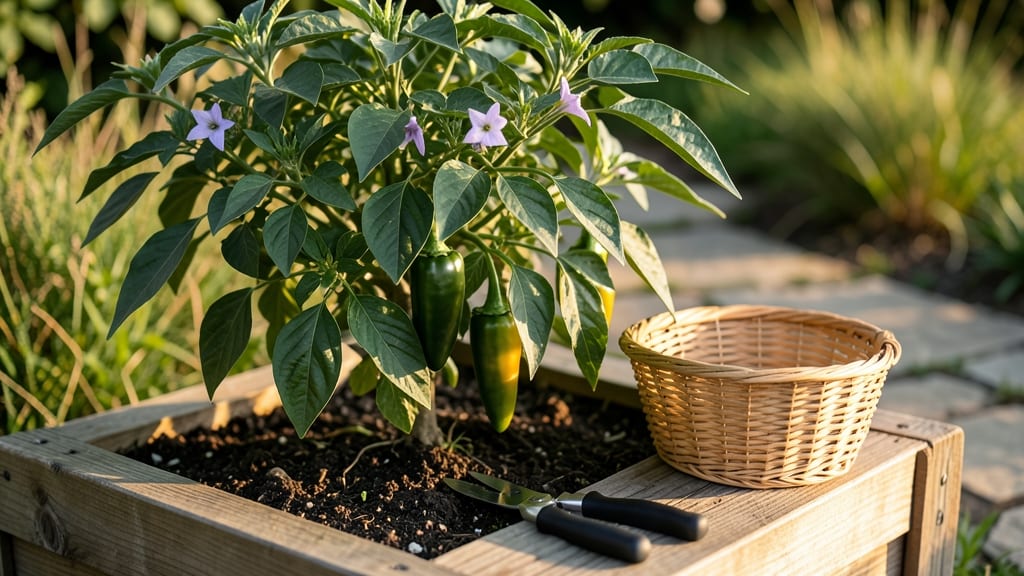
To pick a poblano pepper at its perfect flavor peak, watch for a 4-6-inch length and a glossy skin that’s just starting to darken—though they’re usually harvested green 🌶️.
Picking too early turns them bitter, while waiting too long makes them leathery. I’ve learned the hard way that timing matters more than you’d think—especially in Zone 6a where hot afternoons speed up ripening.
Below, I’ll break down the exact color cues, firmness tests, and size benchmarks so you never miss the window. Whether you’re stuffing them for chiles rellenos or drying them for powder, these clues ensure your poblano peppers taste their best.
You’ll also discover how to store them post-harvest so they stay fresh longer—no more wasted peppers!


Poblano pepper ripening stages by color: what to watch for
Poblano peppers start their life as bright green pods, but their true culinary potential unfolds through subtle color shifts. Unlike jalapeños or serranos, poblano peppers are rarely picked red—most chefs prefer them at their darkest green stage before they begin turning reddish-brown.
Understanding these color transitions helps you time your harvest for maximum flavor and texture.
The journey from immature green to mature dark green takes about 75-90 days after transplanting, depending on your climate. Each color phase signals a different flavor profile and culinary use, so paying attention to these visual cues ensures you don’t miss the peak harvest window.
Let’s break down what to watch for at each stage.
| Stage | Color Description | Size | Flavor & Texture | Best For |
|---|---|---|---|---|
| Immature Green | Bright, glossy green | 3-4 inches | Mild, slightly grassy | Discard or compost |
| Mature Green | Dark green, slightly dull | 4-6 inches | Earthy, mild heat (500-1,500 SHU) | Stuffed peppers, grilling, roasting |
| Darkening Green | Deep green with slight blackening | 5-7 inches | Rich, smoky, slightly spicy | Roasting, drying, sauces |
| Reddish-Brown | Dull reddish-brown | 6+ inches | Sweet, fruity, intense heat | Drying, powders, long cooking |
The mature green stage is where most home gardeners aim to harvest poblano peppers. At this point, the peppers are 4-6 inches long, their skin has lost some of its bright glossiness, and they feel firm but yield slightly when gently squeezed.
This is the sweet spot for roasting or stuffing, as the walls are thick enough to hold fillings but still tender.
If you let poblano peppers progress to the darkening green stage, you’ll notice a slight blackening near the stem and a deeper, richer flavor. These peppers are perfect for drying or making powders, as their walls thicken and their flavor intensifies.
However, they can become leathery if left too long, so harvest them before they fully darken.
While the reddish-brown stage is common in other peppers, poblano peppers rarely reach this point in home gardens. If they do, the flavor shifts to sweet and fruity with a higher heat level (up to 2,000 SHU).
These are best used in long-cooked dishes or dried for later use, as their texture becomes firmer and less tender.
One critical mistake gardeners make is waiting too long for poblano peppers to turn red. Unlike jalapeños or serranos, poblano peppers are harvested green for their best texture and flavor.
Overripe poblano peppers develop a bitter, leathery quality, making them less desirable for most culinary uses. Always prioritize the dark green stage for the best results.
Regional climate plays a role in ripening speed. In hotter climates (Zones 9-11), poblano peppers may mature faster and progress through color stages quicker. In cooler climates (Zones 6-8), ripening slows down, giving you more time to monitor color changes.
Pay attention to your local first frost date—poblano peppers need at least 75 days to reach maturity, so plan your harvest accordingly.
To extend your harvest season, consider roasting and freezing poblano peppers at their peak maturity. Roasted poblano peppers can be stored in the freezer for up to 6 months, preserving their rich flavor for future use.
This method also allows you to enjoy your homegrown peppers long after the growing season ends.
Next time you’re in your garden, take a close look at your poblano peppers. The color shift from bright green to dark green is your cue to harvest. With these visual clues, you’ll never miss the perfect moment to pick poblano peppers at their peak—ensuring every bite
Size and firmness guidelines for optimal harvest time
Harvesting poblano peppers at the right size and firmness ensures maximum flavor and texture. The ideal length ranges between 4 to 6 inches, while the girth should feel full but not overripe. These measurements align with the 75-day maturity most varieties need to reach peak ripeness.
For optimal firmness, gently squeeze the pepper—it should yield slightly but not feel mushy. A glossy, taut skin indicates proper hydration and maturity, while a dull or wrinkled surface signals underripeness. Overripe poblanos lose their signature earthy flavor, becoming bitter or leathery.
| Characteristic | Ideal Poblano | Underripe | Overripe |
|---|---|---|---|
| Length | 4-6 inches | <3 inches | >6 inches |
| Girth | Firm, full | Skinny, shriveled | Soft, wrinkled |
| Firmness | Slightly springy | Rock-hard | Mushy |
| Stem Test | Snaps cleanly | Resists twisting | Pulls easily |
| Skin Appearance | Glossy, taut | Dull, rough | Leathery, cracked |
Avoid picking poblanos when they’re smaller than 4 inches—this often results in a bland, underdeveloped flavor. I’ve made this mistake in my garden, and the peppers lacked the depth of flavor I expected.
Similarly, waiting too long past 6 inches risks losing their signature mild heat and turning them rubbery.
Check the stem attachment for readiness—twist gently near the base. If it snaps cleanly, the pepper is ready. A stubborn stem means it’s not ripe enough, while a stem that pulls away easily signals overripeness. This simple test saves time and ensures you harvest at the perfect moment.
Regional climates can affect poblano ripening. In hotter zones (USDA 9-10), poblanos may mature faster, requiring more frequent checks. Cooler areas (USDA 6-8) often need extra time, so monitor size and firmness closely during late summer. Adjust your harvesting schedule based on these conditions.
Once harvested, store poblanos in a cool, dark place for up to 2 weeks. For longer storage, freeze them whole or slice them for future use. Proper timing now means better flavor later—so don’t rush the harvest! 🌶️