
Picking
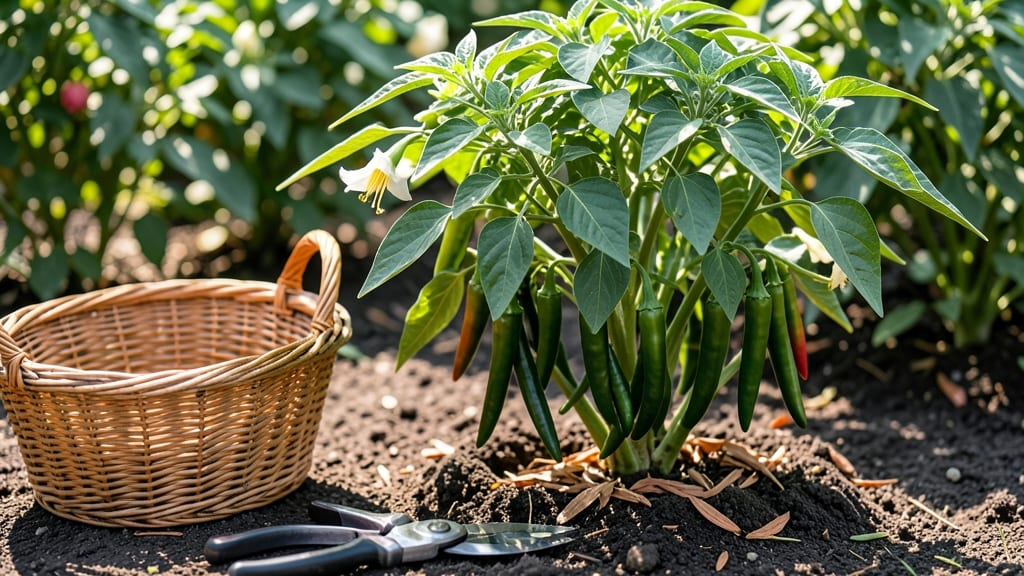
Are shishito peppers spicy? Most aren't—they score 0 on the Scoville scale, but about 10% pack a mild 1,000–2,000 SHU heat, similar to a green bell pepper. Their unpredictable capsaicin distribution means even experienced eaters can get surprised.
Shishito peppers earn their reputation for being mostly mild, but the occasional "hot one" keeps things exciting. 🔥 The capsaicin—the compound responsible for heat—isn't evenly distributed, so even peppers from the same plant can vary.
This inconsistency is what makes shishito peppers so fun to eat: you never know which one will deliver that subtle kick. For those who love the thrill of a surprise, this unpredictability is part of the charm.
What's fascinating is how genetics and growing conditions play a role. Peppers grown in cooler climates or harvested earlier tend to be milder, while those exposed to more heat during growth may develop slightly more heat.
If you're growing your own, harvesting them when they're still small and green can help ensure a consistently mild batch.
💡 In This Article
- Why Shishito Peppers Trick Your Taste Buds
- How to Grow and Select Less Spicy Shishito Peppers
Why shishito peppers trick your taste buds
The capsaicin in shishito peppers isn't distributed evenly—it concentrates primarily in the pepper's placenta (the white, vein-like core) and seeds. This uneven distribution means that even when a pepper scores 0 SHU overall, biting into the core can trigger that mild 1,000-2,000 SHU heat.
Think of it like a pepper-shaped Russian roulette: the flesh is safe, but the center holds the surprise. 🔥
Genetics play a huge role in this variability. Shishito peppers are a variety of Capsicum annuum, but their heat levels depend on specific gene expressions that control capsaicin production. Some plants naturally produce more capsaicin due to environmental stress—like inconsistent watering or temperature fluctuations—while others remain consistently mild.
For example, peppers grown in 65-75°F conditions with steady moisture tend to develop less heat than those exposed to 85°F+ temperatures during ripening.
Maturity also affects spiciness. Younger, smaller shishito peppers (harvested at 3-4 inches) are almost always mild, while those left to ripen fully on the vine may develop slightly more heat. The color shift from green to yellow or red signals increasing capsaicin levels, so timing your harvest is key.
Even within the same plant, you might find 90% mild peppers alongside 10% with a kick, making each batch a gamble.
Here's what's actually happening chemically: capsaicin binds to TRPV1 receptors in your mouth, which perceive it as heat. Shishito peppers contain 10-20 times less capsaicin than jalapeños (which average 2,500-8,000 SHU), but their unpredictable distribution creates the "trick" factor.
The mild heat you might experience is more about psychological surprise than actual danger—your brain registers the unexpected heat as a fun challenge rather than a threat. ✨
Growing conditions can amplify this effect. Peppers grown in nutrient-rich soil with balanced nitrogen, phosphorus, and potassium ratios tend to produce less capsaicin, while those stressed by poor soil or drought may concentrate heat in their cores.
This is why commercial growers often use organic fertilizers and consistent irrigation to maintain mildness across batches.
For the curious cook, this variability is part of the fun. The 10% hot peppers in a batch serve as a playful reminder that nature doesn't always follow rules.
It's this unpredictability that makes shishito peppers a favorite for izakaya-style dining, where the thrill of the unknown is half the experience. 💫
Pro tip: If you're sensitive to heat, simply remove the seeds and core before eating—this eliminates the risk entirely while keeping the pepper's sweet, grassy flavor intact.