
Planting
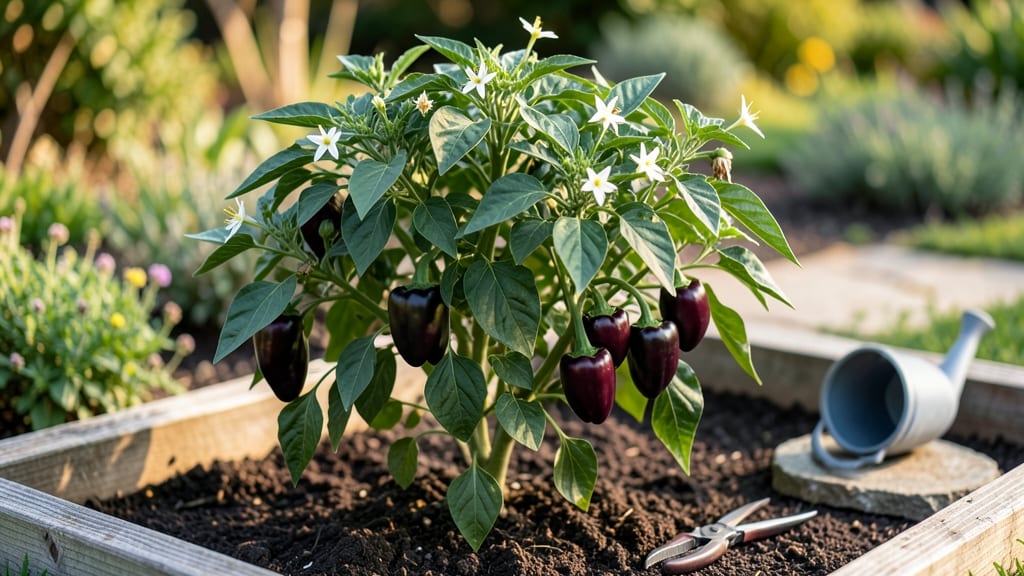
The Pinot Noir pepper plant brings a velvety purple hue to your garden while delivering mild, sweetly rich peppers that deepen in flavor as they ripen. 🌿 Perfect for heat zones 9-11, they thrive where summer temperatures stay warm but not scorching.
Start with well-draining soil and a sunny spot—at least 6-8 hours of direct sunlight daily. Pinot Noir peppers love warmth but hate soggy roots, so amend your soil with compost and plant after the last frost.
Containers work too, as long as they’re at least 12 inches deep to accommodate their sprawling vines.
Water consistently, keeping the soil moist but not waterlogged, and prune regularly to encourage bushier growth. The real magic happens in late summer when the peppers shift from green to deep purple—harvest them when fully colored for the best flavor.
These vines produce plenty of peppers, perfect for fresh eating or preserving.
If you’re in cooler zones, grow them in pots and bring them indoors before frost. They’re hardy once established but need protection from sudden cold snaps. With the right care, you’ll enjoy a harvest that’s both beautiful and delicious—ideal for gardeners who love a showstopper plant with a practical payoff.
📚 In This Guide
- What you need
- Instructions
- Tips and common mistakes
- Wrapping up and next steps
What you need
- ● Pinot Noir pepper seeds or seedlings: 3–5 plants (for optimal yield and cross-pollination). Choose organic, heirloom seeds if possible.
- ● Well-draining potting mix: 10–15 lbs of a light, airy blend (e.g., 60% peat moss, 30% perlite, 10% compost). Avoid heavy garden soil.
- ● Containers or garden bed: Containers: 5-gallon pots (1 per plant) with drainage holes.
- ● Garden bed: Full sun (6+ hours/day), raised bed or in-ground plot with amended soil (pH 6.0–6.8).
- ● Fertilizer: Balanced organic fertilizer (e.g., 5-5-5 or 10-10-10) or compost tea. Start with 1 tbsp per plant at planting.
- ● Watering can or hose with spray nozzle: For gentle, deep watering (avoid wetting leaves).
- ● Pruning shears: Sharp, sterilized shears for trimming vines and removing dead leaves.
- ● Support stakes or cages: 4–5 ft tall (e.g., bamboo stakes or tomato cages) to train vines vertically.
- ● Mulch: 2–3 inches of straw or shredded leaves to retain moisture and regulate soil temp.
- ● Heat mat or grow lights: For seedlings in cooler heat zones (Zone 5–7).
- ● Copper tape or neem oil: To deter pests like aphids or pepper maggots.
- ● pH test kit: To monitor soil acidity (ideal range: 6.0–6.8).
- ● Drip irrigation system: For consistent moisture in large gardens.
- ● Journal or app: To track planting dates, watering schedules, and harvest progress!
Step-by-step guide for growing thriving Pinot Noir pepper plants
Here’s how to cultivate bold, heat-packed Pinot Noir peppers that burst with flavor and color.
🌱 Step 1: Start Seeds Indoors for Early Growth
Pinot Noir peppers thrive when started indoors 6-8 weeks before your last frost date. Fill 2-3 inch deep biodegradable pots with sterile seed-starting mix (not garden soil) and plant 1-2 seeds per pot at a depth of ¼ inch. Gently press the soil to secure seeds but avoid compacting.
Cover the pots with a clear plastic dome or wrap to retain warmth and moisture. Place them in a warm spot (70-80°F)—a seedling heat mat speeds germination. Keep the soil consistently moist but never soggy. You’ll see tiny sprouts in 10-14 days, signaling it’s time to adjust care.
☀️ Step 2: Provide Bright Light and Gradually Harden Off
Once seedlings emerge, remove the dome and move them under grow lights or to a south-facing window where they’ll get 12-14 hours of light daily. Pinot Noir peppers need strong light to prevent leggy growth—if stems stretch toward the window, raise the light or rotate pots weekly.
After 4-6 weeks, when seedlings have 3-4 true leaves, start hardening them off. Place pots outside in a sheltered spot for 1-2 hours the first day, then gradually increase exposure over 7-10 days. This toughens seedlings for transplanting and prevents shock.
🪴 Step 3: Transplant to Outdoor Beds or Containers
Choose a location with full sun (6+ hours daily) and well-draining soil. Pinot Noir peppers prefer slightly acidic to neutral soil (pH 6.0-7.0). If planting in containers, use 5-gallon pots with drainage holes—one plant per container ensures proper airflow and prevents disease.
Transplant after the last frost when soil is at least 60°F. Dig a hole twice as wide as the root ball and place the pepper plant at the same depth it was in its pot. Water deeply to settle soil and remove any yellow or damaged leaves to encourage new growth.
💧 Step 4: Water and Fertilize for Maximum Heat Production
Water deeply once a week, aiming for 1-1.5 inches of water per week. Let the top 1-2 inches of soil dry between waterings—overwatering causes blossom-end rot, a common issue with peppers. Mulch around the base with 2-3 inches of organic mulch to retain moisture and regulate soil temperature.
Feed plants every 2-3 weeks with a balanced fertilizer (10-10-10) or a low-nitrogen, high-phosphorus blend to boost fruiting. Stop fertilizing 4-6 weeks before harvest to allow peppers to develop their signature sweet-spicy heat.
✂️ Step 5: Prune and Harvest for Peak Flavor
Pinot Noir peppers benefit from light pruning—remove suckers (shoots growing between the main stem and branches) to direct energy to fruit production. Pinch off the first few flowers if your plant looks leggy, allowing it to grow bushier before fruiting.
Harvest peppers when they reach 3-4 inches long and turn a deep purple-black hue. Use pruning shears to avoid damaging the vine. The longer you leave them, the hotter they get—pick early for milder heat or wait for maximum spice. Store in a cool, dry place for up to 2 weeks or freeze for later use.
Tips & tricks for perfect Pinot Noir pepper plants
These game-changing tips will help you grow the most vibrant, heat-packed Pinot Noir peppers your garden has ever seen!
Seedling Heat Secret: That 70-80°F warm spot is critical for germination—don't skimp! I use a seedling heat mat under my pots and place them on top of my fridge (which stays warm). The difference in germination speed is night and day. If your kitchen stays cooler, consider a small greenhouse setup or even a sunny windowsill with a heating pad underneath.
Lighting Strategy: Those 12-14 hours of daily light are non-negotiable for preventing leggy seedlings. I've ruined batches by not providing enough light—now I use a combination of grow lights and a south-facing window. If you don't have grow lights, rotate your pots weekly so all sides get even exposure. You'll notice the seedlings growing strong and compact rather than stretching toward the light.
Transplant Timing: Wait until soil reaches at least 60°F before transplanting—cold soil shocks the roots. I check soil temperature with a simple thermometer probe. If you're in doubt, wait a few extra days. The plants will thank you with vigorous growth rather than struggling to establish in cool conditions. Also, remove those yellow leaves before transplanting—they'll only slow down new growth.
Fertilizer Pause: The 4-6 weeks before harvest when you stop fertilizing is crucial for developing that signature sweet-spicy heat. I mark my calendar with big red letters so I don't accidentally fertilize too close to harvest time. This pause allows the plant to focus all its energy on ripening the peppers rather than producing new leaves.
Pro Tips for Pinot Noir Pepper Plant
- These game-changing tips will help you grow the most vibrant, heat-packed Pinot Noir peppers your garden has ever seen!
- Seedling Heat Secret: That 70-80°F warm spot is critical for germination—don't skimp! I use a seedling heat mat under...
- Lighting Strategy: Those 12-14 hours of daily light are non-negotiable for preventing leggy seedlings. I've ruined ba...
Frequently asked questions
Got questions about growing Pinot Noir pepper plants in your heat zone? You’re not alone! Here are some of the most common queries—plus straightforward answers to help you cultivate thriving vines.
What heat zones are best for Pinot Noir pepper plants?
Pinot Noir peppers thrive in USDA Hardiness Zones 9-11 but can also grow in Zones 8-9 with protection (like row covers or containers). These peppers love heat—ideal temps are 75–90°F (24–32°C) during the day and 60°F (15°C) or warmer at night. If you’re in a cooler zone, opt for early varieties or extend the season with greenhouses.
How long does it take for Pinot Noir peppers to mature?
Pinot Noir peppers are late-season varieties, typically taking 80–100 days from transplant to harvest. Start seeds indoors 8–10 weeks before your last frost, then transplant after soil temps hit 60°F (15°C). Patience pays off—they’re worth the wait for their sweet, smoky flavor!
Can I grow Pinot Noir peppers in containers?
Containers work well for Pinot Noir peppers, especially in small spaces or cooler climates. Use a 5-gallon pot or larger with well-draining soil and place it in a sunny spot (6+ hours of light daily). Just ensure the container has drainage holes to prevent root rot. Pro tip: Move pots indoors or to a sheltered area if night temps dip below 55°F (13°C).
What pests or diseases should I watch for with Pinot Noir peppers?
Pinot Noir peppers are prone to aphids, spider mites, and pepper maggots. Prevent pests by:
- Using row covers early in the season.
- Removing infected leaves promptly.
- Spraying neem oil or insecticidal soap if needed.
For diseases like powdery mildew, improve airflow and avoid overhead watering. Pro tip: Rotate crops yearly to reduce soil-borne issues.
What’s a good alternative if Pinot Noir peppers don’t thrive in my climate?
If your heat zone is too cool for Pinot Noir, try these similar late-season peppers:
- Ancho (milder, 80–90 days)
- Poblano (adaptable, 80–90 days)
- Early Jalapeño (faster, 60–70 days)
Or experiment with early-maturing varieties like ‘Black Pearl’ (75 days) for a similar smoky profile in warmer zones.
Wrapping up and next steps
Growing Pinot Noir pepper plants is a rewarding journey—especially when you match them to the right heat zone for lush, flavorful vines. 🌱 Whether you’re a seasoned gardener or a curious beginner, understanding sunlight, soil, and seasonal shifts will set your plants up for success.
With the right care, you’ll soon enjoy bold, fruity peppers that elevate any dish!
Ready to take the next step? Start by monitoring your plants’ progress—adjust care as needed—and consider experimenting with companion plants (like basil or marigolds) to boost growth. Happy gardening! 🌿